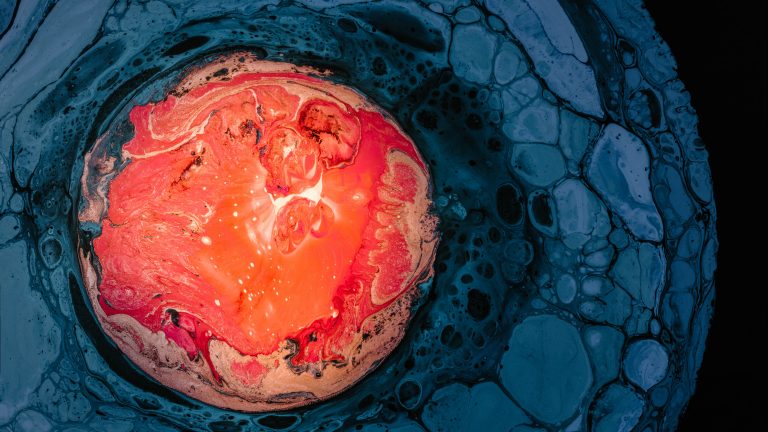
Deep beneath our feet lies one of the most important parts of our planet: Earth’s core. Hidden thousands of kilometers below the surface, this massive sphere is made primarily of iron and nickel. At its center, temperatures reach roughly 6,000°C (10,800°F), making it nearly as hot as the surface of the Sun.
This incredible heat has existed since Earth formed more than 4.5 billion years ago and continues to power many of the processes that make life possible today.
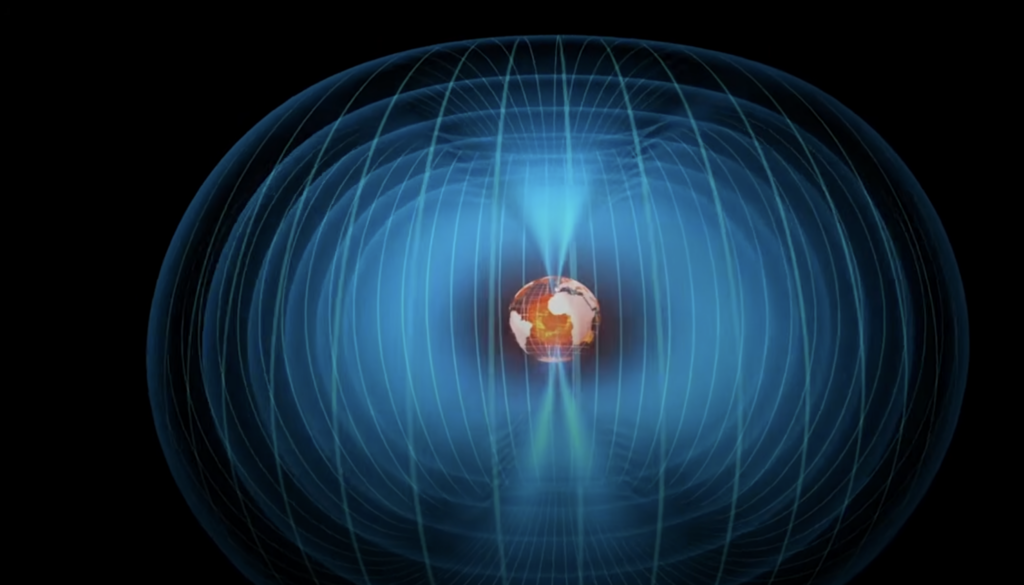
The core does far more than simply generate heat. It is responsible for creating Earth’s magnetic field, an invisible shield that protects the planet from harmful radiation coming from space.
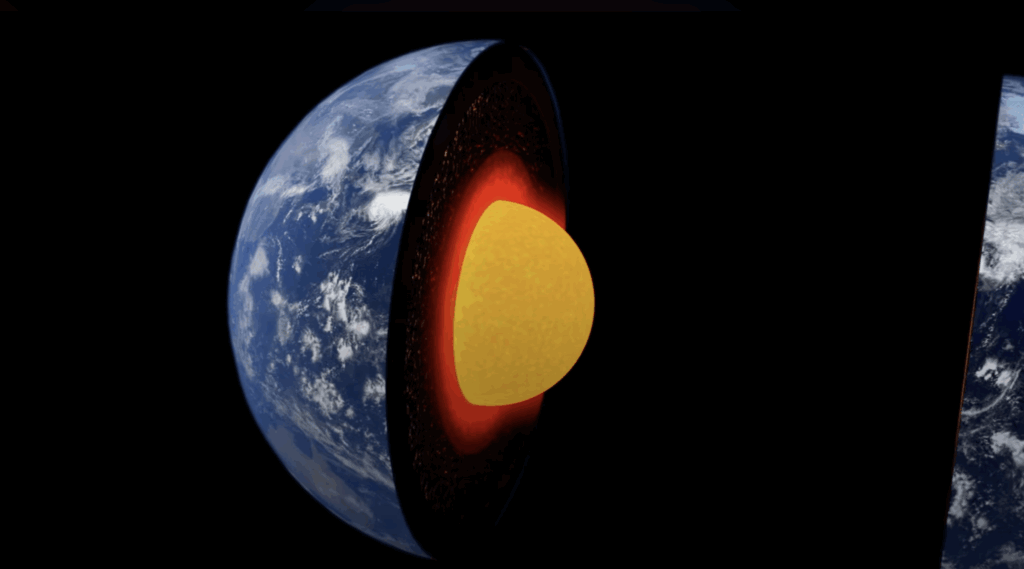
The inner core is solid, while the outer core consists of swirling liquid metal. As Earth rotates, the movement of this molten iron generates powerful electric currents that produce the magnetic field surrounding the planet.
Without this protective barrier, life on Earth would face serious consequences. The magnetic field deflects charged particles from the Sun, preventing them from gradually stripping away our atmosphere. Scientists believe this process played a major role in transforming Mars into the cold, barren world we see today.
If Earth lost its magnetic shield, our atmosphere would slowly erode, exposing the surface to dangerous radiation and making the planet increasingly hostile to life.
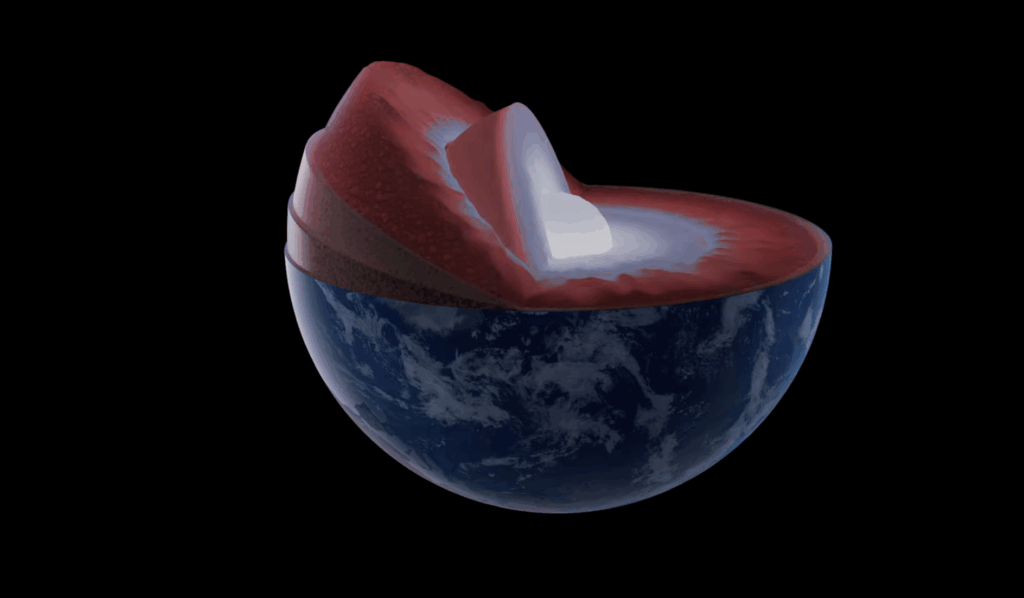
A completely frozen core would also bring an end to many of the geological forces that shape our world.
The internal heat that drives plate tectonics would eventually disappear. Volcanic eruptions would cease, earthquakes would become extremely rare, and the continents would stop drifting across the planet’s surface. Over immense periods of time, Earth’s interior would become geologically inactive.
As the planet continued to lose heat, global temperatures would gradually decline. While this cooling would occur over millions or even billions of years, the long term result would be a far less dynamic and potentially less habitable world.
Even if the core froze, however, it would remain an incredibly extreme environment. The pressure at Earth’s center is estimated to be more than 3.5 million times greater than the pressure at sea level. Any object somehow reaching the core would be crushed by these unimaginable forces.
Fortunately, scientists do not expect Earth’s core to freeze anytime soon. In fact, it is likely to remain hot and active for billions of years, continuing to protect the planet and sustain the conditions that allow life to thrive.