When people think about continents, they usually imagine something permanent and unchanging. Borders shift, countries rise and fall, but the land itself feels solid. Yet deep beneath Africa’s surface, something far more dramatic is happening. The continent is slowly pulling itself apart.
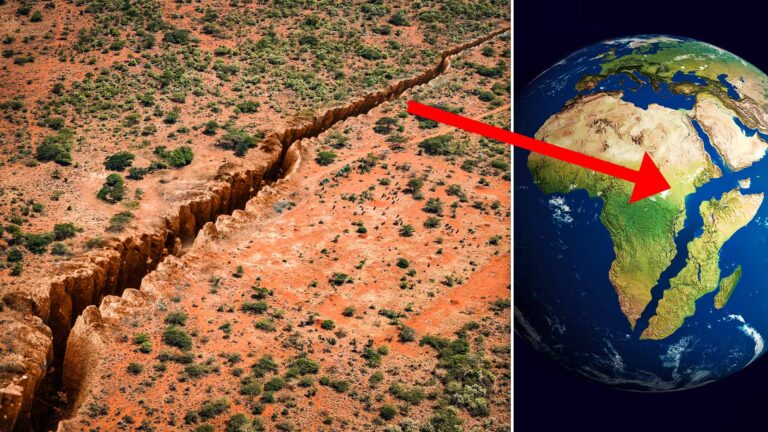
This process is not sudden or violent in a single moment. It is extremely slow, unfolding over millions of years. But in 2005, scientists observed something striking in Ethiopia: a 60 kilometer long crack opened in the ground in just a few days, revealing that the separation is not just theoretical. It is already underway.
Since then, smaller fractures and surface changes have continued to appear across parts of East Africa, especially in regions where the Earth’s crust is under constant stress. For the people living there, the ground beneath their feet is not as stable as it seems.
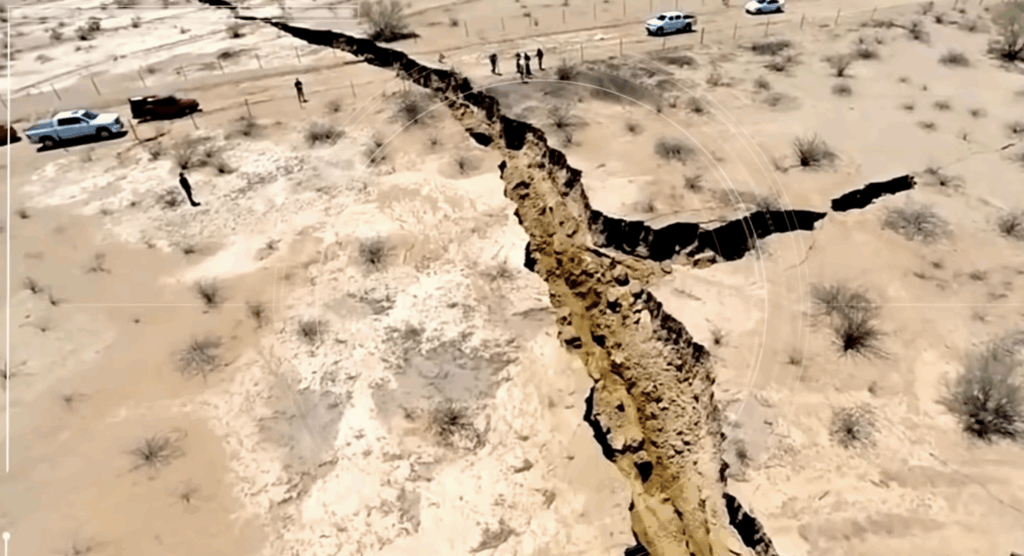
These changes are part of one of the most important geological systems on Earth, the East African Rift. Most people outside geology rarely hear about it, yet it is slowly reshaping an entire region of the planet.
The Earth’s outer layer, called the lithosphere, is broken into large tectonic plates that constantly move, although at speeds too slow for us to notice in daily life. When these plates pull away from each other, the crust stretches, cracks, and weakens over time.
As this stretching continues, the land between the separating plates begins to sink, forming a long valley known as a rift valley. Over millions of years, this process can completely transform landscapes and even create new oceans.
In East Africa, the African tectonic plate is gradually splitting into two separate plates: the Nubian Plate and the Somali Plate. This slow separation is what drives the entire rift system.
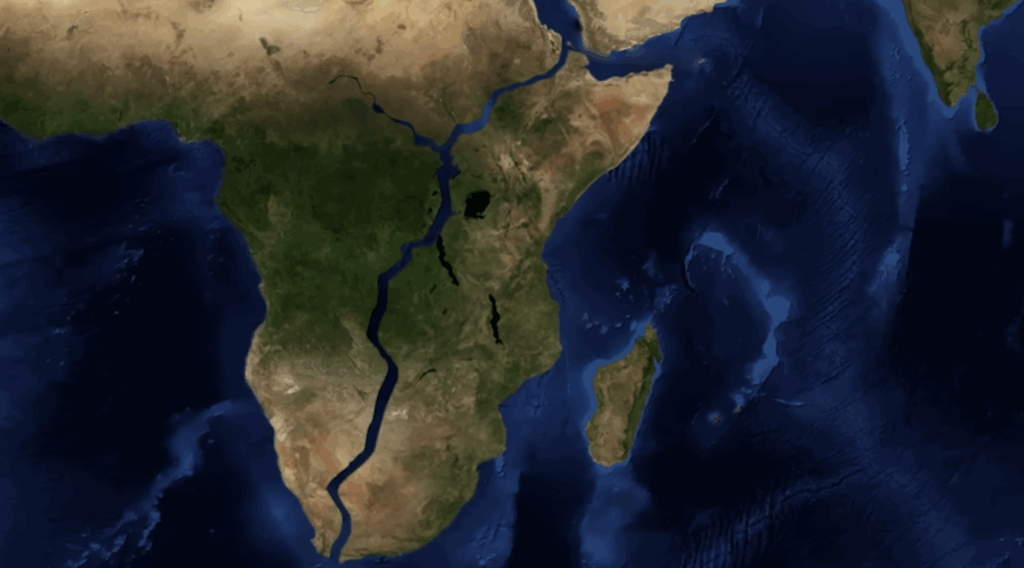
Over extremely long time scales, this process will continue to widen the gap between the two sides. However, it is important to understand that this is not something that will happen in a human lifetime. Geological estimates suggest that a full separation would take on the order of millions of years, not decades or centuries.
As the rift deepens, parts of the land could eventually drop below sea level. If that happens, water from nearby oceans, including the Red Sea, could flood into the gap. This would slowly create a new ocean basin, effectively dividing a section of Africa and forming new coastlines.
In this distant future scenario, parts of eastern Africa, including regions of Ethiopia, Kenya, and Somalia, could become separated from the main continent and form a large island or group of islands.
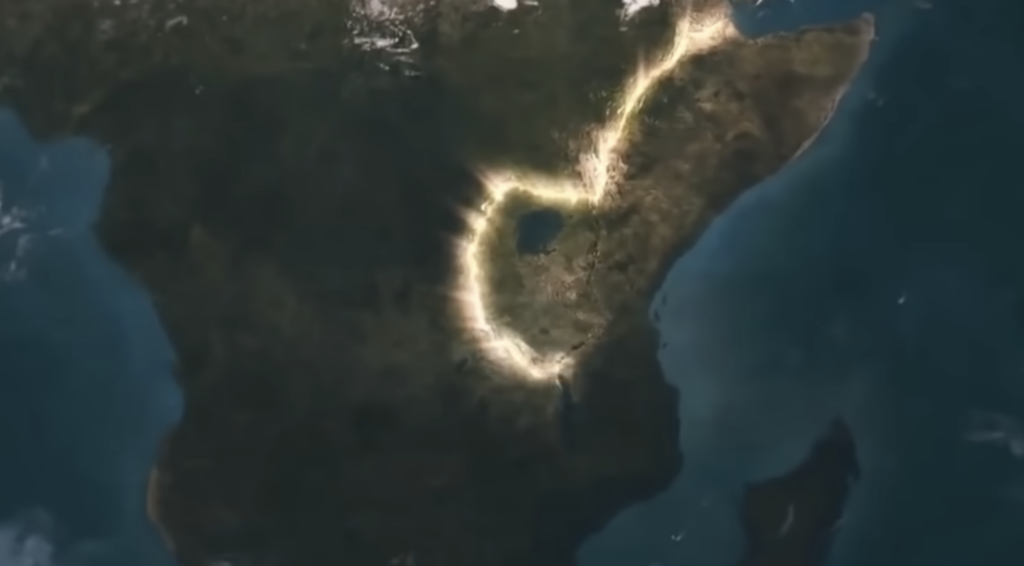
For people living along the rift today, the effects are much more immediate but still gradual. Ground fractures, shifting terrain, and localized earthquakes can damage roads, infrastructure, and farmland in certain areas.
Despite this, the East African Rift is not seen only as a threat. For scientists, it is one of the most valuable natural laboratories on Earth. It offers a rare opportunity to study how continents break apart, how new ocean basins form, and how tectonic forces shape the planet over time.
In a way, Africa is not suddenly breaking apart. It is slowly revealing the same processes that have shaped every continent on Earth since the beginning of geological time.