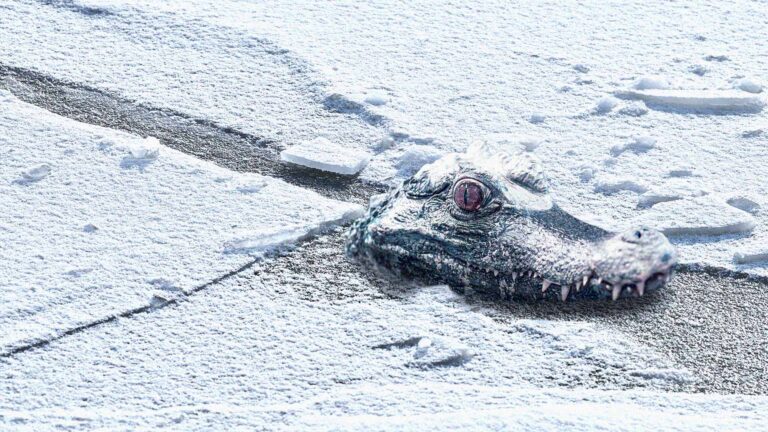
Why is there an alligator lying completely frozen under the ice… and still alive?
At first glance, it looks like something out of a frozen wasteland. A solid block of ice with an alligator trapped inside it. But then something strange happens. It is not dead. It is waiting.
Every winter, some animals are forced to face temperatures that would instantly kill most life on Earth. With no warm shelter and no fur or feathers to protect them, they do something extraordinary. Instead of dying, they slow down their bodies to the edge of survival and essentially pause life itself until spring returns.
Humans cannot do this. If a human body froze in the same way, cells would rupture, organs would fail, and recovery would be impossible. But for a few species, freezing is not the end. It is part of their survival strategy.
So how do they manage it, and what is actually happening inside their bodies?
Life on Earth has evolved some of the most extreme survival mechanisms imaginable. While humans change environments to suit themselves, many animals have adapted to survive conditions that seem completely impossible.
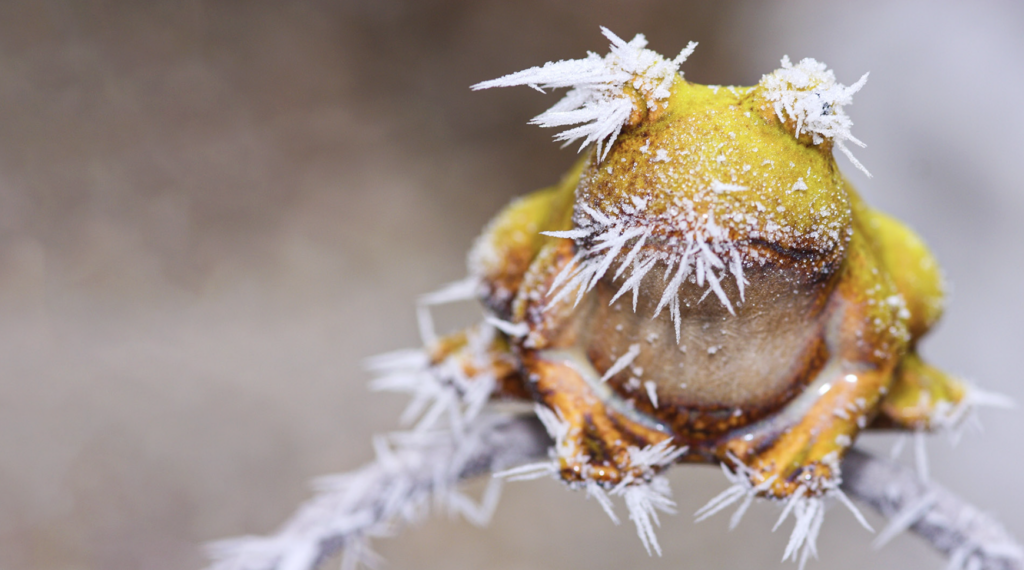
One of the most famous examples is the wood frog. Unlike most amphibians, which are highly sensitive to cold, the wood frog actively survives winter by freezing almost completely solid.
Up to 70 percent of its body can freeze, including the brain, heart, and lungs. From the outside, it looks completely lifeless. But inside, something very different is happening.
Before freezing begins, the frog’s body floods its cells with glucose. This acts like a natural antifreeze, reducing ice damage by controlling where and how ice forms. Instead of destroying cells, the ice is mostly kept in spaces where it causes less harm.
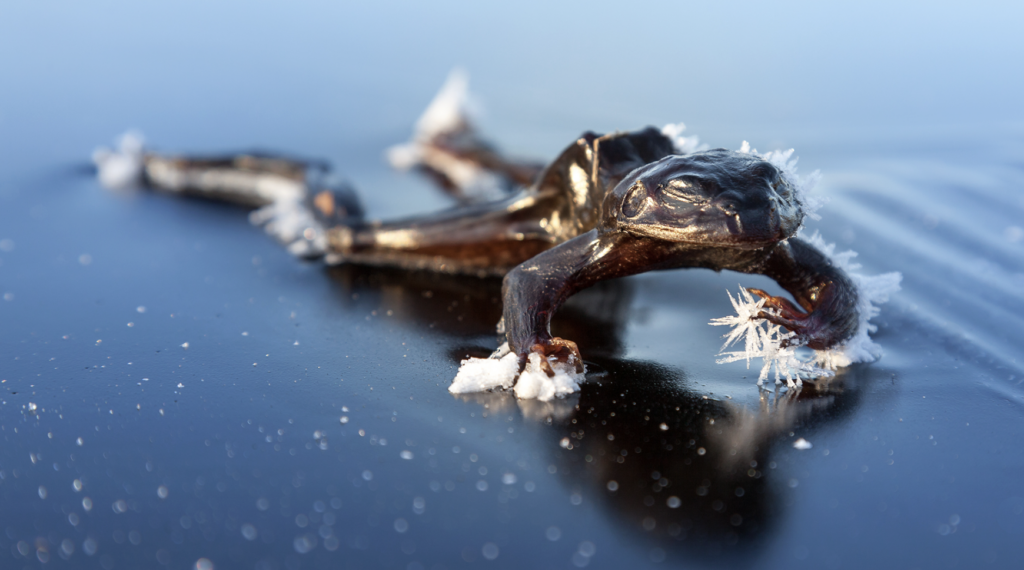
When temperatures rise again in spring, the process reverses. The frog slowly thaws, its heart restarts, and its organs begin functioning normally. Within hours, it can hop away as if nothing happened.
Alligators take a different approach. In colder regions like North Carolina, they do not freeze completely, but they do enter a deep state of dormancy. As ponds begin to ice over, alligators often keep their snouts above the frozen surface, creating natural breathing openings.
In this state, they enter brumation, a reptile version of hibernation. Their metabolism slows dramatically, heart rate drops, and they conserve energy while waiting for warmer weather.
Then there are painted turtle hatchlings, which may be even more impressive. These turtles can survive being frozen in water for long periods, even when ice forms around their bodies.
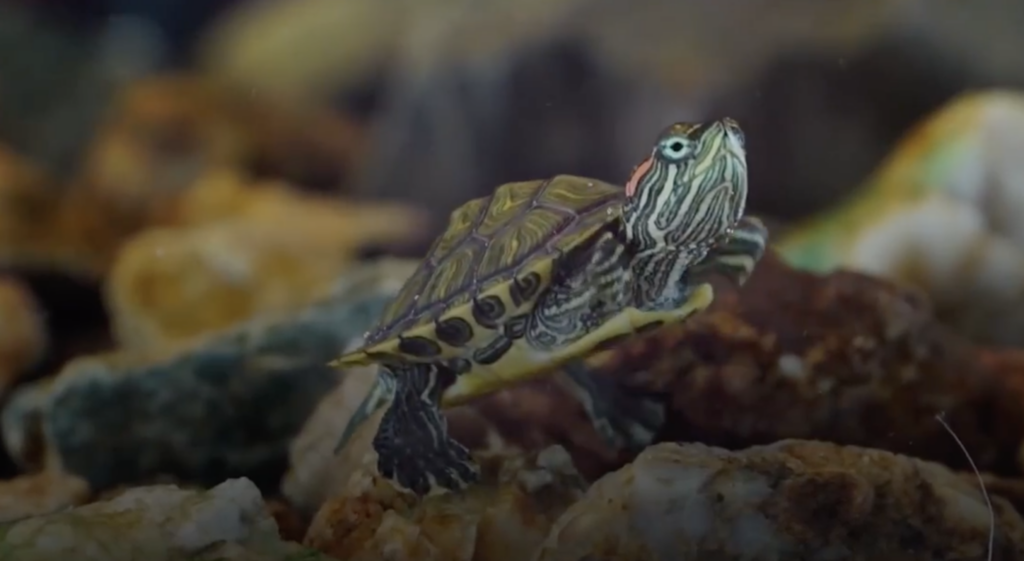
What makes them unusual is how they get oxygen. When submerged in cold, low oxygen water, their metabolism slows so much that they can absorb oxygen directly through specialized blood rich areas of their bodies. This includes the cloaca, an organ used for both waste removal and gas exchange in some reptiles.
It is not quite as strange as it sounds in biology terms, but it allows them to survive long winters without needing to surface for air.
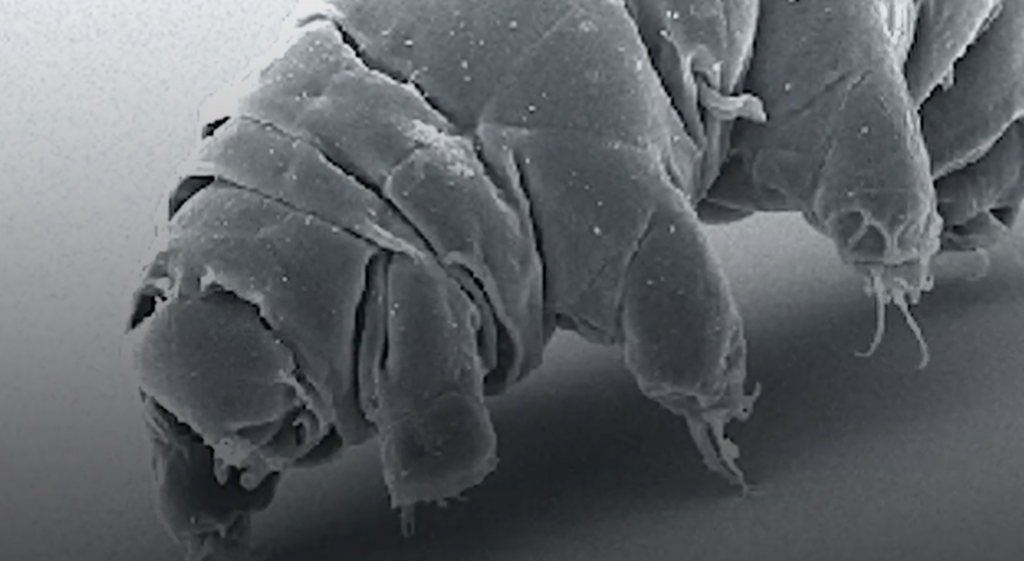
Even more extreme examples exist in the microscopic world. Tardigrades, also known as water bears, are among the toughest organisms on Earth. In experiments, scientists have frozen them for extended periods, and some have been successfully revived even decades later. Remarkably, some returned to normal life and were able to reproduce.
These survival strategies are not just scientific curiosities. They offer potential insights into medicine and future technology. If scientists can understand how these animals protect their cells during freezing, it could lead to advances in organ preservation, improving transplant success.
Some researchers even explore whether similar principles could one day help preserve humans for long distance space travel, allowing journeys far beyond our current limits.
Nature has already solved problems that seem impossible to us. In these frozen survivors, life does not stop. It simply waits.