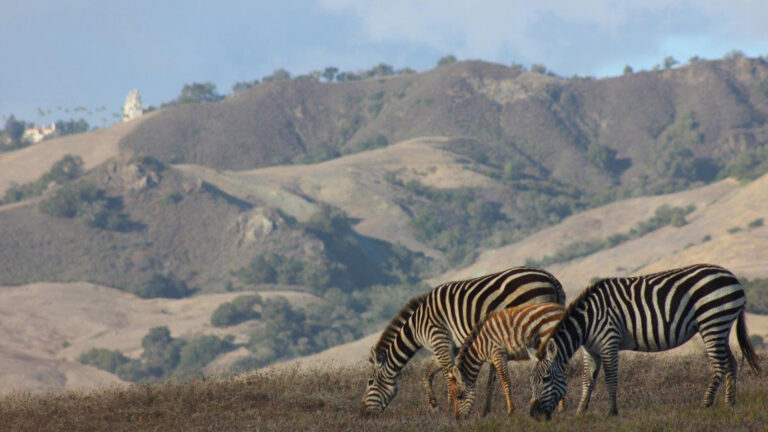
California is famous for its golden beaches, towering palm trees, Hollywood celebrities, and scenic coastal highways. But along one stretch of the Pacific Coast Highway, drivers are often surprised by something completely unexpected. Standing in grassy fields overlooking the ocean are herds of wild looking zebras.
At first glance, it seems impossible. Zebras belong on the African savanna, not along California’s central coast. Yet more than a century after they first arrived, these striped animals continue to roam freely, leaving many visitors wondering how they got there and why they never disappeared.
The story begins with one of America’s wealthiest and most influential newspaper publishers, William Randolph Hearst. In the early 1900s, Hearst built an enormous estate near San Simeon, California. Known today as Hearst Castle, the magnificent property featured 165 rooms and took nearly three decades to complete.
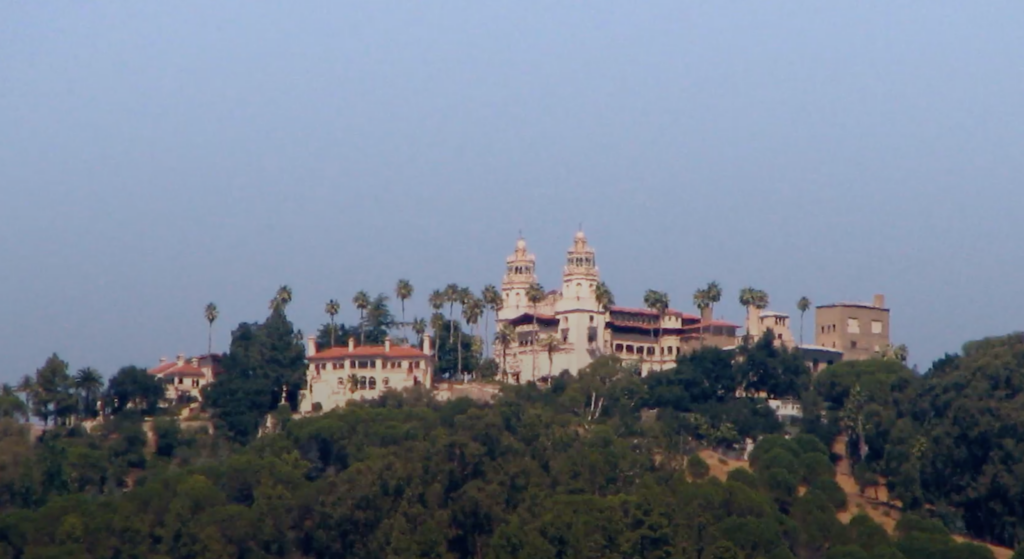
But the castle itself was only part of Hearst’s grand vision.
Surrounding the estate was an enormous private ranch covering roughly 250,000 acres. Hearst wanted his guests to feel as though they had entered another world, so he filled the property with an extraordinary collection of exotic animals. Instead of keeping every species behind bars, many were allowed to roam freely across the rolling hills and open grasslands.
Visitors could encounter elk, bison, antelope, camels, ostriches, giraffes, and zebras wandering across the landscape. More dangerous animals, including lions, tigers, bears, and elephants, were housed in large enclosures where they could still be admired safely.
The ranch quickly became one of the most unusual private wildlife collections in the United States, combining luxury architecture with an expansive zoo unlike anything most people had ever seen.
However, maintaining such a massive estate was incredibly expensive. By the late 1930s, Hearst faced growing financial difficulties. In 1937, he sold most of the exotic animals from his collection, bringing an end to his ambitious private zoo.
Not every animal left.
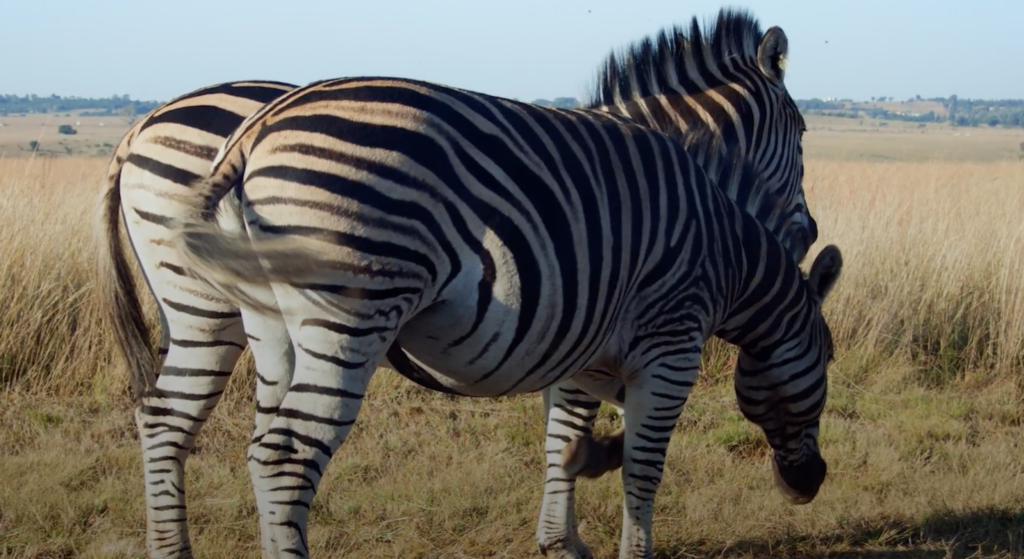
Some of the zebras remained on the ranch, and because they were already accustomed to the vast open landscape, they continued living there. Over the decades, the surrounding environment proved to be an ideal habitat. The mild coastal climate, abundant grass, and lack of large natural predators allowed the herd to survive and slowly grow.
Eventually, much of Hearst’s enormous ranch was placed under the protection of the State of California for conservation. The preserved landscape ensured that the remaining zebras could continue roaming the same hills where their ancestors had lived for generations.
Today, the descendants of those original animals are still a familiar sight along portions of Highway 1 near San Simeon. Travelers often stop at roadside viewpoints, hoping to catch a glimpse of the famous striped herd grazing peacefully against the backdrop of the Pacific Ocean.
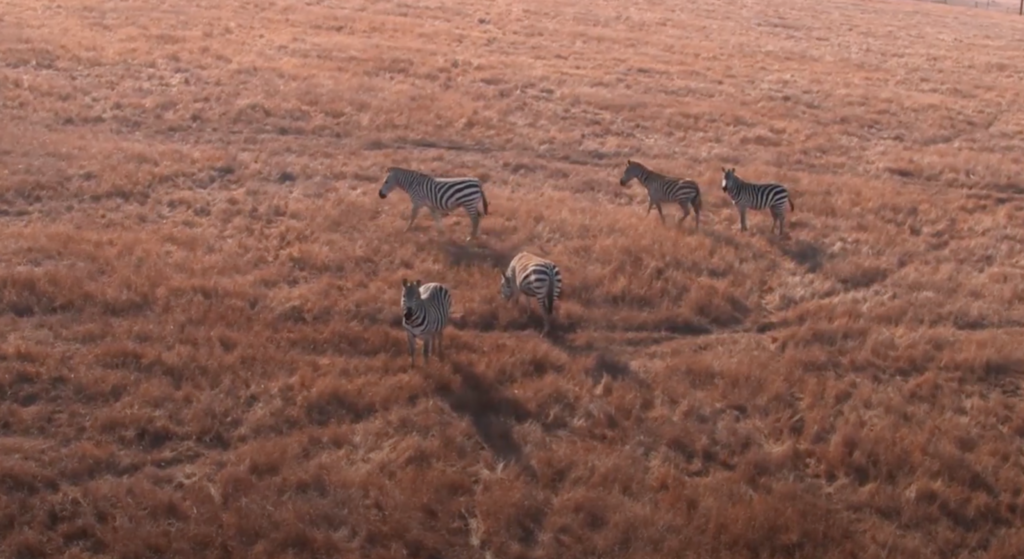
Although these zebras are not truly wild in the traditional sense, they have become one of California’s most unusual and enduring wildlife stories. They are living reminders of an eccentric billionaire’s dream, surviving long after his private zoo disappeared.
For many visitors, spotting zebras beside the Pacific Coast Highway feels almost surreal. Yet these remarkable animals continue to thrive, turning an ordinary coastal drive into an unforgettable encounter with one of California’s most unexpected attractions.