Scientists at Ohio State University strapped ants into a centrifuge and slowly increased the force pulling on their bodies, waiting to see where the neck joint would fail.
It held past 3,400 times the ant’s body weight. It kept holding until roughly 5,000 times.
Scale that up to human proportions and you are looking at a person supporting the weight of a large commercial aircraft by the neck.
Ants are among the most familiar creatures on Earth, and yet scientists keep uncovering abilities that sound invented.
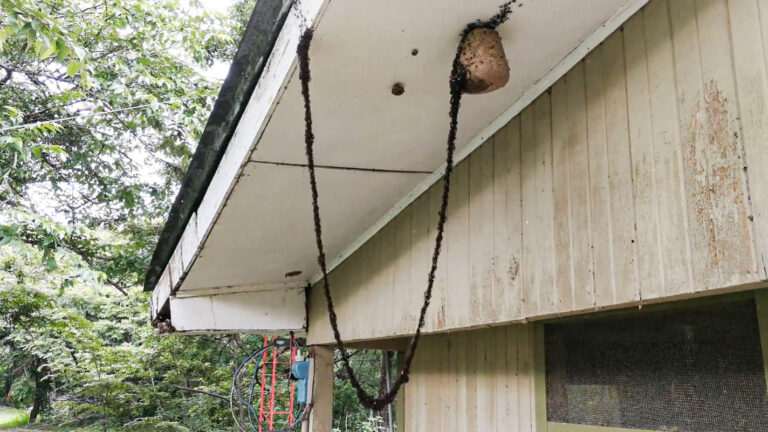
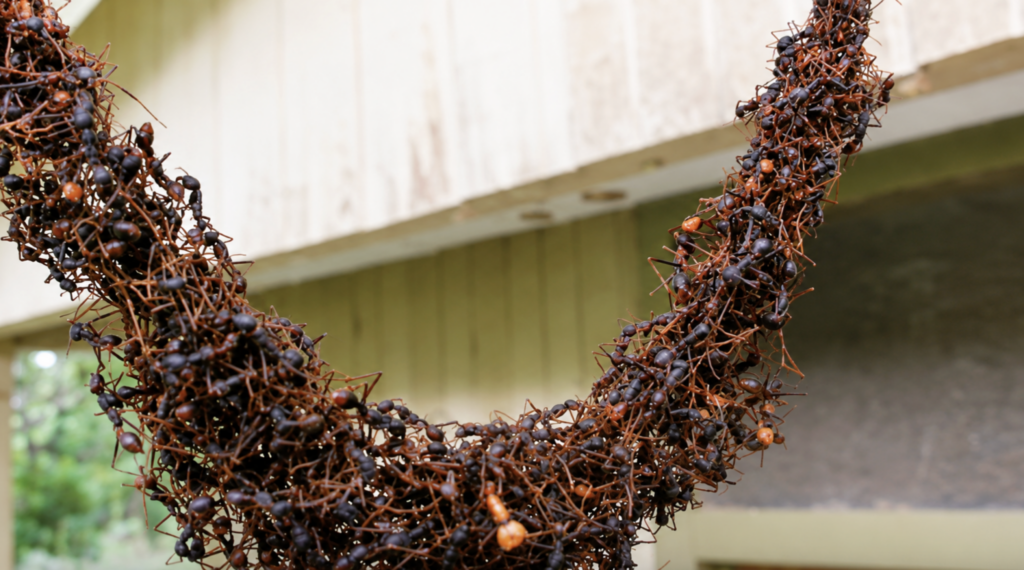
One recent observation left researchers stunned as thousands of ants worked together to form a giant living bridge, letting an entire colony cross an obstacle that should have stopped them completely.
Most people only notice ants when they invade a picnic or turn up in a kitchen. Underneath that ordinariness sits a combination of strength, coordination, and teamwork that has fascinated researchers for decades.
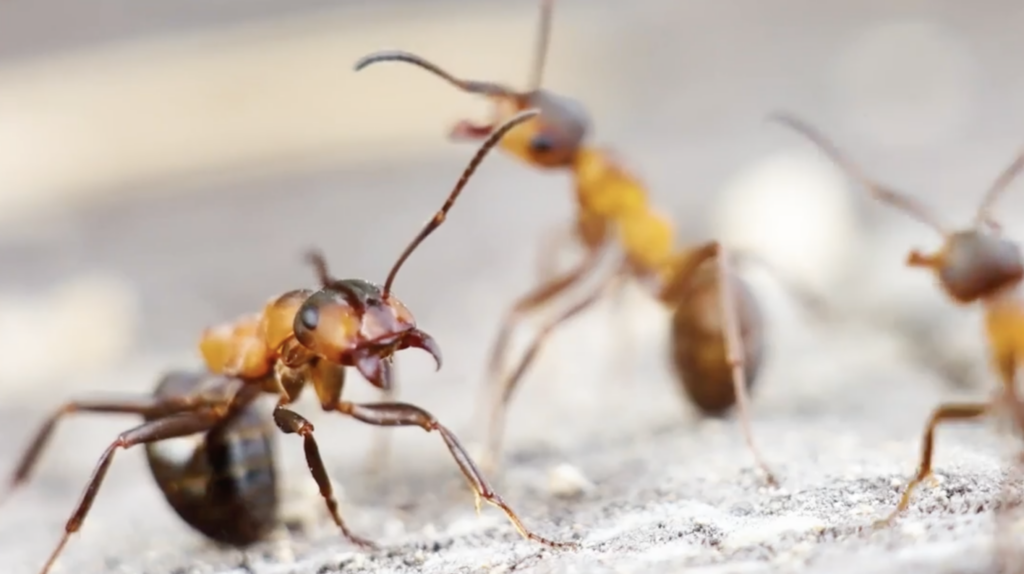
The strength comes down to construction. Muscles occupy a relatively large portion of an ant’s body, letting it generate enormous force at a tiny scale. That is why ants routinely carry prey and objects many times heavier than themselves, including insects, small reptiles, and even young birds.
But raw power does not explain the bridge. That trick belongs to cooperation.
Army ants travel in colonies containing hundreds of thousands of individuals. When they hit a gap in their path, they do not stop to look for materials. They use their own bodies.
It starts when the first ant reaches the obstacle and slows down. The ants behind keep pushing forward, which holds that first one in place. More arrive and lock themselves together, forming the foundation of a living structure.
Ant by ant, the span grows until it reaches the other side. Then the rest of the colony marches across a bridge made entirely of their own colony members.
The truly remarkable part is that nobody is in charge.
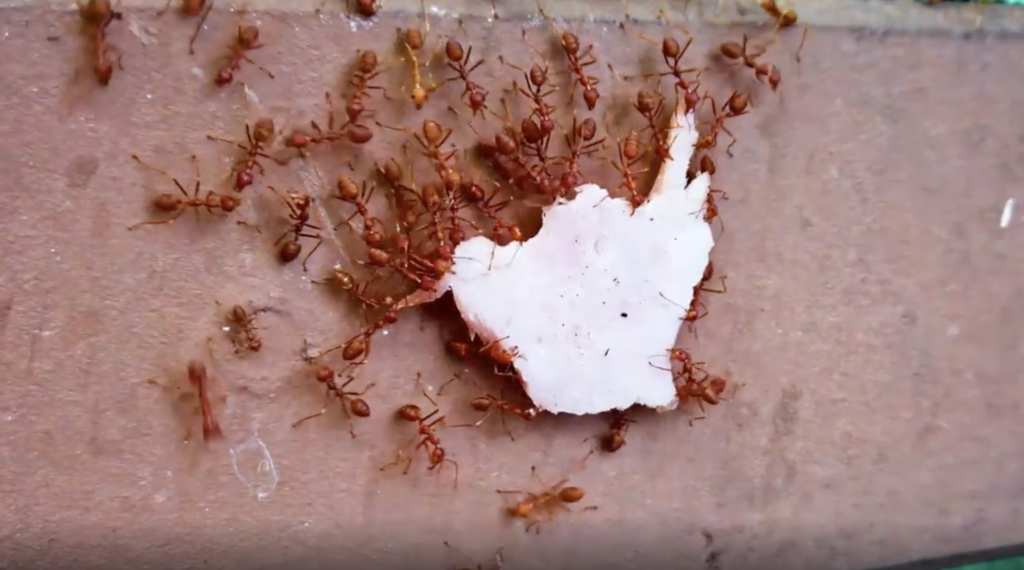
No ant directs the operation. Each one follows simple behavioral rules, and out of those rules emerges a structure that looks carefully engineered. Scientists studying swarm intelligence have spent years trying to understand how creatures this simple accomplish tasks that appear to require planning.
Then researchers noticed something stranger. Army ants do not always take the shortest route. Some of their bridges look inefficient by human standards.
The colony is not optimizing for distance. It balances several factors at once, including traffic flow and how many ants must be spent holding the structure together, which suggests collective decision making inside these colonies is far more sophisticated than anyone assumed.
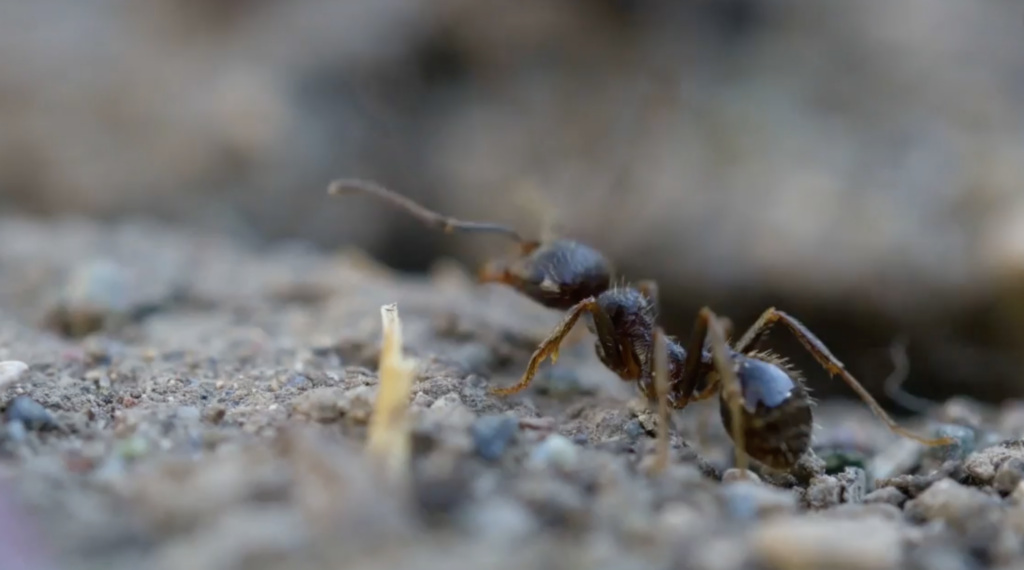
Bridges are only one example of what this cooperation produces.
Most ant species live in highly organized colonies of hundreds to thousands, building intricate underground networks of tunnels and chambers that function as nurseries, storage rooms, and living quarters. Every member holds a role, whether caring for larvae, gathering food, or defending the nest.
None of it works without communication. Ants use chemical signals called pheromones, invisible scent trails that guide nestmates toward food, warn of danger, and identify colony members. Following those messages, thousands of individuals coordinate with remarkable precision.
And their impact reaches far past the colony. Scientists estimate there are trillions of ants alive across the planet, with a combined biomass roughly equal to that of all humans.
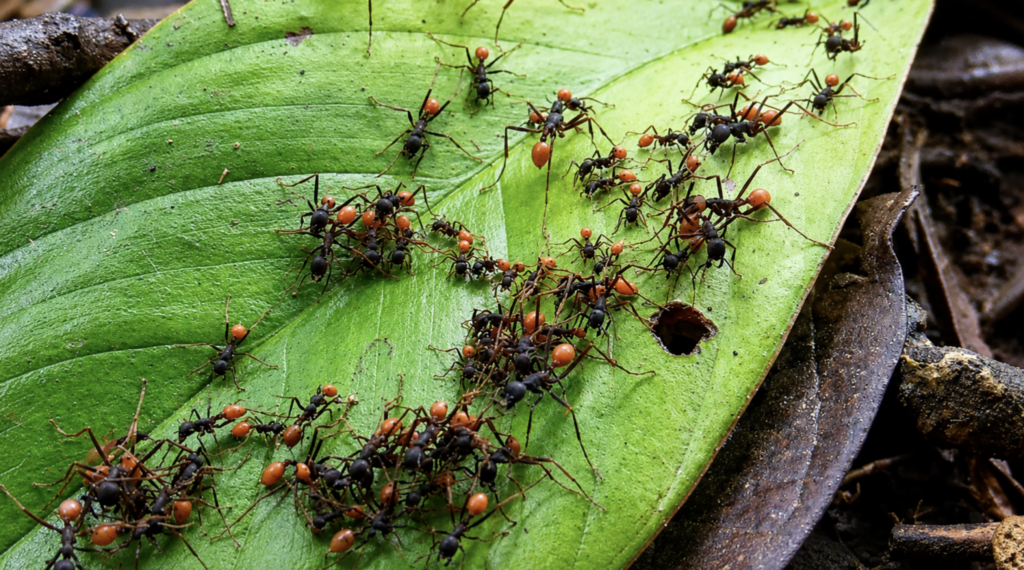
They disperse seeds, pollinate plants, and recycle nutrients through the soil. Remove them and many ecosystems would function completely differently.
The living bridge discovery is now feeding back into human technology. Studies of ant behavior have inspired new approaches to robotics and collective problem solving, as engineers try to build machines that adapt and cooperate the way a colony does.
What started as a group of insects crossing a gap became a lesson about capability having nothing to do with size.
A single ant can hold 5,000 times its own weight. Thousands of them together can build a bridge out of nothing but themselves, with no leader, no plan, and no materials.
Nature keeps arriving at solutions more ingenious than anything we would have thought to design.