Imagine landing on Earth two hundred million years in the past. Rather than feeling like time travel, it would feel like touching down on a completely foreign planet. No skyscrapers, no roads, no machinery, and nothing to suggest that a species like ours would ever walk this ground.
This version of Earth is still healing from a catastrophic extinction that wiped out huge portions of existing life. That collapse cleared space for new species to test different survival strategies, turning the planet into something like a live laboratory of evolution where only the toughest organisms endured.
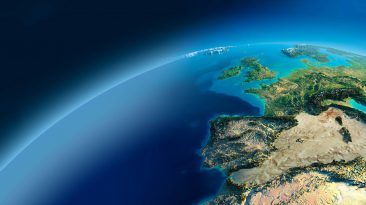
Perhaps the biggest visual shock would be the geography itself. None of the continents we recognize today have separated yet. They are locked together into one giant landmass called Pangaea, joining regions that will someday become North America, Europe, Africa, and Asia.
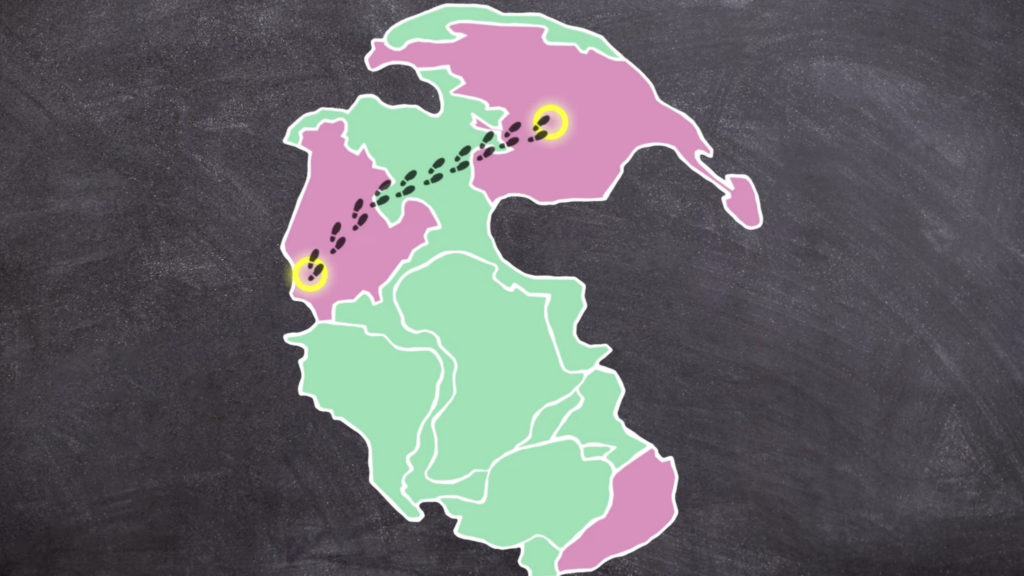
Because everything is connected, someone could theoretically walk from the region that will become California all the way to what will someday be France, never once needing to cross open water. Still, nothing along that route would look familiar.
There would be no towns, no paved paths, no trace of civilization anywhere. In their place stretch untamed forests, punishing desert basins, and sprawling wild terrain molded entirely by geological forces still shaping the young planet.
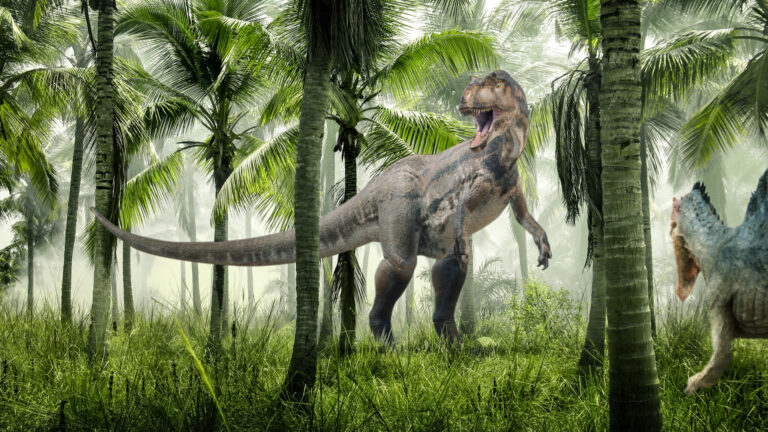
The dominant residents of this world are early dinosaurs alongside a wide range of other prehistoric animals. Many of these creatures are modest in size and would pose little danger to a visitor, but others already hint at the massive, formidable animals dinosaurs would eventually become.
A person wandering into contact with the smaller species probably would not face much risk. The bigger ones are another matter entirely. Several early herbivores and hunters reach sizes large enough that staying alert would be essential just to survive an encounter.
Dinosaurs share their world with a strange assortment of reptiles, many representing evolutionary trial runs that never quite fit into today’s tidy classifications. Some blend traits of reptiles and birds, hinting at the long transformation that will eventually produce the winged animals we know now.
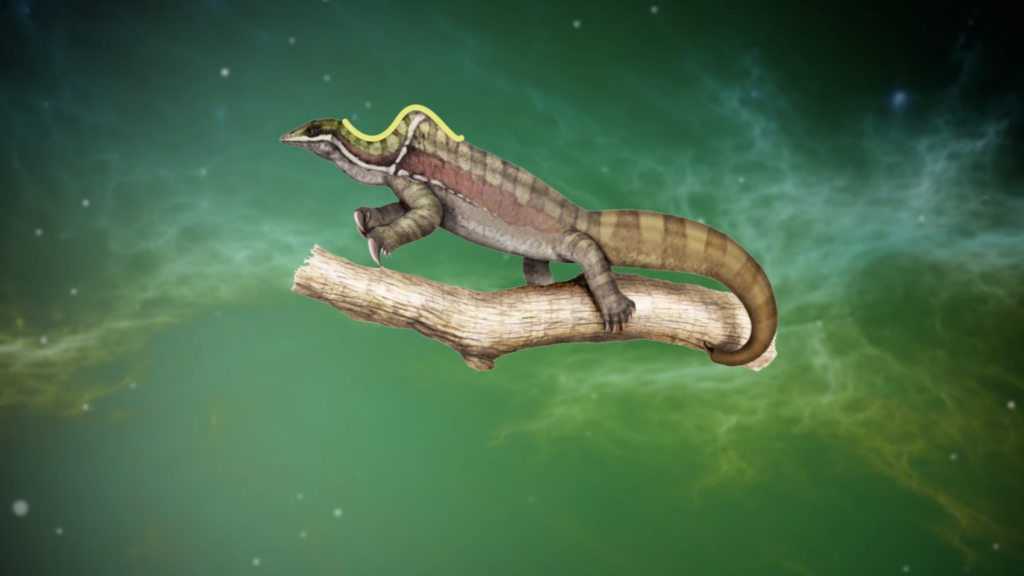
Drepanosaurus stands out as one of the odder examples, a creature built with unusual limb structures and a body plan that resists easy categorization even by modern standards. Animals like this reveal just how experimental evolution was during this stretch of prehistory.
This chapter of Earth’s story, the Triassic, stretches across tens of millions of years and marks a turning point in the planet’s biological development. It begins in the aftermath of a mass extinction that had emptied out ecological niches once filled by other dominant creatures.
With fewer established predators competing for territory, surviving species had room to spread into new environments quickly. That opening allowed early dinosaurs to multiply, grow larger, and gradually rise toward becoming the most powerful land animals anywhere on the planet.
Traveling across Pangaea would mean passing through wildly different environments depending on location. Regions near the coast tend to support dense forests and abundant plant growth, while the deep interior of the supercontinent grows progressively harsher and drier.
That interior struggles to receive moisture carried in from the surrounding seas simply because of how far it sits from any coastline. The result is a series of enormous desert zones, places where rain rarely falls and temperatures swing wildly between blistering days and freezing nights.
Wrapping around this single landmass is an equally massive body of water called Panthalassa, a global ocean that dominates most of the planet’s surface and heavily influences weather patterns across every region.
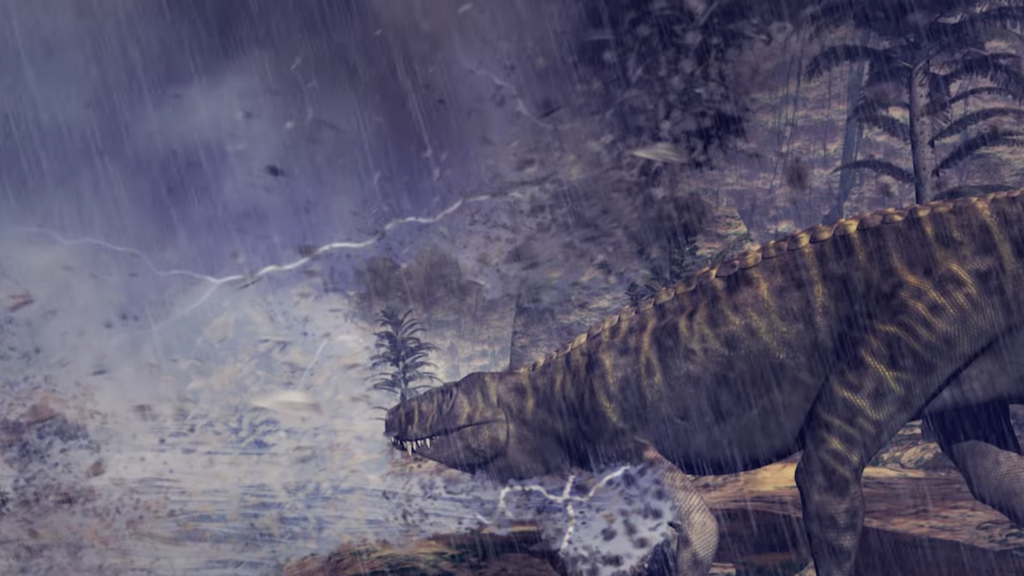
Without any continents to break their path, storms brewing over Panthalassa can grow into monstrous systems, gathering strength as they travel enormous distances before slamming into the coastlines of Pangaea with tremendous force.
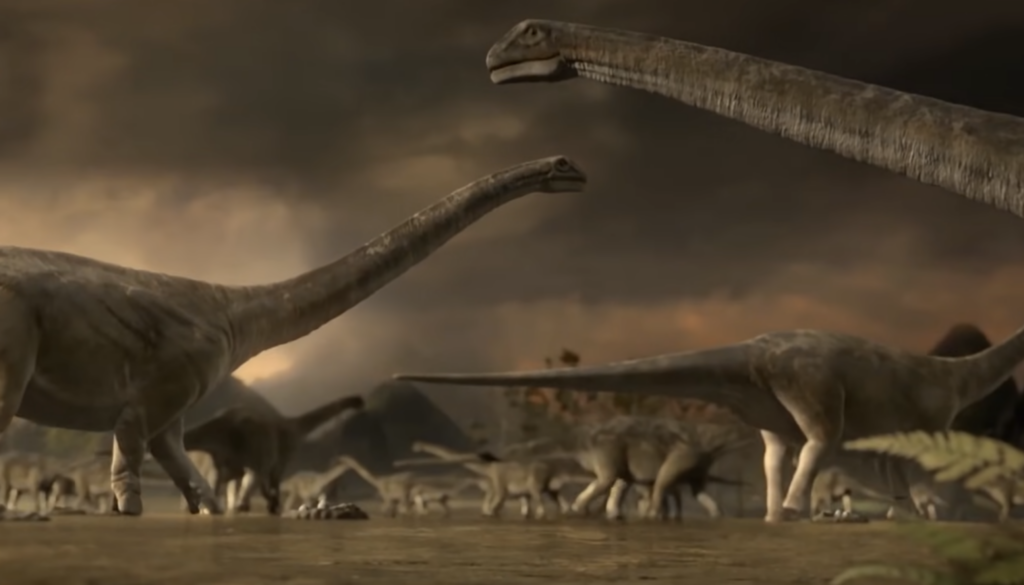
As millions of years pass, the planet gradually transforms into something closer to the Earth we recognize. Later chapters like the Jurassic period introduce far more familiar dinosaurs, including colossal plant eaters and the fearsome hunters that dominate popular imagination today.
This is when giants like the long necked sauropods and formidable large predators finally appear, illustrating how dramatically evolution has advanced since the early days of the Triassic. Surviving in that later world would be no easier for an outside visitor.
Even the fantasy of casually observing these animals up close falls apart once their sheer scale, unpredictable behavior, and hostile surroundings are taken into account. What sounds thrilling from a safe distance would almost certainly become dangerous in person.
Looking back across this vanished version of Earth makes one thing obvious, it was an entirely different planet, forged through disorder, relentless change, and evolution running countless experiments at once. Walking among dinosaurs might sound appealing in theory, but the lived reality would have been far harsher and more unpredictable than anything we experience now, a world built purely for survival long before it ever became a home for humans.