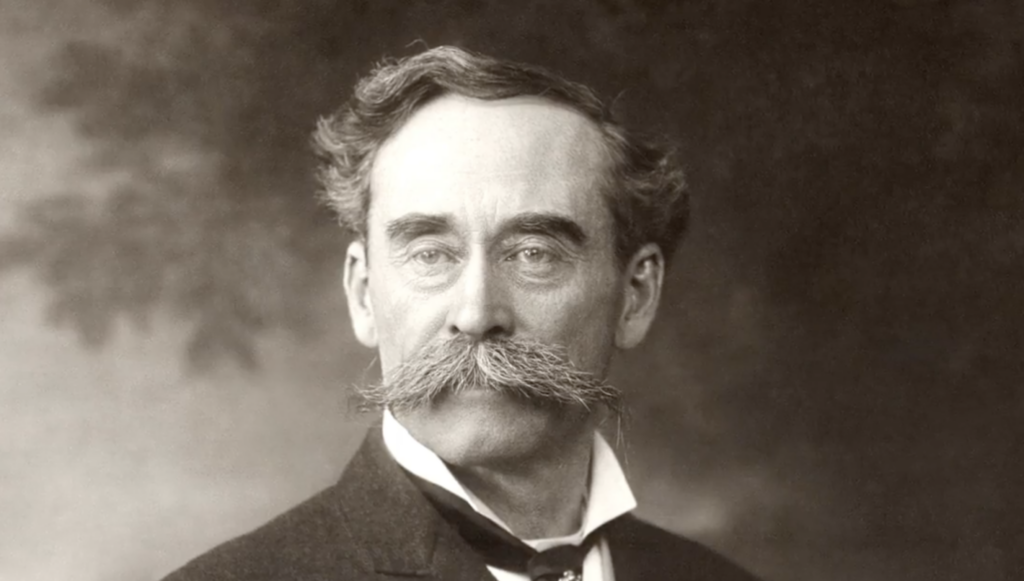
In 1894, American polar explorer Robert Peary was on the hunt for fame. His ultimate goal was the North Pole, but along the way, his expeditions would involve grave robbing, the removal of valuable meteorites, and the taking of Inuit people from Greenland.
During his early efforts to reach the Pole, Peary journeyed to Cape York, Greenland, where he interacted with local Inuit. He traded tools and other goods for assistance and local knowledge, but Peary wanted more than information about the Arctic.
His Inuit hosts were astonished when they discovered him digging up the graves of their ancestors. Peary claimed he wished to rebury the remains in the warm and pleasant land far to the south, but bones were not all he wanted to take with him.
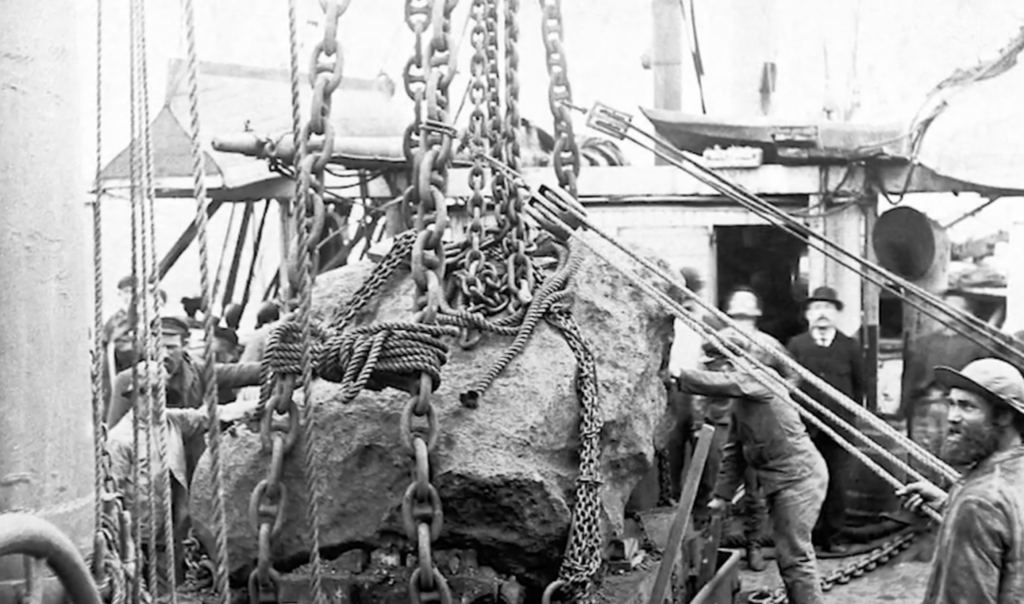
Peary was led on an expedition to a series of enormous meteorites, massive rocks from space that had provided the Inuit with a valuable source of iron for generations. They hammered the metal into tools such as knives and spear points, giving the meteorites immense importance to the local community.
A local hunter led Peary on an 11 day trek to the meteorites. The Inuit had special names for the three massive rocks: the Woman, the Dog, and the Tent. The Tent was the largest, measuring more than three meters across and weighing more than 30 tons.
Once Peary learned the secret of their location, he decided to take the meteorites home. His crew eventually had to build a railway to move the enormous rocks toward his ship, and after three years and several voyages, Peary finally brought them to New York, where they caused a sensation.
But Peary arrived in New York with more than meteorites. He also brought six Inuit from Greenland for scientific research, convincing them to make the difficult journey from Cape York to New York with promises of supplies, tools, and a return home within a year.
None of this turned out to be true.
The Inuit were brought to the American Museum of Natural History, where they were forced to live in a damp cellar while anthropologists studied them. Four of the six died within months. One survivor eventually returned to Greenland, while a young boy named Minik was left orphaned and became one of the only Inuit remaining in New York.
Abandoned by Peary, Minik was adopted by museum supervisor William Wallace and his wife, Retta. His father had been among those who died, but Minik was later horrified to discover that the museum had staged his father’s burial while secretly keeping his remains for study.
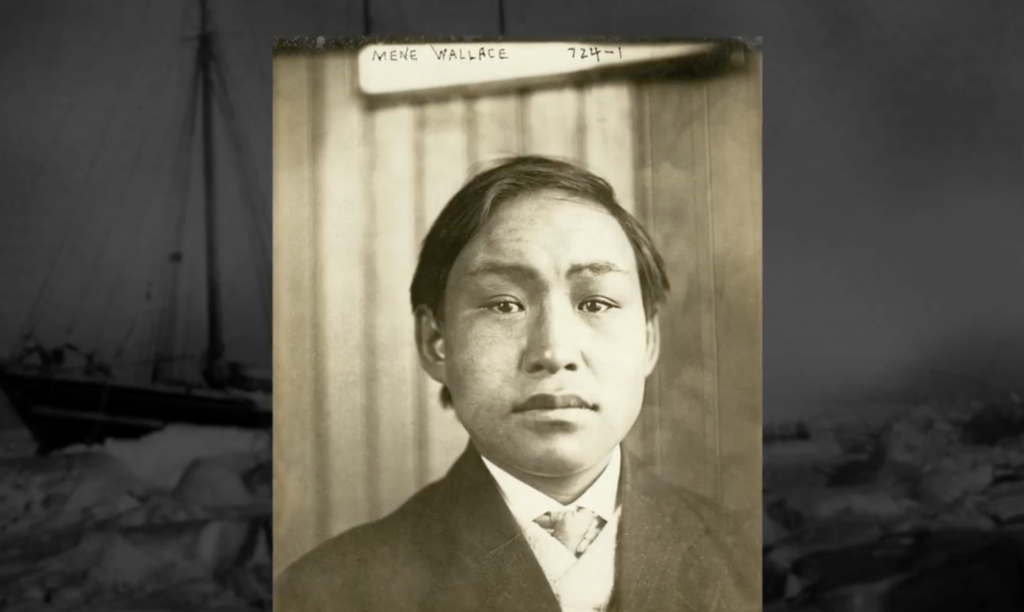
Minik tried to get his father’s remains back, but his request was refused. Eventually, he demanded to be sent home, and in 1909, the Peary Arctic Club paid for his passage back to Cape York.
After years in New York, however, Minik struggled to fit into life in Greenland. He eventually returned to New York in 1916, where he died of the Spanish flu two years later.
Meanwhile, Peary had achieved worldwide fame after claiming he was the first explorer to reach the North Pole in 1909. Today, his claim is widely disputed, but his name remains famous.
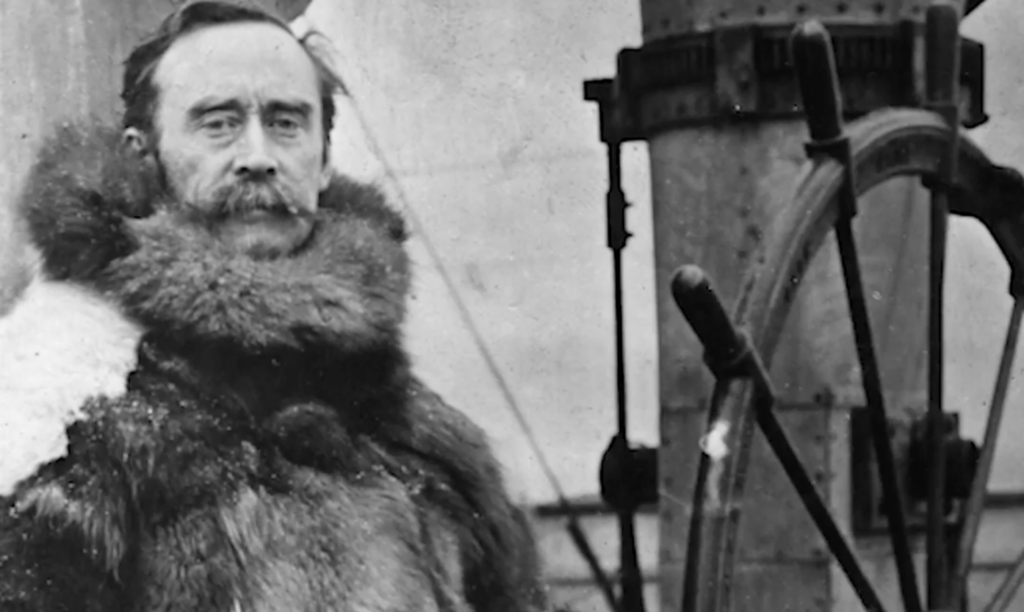
The story of Minik and the other Greenlanders reveals the human cost behind Peary’s search for glory. After Peary’s death, his wife sold the meteorites to the American Museum of Natural History for $40,000 in 1920.
The enormous rocks remain there today, silent souvenirs of an expedition remembered not only for its pursuit of the North Pole, but also for the graves, people, and treasures Peary took from Greenland.