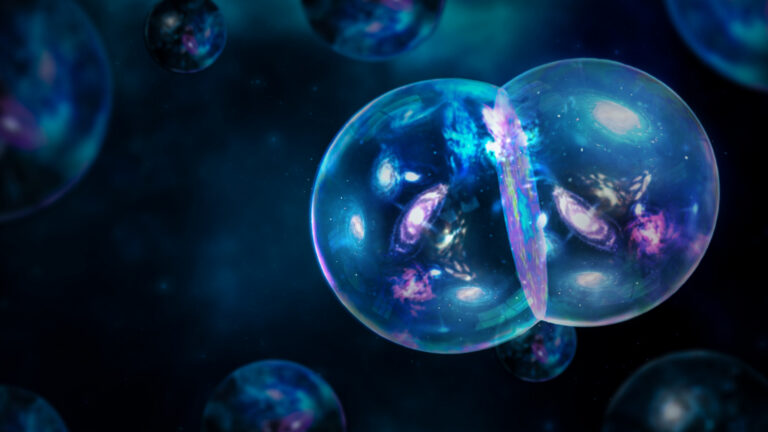
What would occur if another universe suddenly collided with ours? Though this sounds like something out of science fiction, some scientists have thought about whether signs of such an event might already be present in the cosmos.
The sole example of a universal collision that has ever been discovered is a peculiar area called the cosmic cold spot. This is a very large region of space which is considerably colder than its neighbours and seems to contain fewer galaxies than can be expected.
The Planck satellite of the European Space Agency in 2013 established that the area in question is about 1.8 billion light years in extent. It is approximately 0.00015 degrees colder than the rest of the universe and seems to be lacking about 10,000 galaxies.
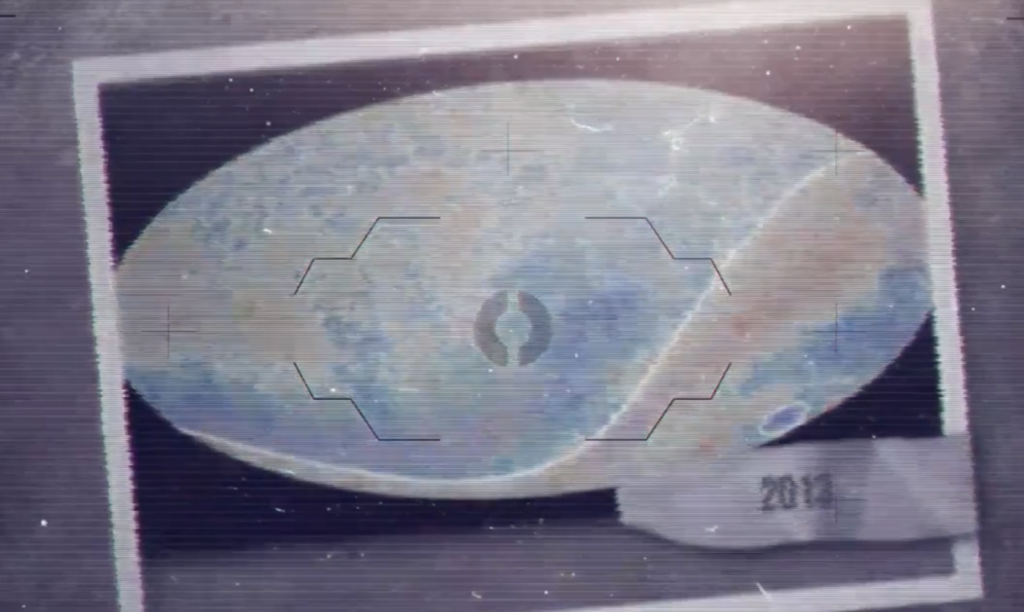
Initially, scientists could not understand its existence. Nowadays, some people have suggested that the cold spot might be a sort of scar or bruise caused by a collision with another universe.
Yet how could there be another universe if the universe includes everything?
There is a belief among some scientists in the idea of the multiverse. According to this theory, our universe might not have been the only one produced during the Big Bang, there possibly being a number of other universes which lie beyond what we are now able to observe or measure.
Should other universes exist, it is possible that they too would have expanded at comparable rates and from much the same origins. There is a possibility that collisions between them could have taken place in the distant past if their expansions caused them to come into contact.
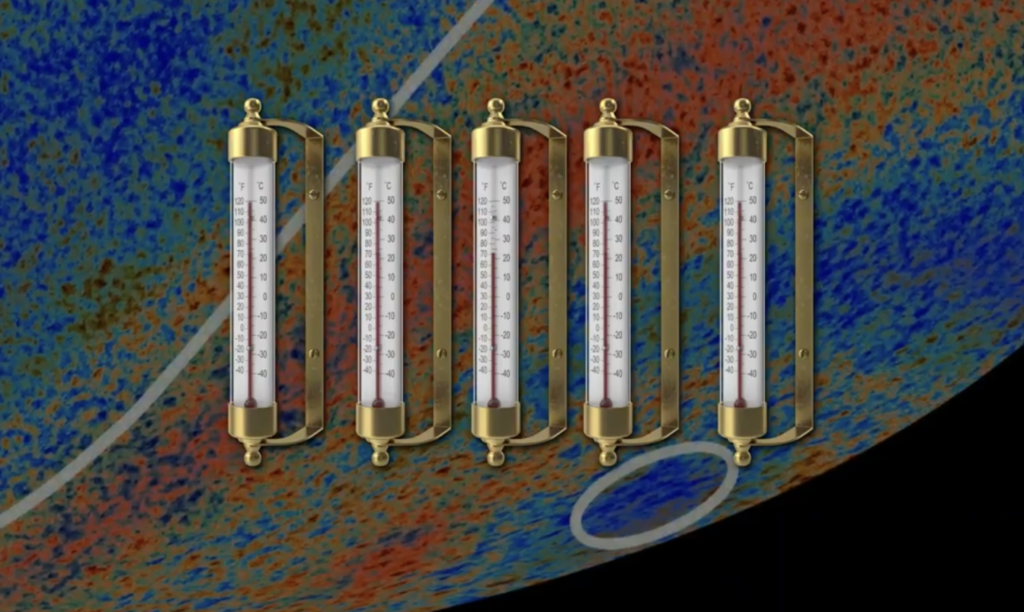
That brings us back to the cold spot; even though the unusual temperature of this spot might appear to be unimportant, the remainder of the universe has a highly uniform background temperature, which makes this kind of large anomaly especially interesting to researchers.
It has been suggested that a collision might have caused some energy to be removed from that area, which is why we now have the cold region; yet there is no conclusive evidence that the cold spot was in fact caused by another universe.
What would it look like if two universes crashed into each other?
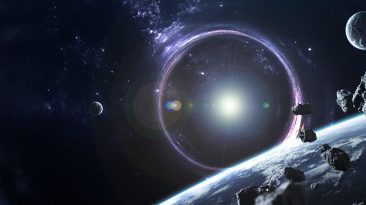
We can’t be certain about it, but some fascinating possibilities have been put forward by physicists. One of these proposes that another universe moving towards ours might look like a huge mirror in the sky, rushing towards us as its boundary reflects light.
The effects could be just as severe; in the event that another universe collided with ours we might in principle end up with a completely new set of physical laws.
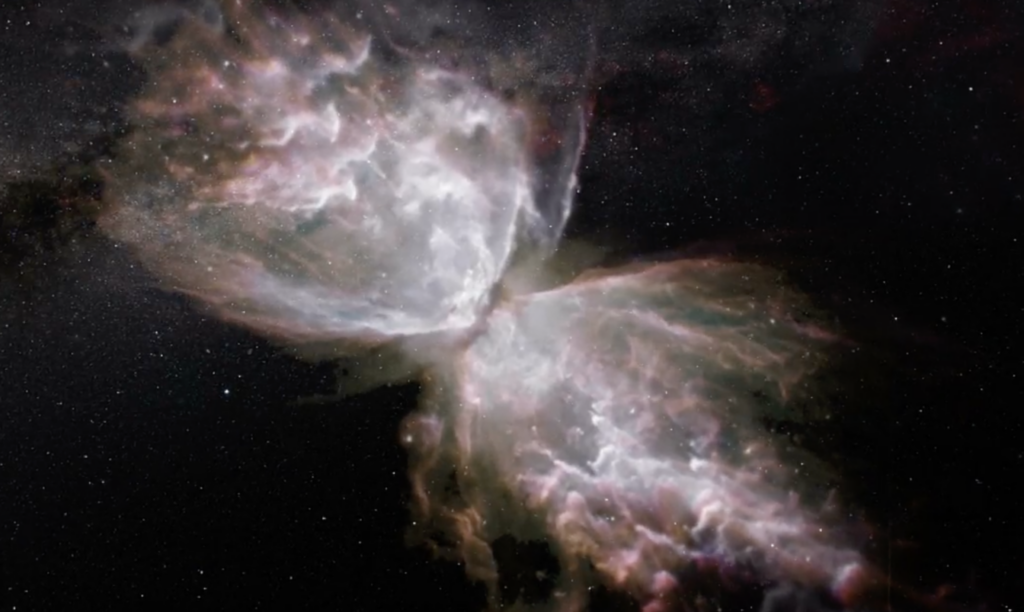
It is possible for gravity to diminish or even vanish, which would cause planets to escape the gravitational
influence of their stars and move through space. If gravity disappeared, stars would stop existing and the universe would then remain in permanent darkness.
Life on Earth would also be in serious difficulty since, without stars to supply energy, plants would cease to be able to carry out photosynthesis and thus produce the oxygen and nutrients necessary for life.
We have no need to worry about this. In fact, we don’t even know if other universes exist, and even if they do, the probability of a collision with ours seems to be very low.
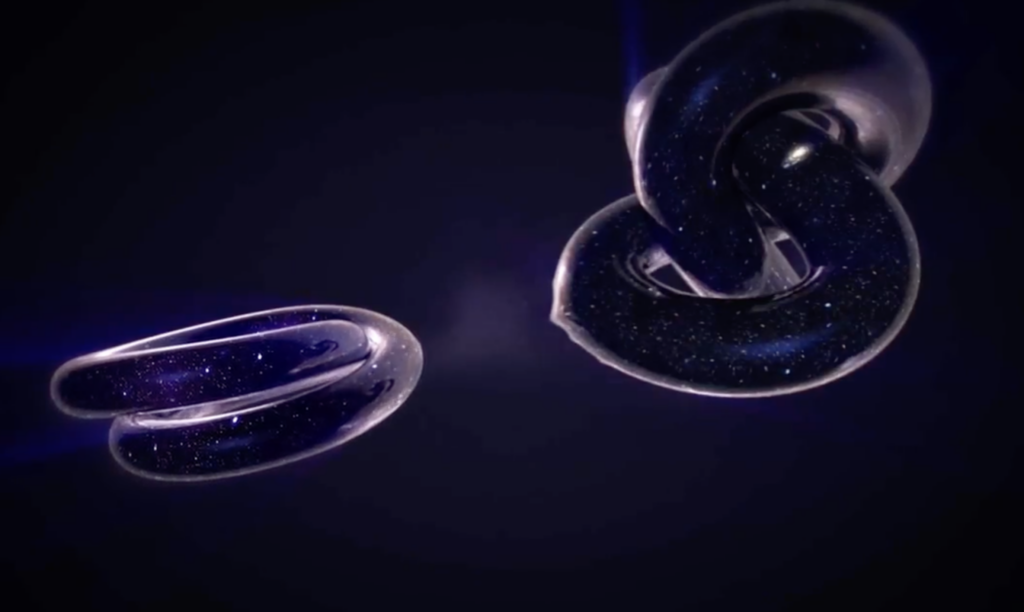
Collisions between expanding universes might have taken place billions of years ago, when the cosmos was still in its infancy. In that case, there would be no good reason to expect another collision to occur.
At the moment, the cold spot is still an intriguing cosmic mystery and not evidence that another universe had once collided with ours.