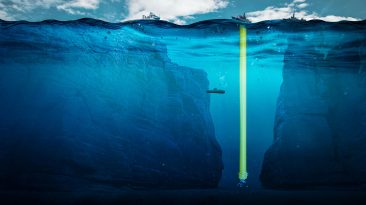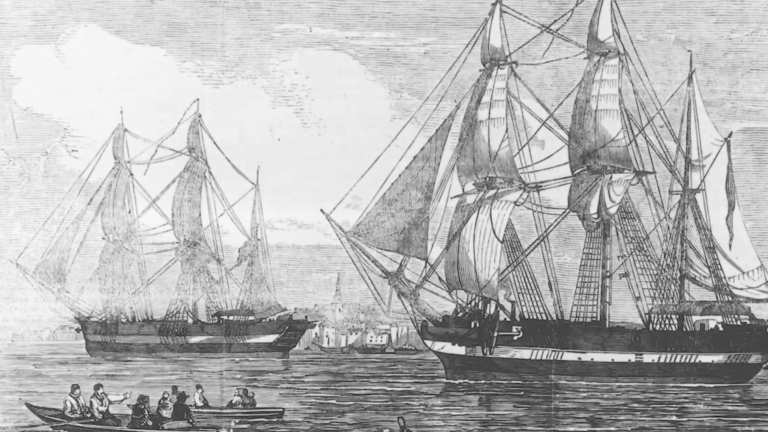
In May 1845, Sir John Franklin and 134 men left England on one of the most ambitious Arctic expeditions of the 19th century. Their goal was to navigate the Northwest Passage through the frozen waterways of what is now the Canadian Arctic Archipelago and reach the Pacific Ocean.
Everything seemed to be in their favor. The expedition carried three years of food, advanced technology, two powerful ships, and an experienced commander and crew. Aboard HMS *Erebus* and HMS *Terror*, there was little reason to believe the journey would become one of the greatest mysteries in exploration history.
The voyage initially went according to plan. After reaching Greenland, five men were sent home aboard a supply ship in July 1845. Franklin then continued west with 129 men, attempting the difficult crossing of Baffin Bay.
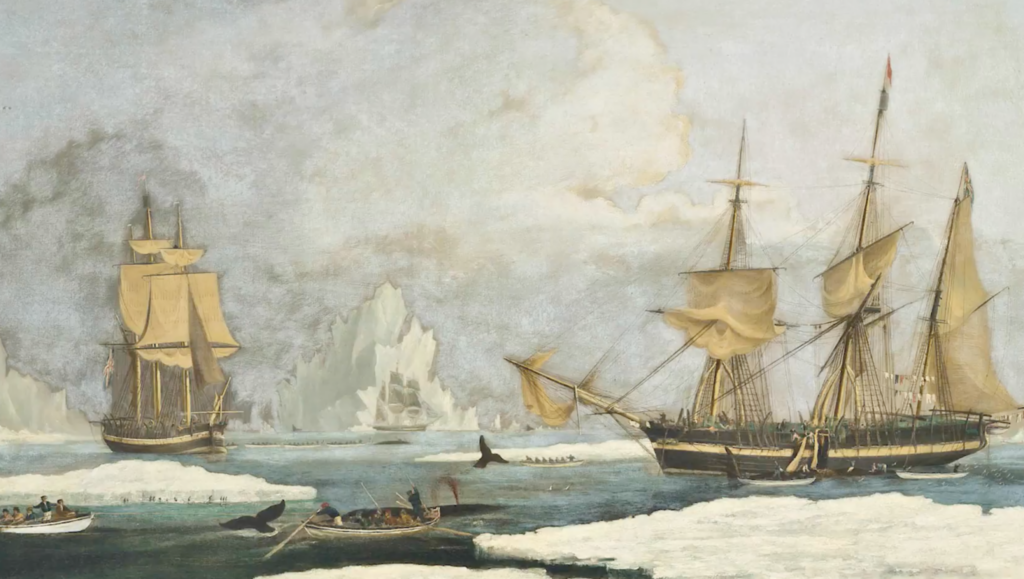
On July 26, 1845, a whaling ship spotted *Erebus* and *Terror*. It was the last confirmed sighting of the Franklin Expedition.
After that, the men disappeared.
When the expedition failed to return, search parties were eventually sent into the Arctic. One of the first major discoveries came at Beachy Island, a remote stretch of rock and gravel near the entrance to the Northwest Passage.
Explorers found hundreds of discarded food tins, evidence of an attempted garden, and three graves belonging to John Hartnell, William Brayne, and John Torrington.
The frozen Arctic ground had preserved the bodies remarkably well. More than a century later, in 1984, physical anthropologist Owen Beattie and his team examined the remains using modern forensic techniques.
The men appeared to have suffered from diseases including pneumonia and tuberculosis. However, researchers also discovered unusually high levels of lead in all three bodies.
This finding led to the theory that lead poisoning may have contributed to the deaths. One suspected source was the canned food carried by the expedition, as lead solder used in some cans could potentially contaminate food.
The theory remains uncertain, but it offered one possible explanation for the declining health of the crew and some of the strange decisions made later in the expedition.
Whatever killed the three men at Beachy Island, they were at least given proper burials. Their fellow crewmen would not receive the same treatment.
Evidence discovered on King William Island revealed that Franklin had died, although the exact cause and location of his burial remain unknown. The surviving crew members eventually abandoned their ships and attempted to escape across the frozen landscape.
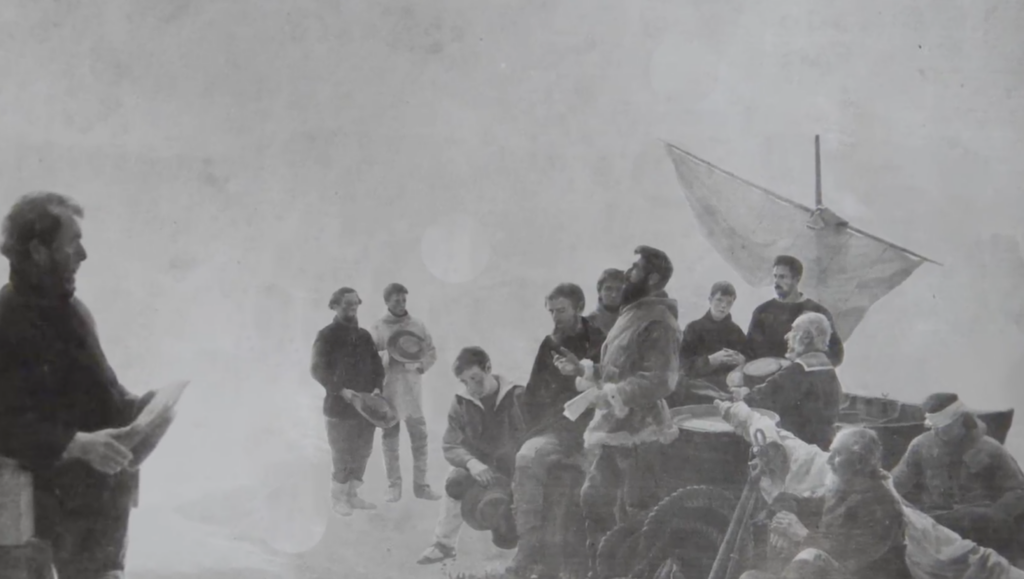
None made it out alive.
Some bodies were found frozen while hauling boats across the land, while the scattered bones of others were discovered across the tundra. The evidence suggested that the men had endured a desperate struggle against starvation, disease, exhaustion, and the brutal Arctic environment.
The wrecks of *Erebus* and *Terror* were eventually discovered more than a century later, providing further clues about the expedition. Yet many details surrounding the final days of Franklin and his crew remain uncertain.
The men had entered the Arctic expecting an extraordinary achievement. Instead, their expedition became a haunting mystery that fascinated explorers and historians for generations.
Of the 134 men who sailed toward the Northwest Passage, the three buried at Beachy Island may have been the lucky ones.