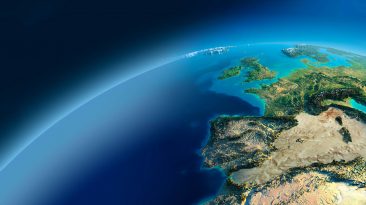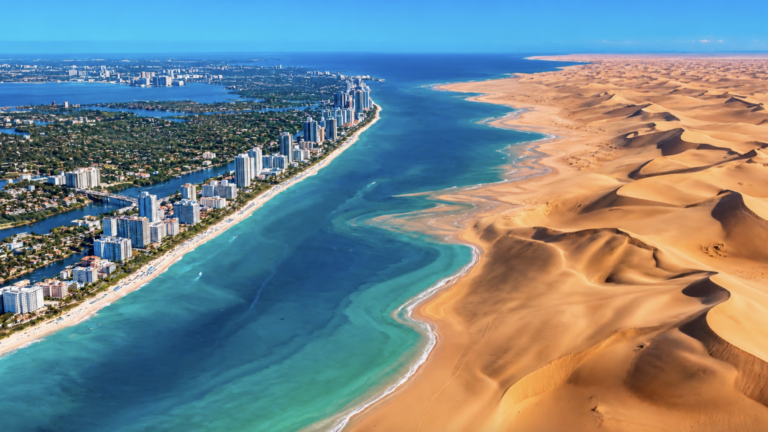
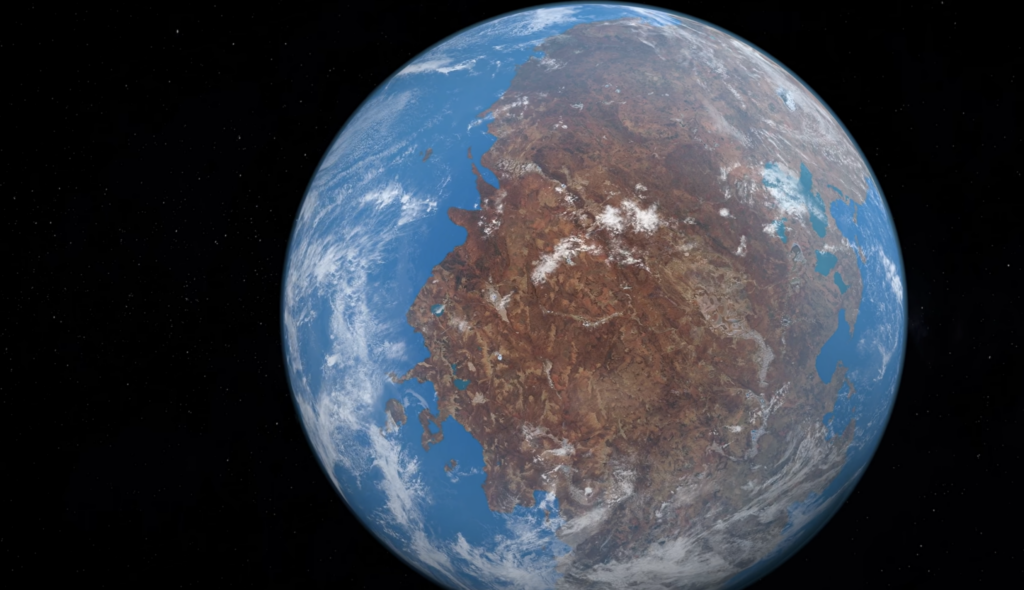
History has been rewritten. And before you stands modern day Pangea, one massive supercontinent. Our modern continents never separated.
The air hits you first. It’s heavy, thick and hot, and smells of wet mud and pine. Your lawn is a dense fern jungle.
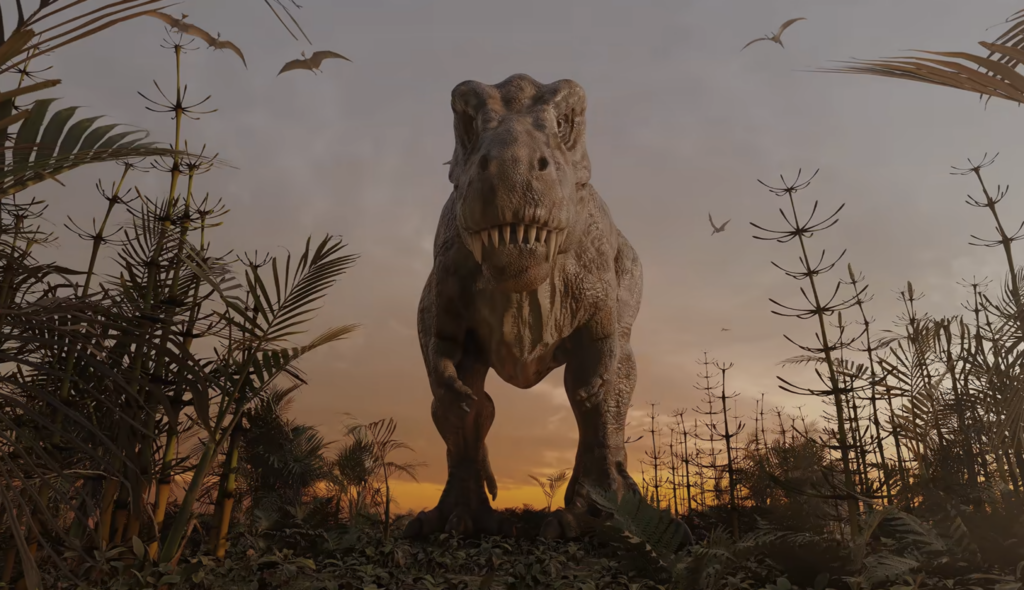
Instead of your car in the driveway, you’re confronted by a massive, toothy beast, staring at you like you’re dinner. You turn to go back inside, hoping to wake up from this nightmare. But there’s no house to go back into. This is happening, and it’s not a dream.
Suddenly, you’d be in competition for apex predator status with this ancient cousin of the crocodile. If the continents had never split apart, this is who your neighbour would be.
So, what would that world actually look like, what would rule it, and would humans have ever even evolved?
This is Pangea. And you’re living on it. Because the continents you know today never broke apart from it, and the environment never evolved past this stage.
That beast standing in what used to be your driveway is a carnivorous reptile. Postosuchus, a distant relative of the modern day crocodile. It had teeth 7.2 cm (2.8 inches) long and weighed up to 700 kg (1,500 lbs). It’s a mega killer, and this world you just stepped into is full of creatures like that.
Dragonflies the size of birds buzz through the air.
This is a hot, extremely humid environment. Breathing this air would almost be impossible for you. The carbon dioxide content in the atmosphere is almost 5 times higher than you’re used to, and the amount of oxygen in the air is as low as 15%, compared to 21% today. Your lungs just weren’t built for this.
Living here is more than just crocs and bugs, though. Herbivores roam the landscape, too. Big, slow creatures who have no choice but to grow armour and defensive spikes or tusks. Sometimes, the best defence is just being huge.
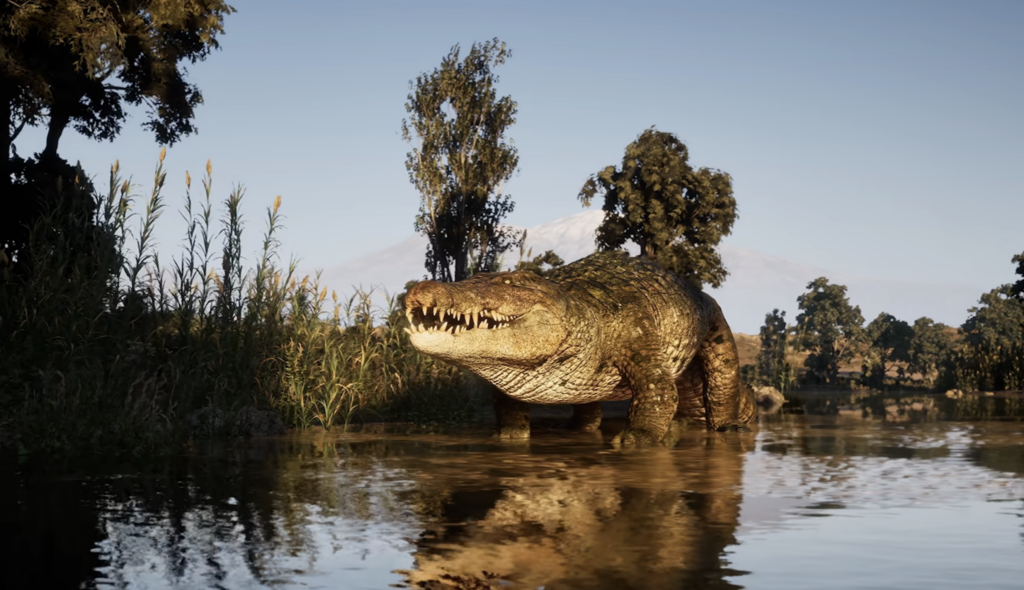
It was in these swampy regions that crocodile like reptiles ruled the food chain. They were 6 m long (20 ft) and walked on their hind legs, constantly looking for lunch.
Just about now, the sky turns dark, and the rain starts. The air turns to water and falls like a solid sheet. You’re drenched by a super monsoon. It goes on for hours, and there’s no shelter.
You’d better get used to it.
A mega monsoon climate defines this place. A mega monsoon is a planetary scale event. It’s hit by frequent tropical downpours and radical swings between wet and dry weather. This place is a nightmare.
Now, hot coastal swamps are just one part of this place. This continent has mega deserts in the interior, where the moisture evaporated from the oceans doesn’t even begin to reach.
So this interior desert is exceptionally dry. Blindingly hot in the day and freezing cold at night, it’s almost uninhabitable. You may be able to survive here. But could you have evolved here?
Because if this singular continent had remained the way it was, if it hadn’t changed radically, you or I might never have come into existence. Pangea existed in the late Triassic, about 220 million years ago. Millions of years before any of the familiar dinosaurs of pop culture appeared.
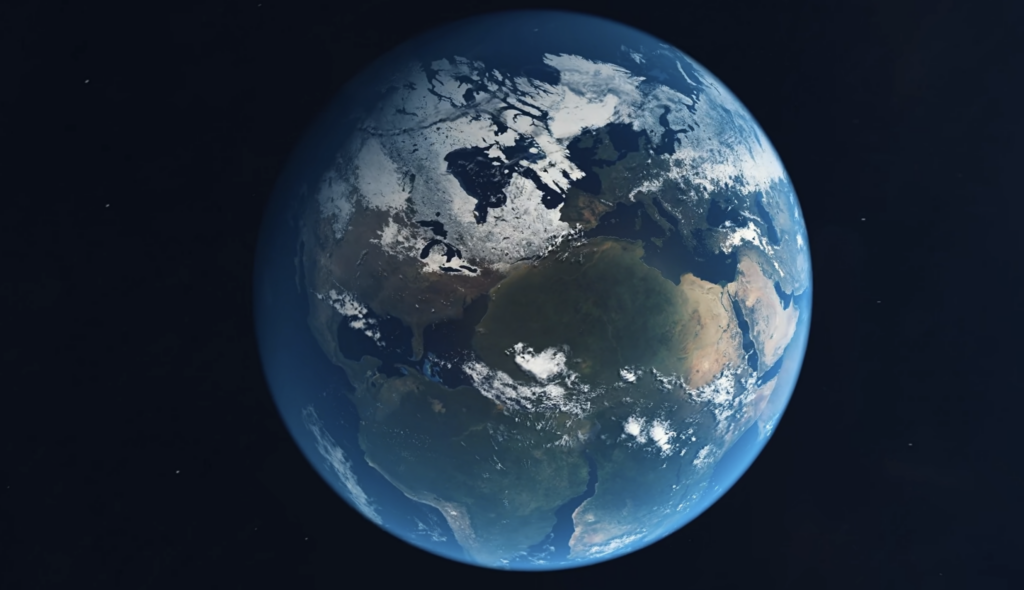
This is Pangea. A single supercontinent existed between 300 and 180 million years ago. And Pangea is big. As big as if you smashed all the continents on Earth together. All the continents on Earth assembled in one giant landmass. It stretched from pole to pole in roughly a C shape.
But it’s entirely conceivable that if Pangea stayed as it was, if it had never broken up, then what came after would be radically different. Because at the end of the day, geology decides what gets to exist and what doesn’t.
If Pangea had stayed put and continued to exist as a single landmass, the landscapes created by continental drift would’ve never appeared. Variations in climate would never have occurred. Instead of one connected super experiment, the world broke into many. And each of those evolutionary experiments yielded wildly separate results.
One of those evolutionary paths was our own. In other words, the geography created by the breakup of Pangea moulded our ancestors.
The way we understand it, evolution would have branched out in vastly different directions. As far as we can tell, preventing the breakup of Pangea would literally wipe us out.
200 million years in a parallel evolutionary universe would give us a human being who wouldn’t be running for its life, but a human apex predator equal to any car sized crocodile. So maybe waking up to this guy as your neighbour isn’t such a surprise now that you look like THIS!
This is you, after 200 million years of parallel evolution, wrestling massive crocodiles for survival. Or at least, one possible version.
Now who’s running for their life?