Every empire has a humble beginning, and none more humble than this one.
Long before Tyrannosaurus rex crushed bones between its jaws, long before giants shook the ground with every step, the ancestors of the dinosaurs were nobodies. Small, rare, and outnumbered, they scurried through a broken world about 250 million years ago, dodging bigger and meaner reptiles that actually ran the planet.
Travel back to that time and you would never place a bet on them. Earth was harsh and unstable, its ecosystems still crawling out of the wreckage of devastating extinction events. And in the middle of that chaos, an unremarkable group of survivors was quietly preparing the greatest comeback story in the history of life.
Their roots trace to a group of reptiles called archosaurs, which rose during the late Permian period and stood among the dominant vertebrates of their era. These animals looked nothing like the movie monsters we imagine, yet they were the evolutionary seed of both dinosaurs and modern crocodiles.
Then came the innovation that changed everything: standing up.
Many early dinosaurs shifted onto two legs, and that simple change in posture was a revolution. Suddenly their front limbs were free for grabbing, hunting, and fighting. What looks like a small adjustment became one of the defining weapons of their entire dynasty.
The rise from underdog to overlord took three geological periods and roughly 165 million years. Here is how it happened.
TRIASSIC PERIOD
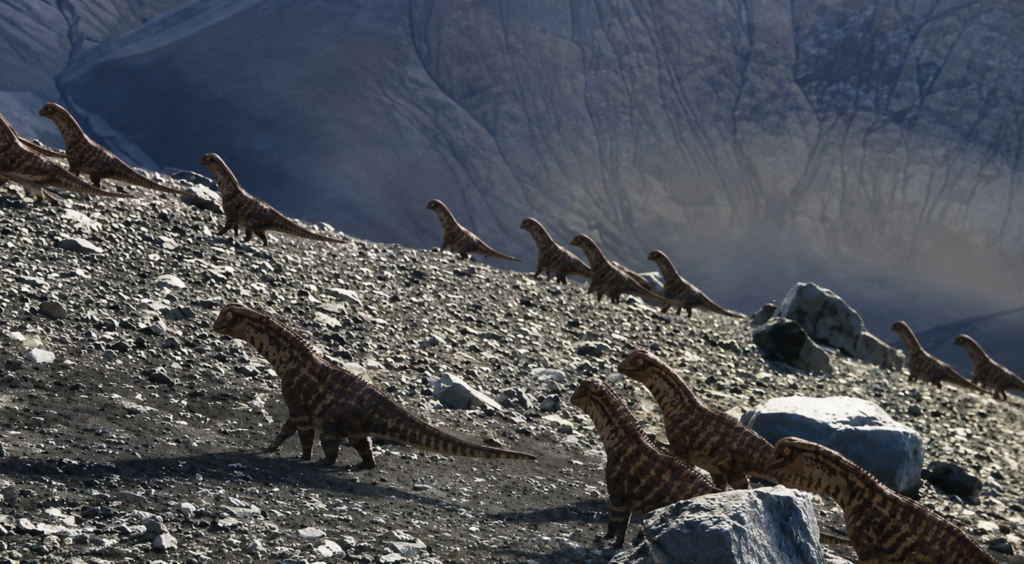
Step into the Triassic and you find the dinosaurs at their weakest. They are small, scattered, and thoroughly unimpressive next to the competition. The world around them is dominated by Pangea, a single colossal supercontinent that has not yet torn apart. The climate is brutally hot and dry, deserts sprawl across the land, and there is not a polar ice cap in sight. Vegetation is thin, though slowly growing more complex, and every creature is fighting over limited resources.
Meet the founder of the dynasty: Eoraptor. This pioneer was about the size of a modern dog, standing under a meter tall and weighing roughly 10 kilograms. Quick, light, and opportunistic, it grabbed small animals and plants alike, doing whatever it took to see another day. At this point, dinosaurs are not conquering anything. They are experimenting, testing survival strategies in a hostile world.
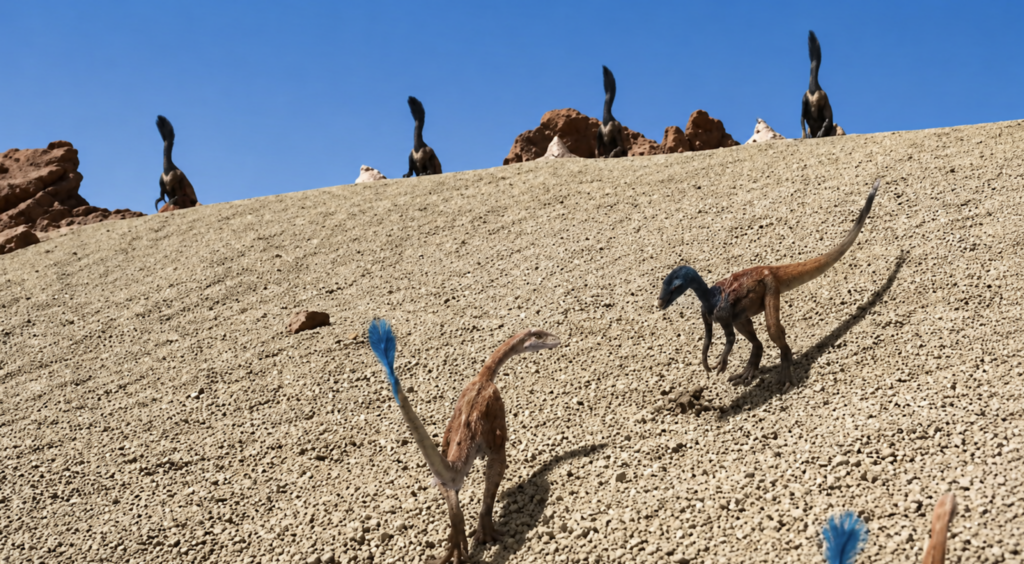
But evolution was moving fast. Coelophysis arrived slightly larger and more streamlined, a genuine pursuit hunter built for speed. Herrerasaurus pushed further still, heavier and stronger, a preview of the killing machines dinosaurs would one day produce.
And then came the first hint of what this lineage was truly capable of. Plateosaurus, one of the earliest large herbivores, stretched several meters long and weighed thousands of kilograms. The age of giants had not begun, but its blueprint was already written.
Still, none of this made dinosaurs rulers. They remained one group among many, sharing the land with countless rival reptiles in a crowded struggle for survival.
Then fate stepped in. At the close of the Triassic, catastrophe swept the planet. Colossal volcanic eruptions, violent climate shifts, and possibly asteroid strikes tore ecosystems apart, and species vanished in droves. But the underdogs endured. When the dust settled, most of their competition was gone, and the throne of the world stood empty.
JURASSIC PERIOD
The Jurassic is the moment the underdogs stopped being underdogs.
With their rivals erased, dinosaurs exploded across the planet. Forests spread, climates calmed, and the recovering world became the perfect stage for large life. The survivors diversified at astonishing speed and claimed every environment they touched.
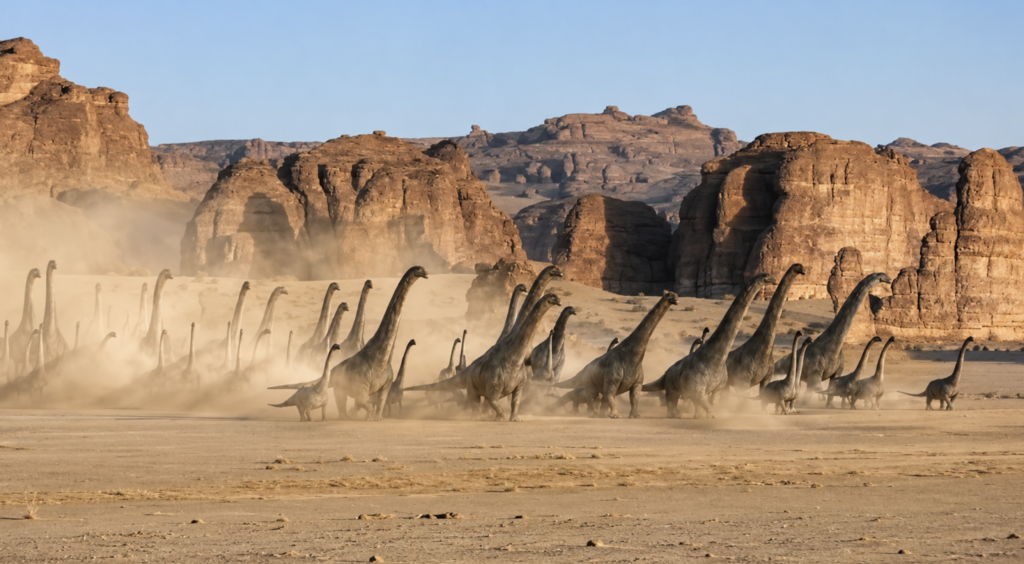
This is the era when Earth truly became their planet.
Colossal herbivores like Brachiosaurus and Stegosaurus wandered the landscapes, while predators like Allosaurus stalked them. The creatures of this age rank among the most iconic dinosaurs ever unearthed, living proof of how enormous and specialized the once tiny survivors had become.
Yet the most important Jurassic story belongs to the small ones. Among the theropods, feathers were appearing, and one animal captured this transformation perfectly: Archaeopteryx. Part reptile, part bird, it carried feathers and wings alongside teeth and a long bony tail, a living bridge between dinosaurs and the birds outside your window today.
Those feathers likely began as simple insulation or display. Evolution had other plans for them: flight.
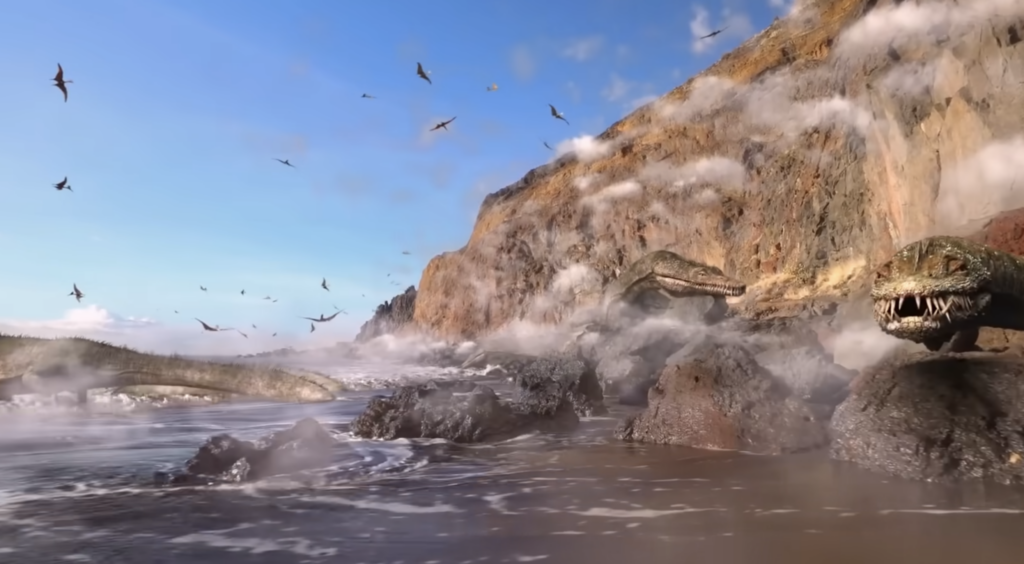
As the Jurassic closed, another extinction event rolled through, gentler than the last but still deadly. Volcanic activity, shifting seas, and changing climates removed some species from the board and cleared the stage for the final, most spectacular act.
CRETACEOUS PERIOD
The Cretaceous is the golden age, the chapter everyone knows. Pangea finished breaking apart, the continents drifted toward their modern positions, and dinosaurs adapted to nearly every environment on Earth.
The former underdogs now produced the most feared land predator that ever lived.
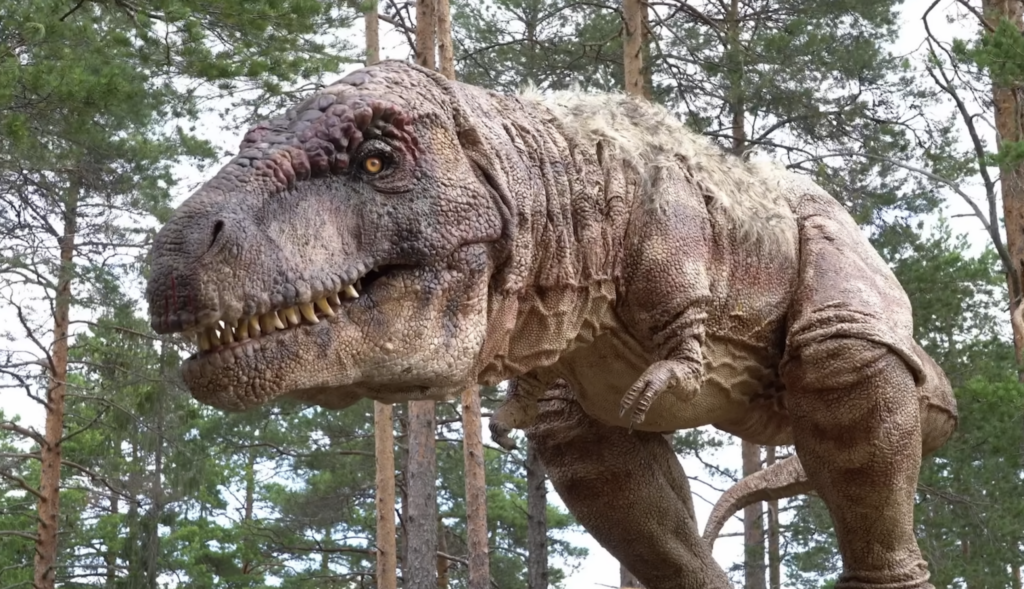
Tyrannosaurus rex stretched up to 12 meters and weighed several tons, armed with jaws that did not just bite flesh but shattered bone. It hunted massive herbivores like Edmontosaurus and Triceratops, combining raw power, surprising speed, and razor senses. The tiny scavenger of the Triassic had become an apex monster beyond anything the archosaurs could have foreshadowed.
Meanwhile, the feathered line kept advancing. Velociraptor, endlessly misrepresented on screen, was in reality wrapped in feathers, useful for warmth and display rather than flight. Tiny Microraptor went further, showing early flight adaptations that give scientists a window into exactly how birds came to be.
Across isolated continents, dinosaurs specialized into forms perfectly tuned to their environments. After 165 million years of climbing, they stood at the absolute peak of life on Earth.
Which is precisely when the universe repeated an old trick.
THE CATACLYSMIC EVENT
Around 66 million years ago, an asteroid slammed into Earth near what is now the Yucatan Peninsula, gouging out a crater more than 150 kilometers wide.
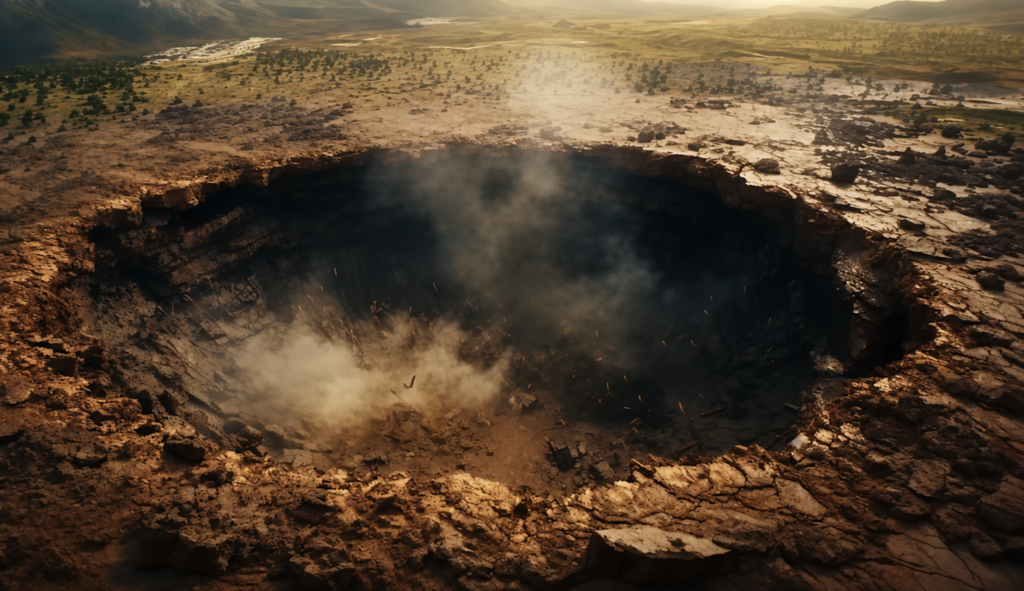
The impact hurled mountains of debris into the sky, sealing away the sunlight. Global temperatures crashed. Photosynthesis stopped, plant life withered, food chains snapped one after another, and ecosystems collapsed across the entire planet.
Roughly 75 percent of all life on Earth was wiped out, including every non avian dinosaur. The empire that rose from an extinction was ended by one.
But history was not finished with them, because the story loops back to where it began. Just as tiny Eoraptor once survived a dying world, one small group of feathered theropods slipped through this apocalypse too. Their descendants are singing outside right now.
We call them birds. The underdogs, it turns out, never actually lost.