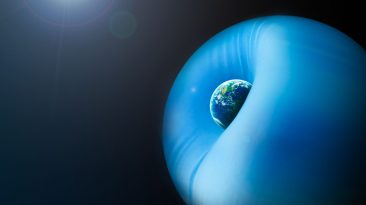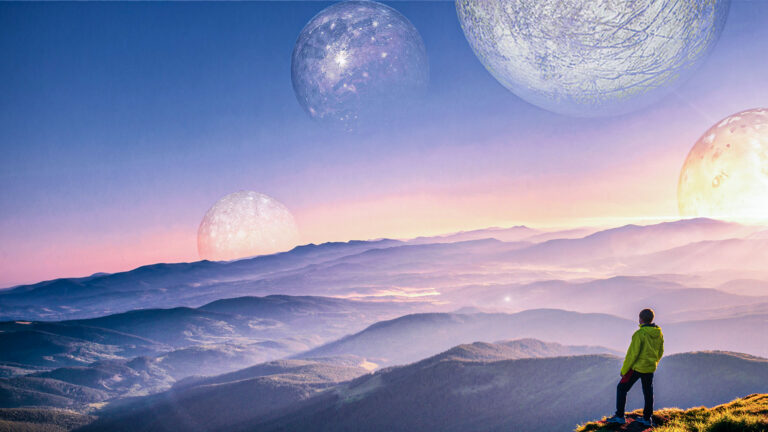
Look up tonight and you would see 79 moons instead of one. Most would look like unusually bright stars, but four of them would hang there as full glowing disks.
It would be the most spectacular night sky in human history. It would also be the beginning of the end.
Because once you add that much mass into orbit around Earth, the tides, the seasons, the length of a day, and eventually the survival of coastal civilization all start coming apart.
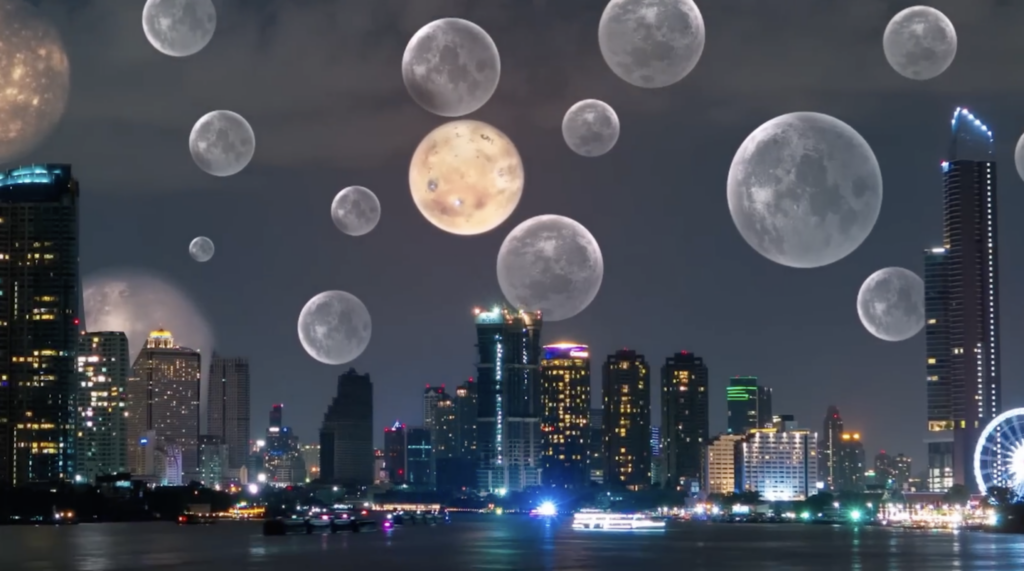
Jupiter is the biggest planet in the Solar System, and its 79 moons put it just behind Saturn with 82. They vary enormously in size, from the tiny S/2010 J2 at only 2 kilometers wide up to Ganymede, which is one and a half times the size of our Moon.
That collection exists because of Jupiter’s enormous gravitational pull. Sitting 778 million kilometers from the Sun, it is not losing any of them in a gravitational tug of war.
Now move the whole set to Earth.
Most of the new arrivals would be less than 10 kilometers wide, so they would register as bright points of light rather than proper moons. The four giants are what would change everything visually: Io, Europa, Ganymede, and Callisto.
Europa would look the most familiar, at roughly 90 percent the size of our Moon. There is one dramatic difference though, because Europa is covered in ice, which means it would reflect about five and a half times more sunlight than our Moon does. You would genuinely want sunglasses to look at it, at night.

Ganymede is where the trouble starts.
It is only one and a half times the size of our Moon, but it carries double the mass. More gravitational pull means more influence on our tides, which translates into massive tsunamis, extreme earthquakes, and increased volcanic activity.
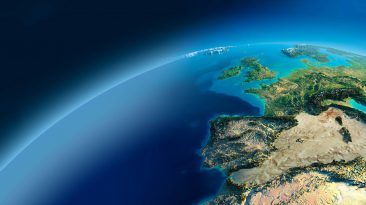
Tides everywhere would rise permanently. Coastal cities would flood and be abandoned, and in the United States alone, where 40 percent of the population lives near the coast, 127 million people would be displaced. Billions more would follow worldwide.
Ganymede might pull hard enough to tidally lock our planet to it, meaning one side of Earth would permanently face that moon. Good news if you happen to live on that side, and better news if you invested early in hotel property with a view. Moon tourism would be about to explode.
Strangely, some of the changes would be improvements.
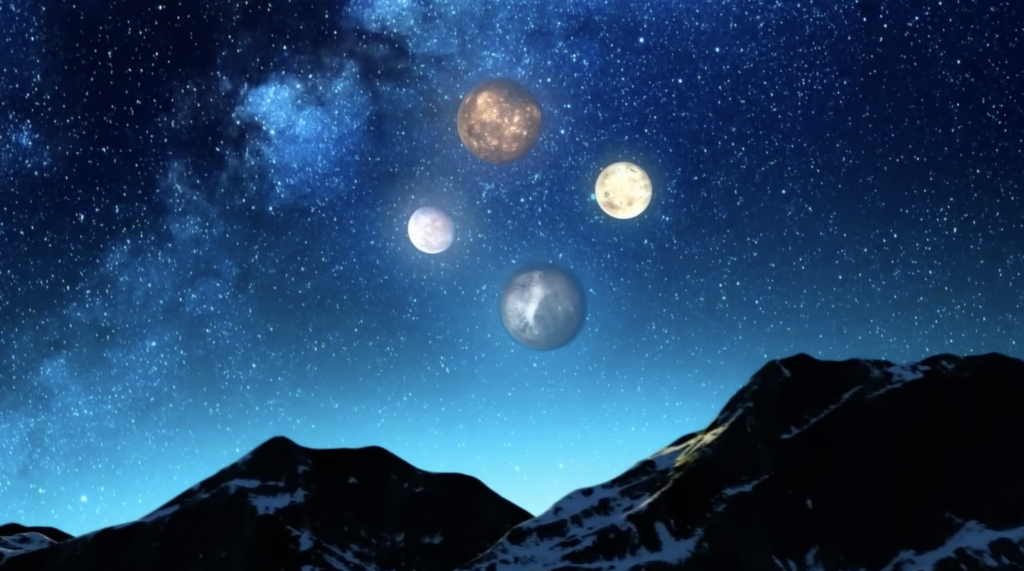
A larger moon stabilizes the tilt of Earth’s rotational axis. Ours currently swings between 22.1 and 24.5 degrees every 41,000 years, and Ganymede would hold it steadier, producing fewer seasonal extremes and no more ice ages in our future.
Enjoy that while it lasts, because the rest of the arrangement is chaos.
The concept of a month stops working immediately, since months are built around the orbital period of our single Moon. Perhaps you end up with 80 months in a year, one for each moon overhead.
Days would change too. All that additional gravitational pull would alter Earth’s rotation, and our current Moon is already slowing us toward a 30 hour day billions of years from now. Add sunlight reflecting off 79 more surfaces and the night sky becomes permanently bright, which is bad news for anyone who sleeps lightly.
The real danger is traffic.
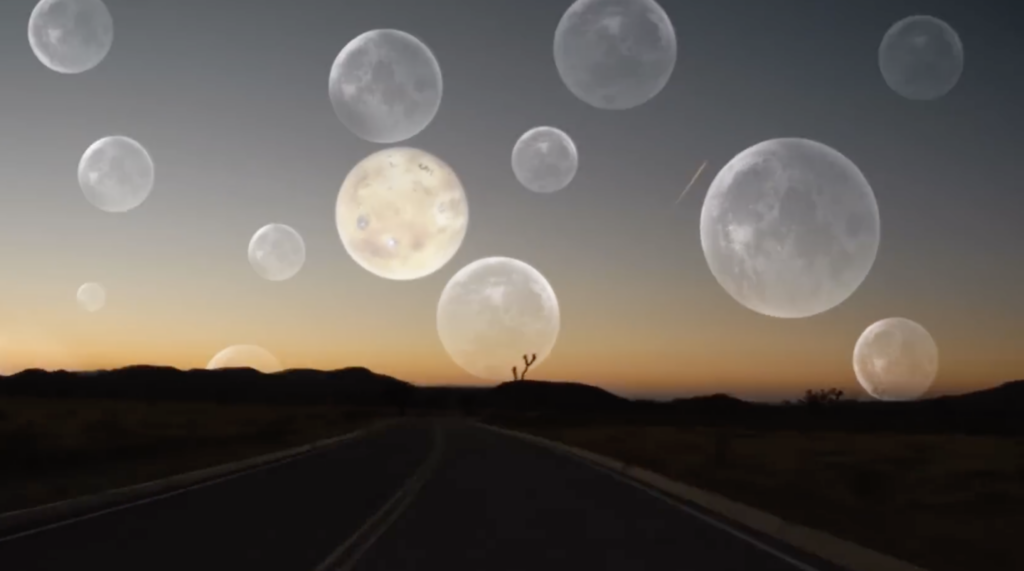
Eighty moons means overlapping orbital paths, and many of the satellites currently circling Earth would risk destruction in a collision. Future space missions would face an orbital environment so cluttered that launching anything becomes a serious problem.
Earth might even end up with rings, the way Saturn has.
Or it might not hold them at all. Our gravitational pull may simply be too weak to keep 80 moons in place this close to the Sun, and if solar gravity wins the contest, some of those moons stop orbiting us and start falling toward us instead.
At which point the most beautiful night sky ever seen becomes the reason nobody is left to look at it.