Earth depends on countless natural systems working together. The atmosphere, oceans, land, and living organisms constantly influence each other, creating the conditions necessary for life. Even the salt dissolved in seawater serves an important purpose. But what would happen if every ocean suddenly became freshwater?
At first, this might sound like wonderful news. Humanity would gain access to an almost endless supply of water for drinking, farming, and industry. In a world where millions of people already face freshwater shortages, transforming the oceans could appear to solve one of the planet’s biggest problems.

Unfortunately, the oceans are not salty by accident. Minerals have been carried from rocks into rivers and eventually into the sea for enormous periods of time. Underwater volcanoes and hydrothermal vents also release dissolved elements, gradually contributing to the chemical composition of seawater.
If all that salt suddenly disappeared, marine ecosystems would be among the first systems to collapse. Fish and other ocean creatures have evolved specialized mechanisms for maintaining the correct balance of water and salt inside their bodies. A sudden switch to freshwater could overwhelm these systems and cause massive die offs.
The damage would spread through marine food chains. Species that require specific levels of salinity would disappear, leaving predators without food and causing entire ecosystems to become unstable. Even organisms that initially survived would face enormous pressure as their environment continued to change.
Phytoplankton could become one of the most important casualties. These microscopic organisms use sunlight to produce energy and contribute significantly to global oxygen production. They also absorb carbon dioxide from the atmosphere, making them an important part of Earth’s climate system.
If phytoplankton populations collapsed, less carbon dioxide would be removed from the atmosphere. Oxygen production could also decrease, while higher greenhouse gas concentrations could contribute to additional global warming.
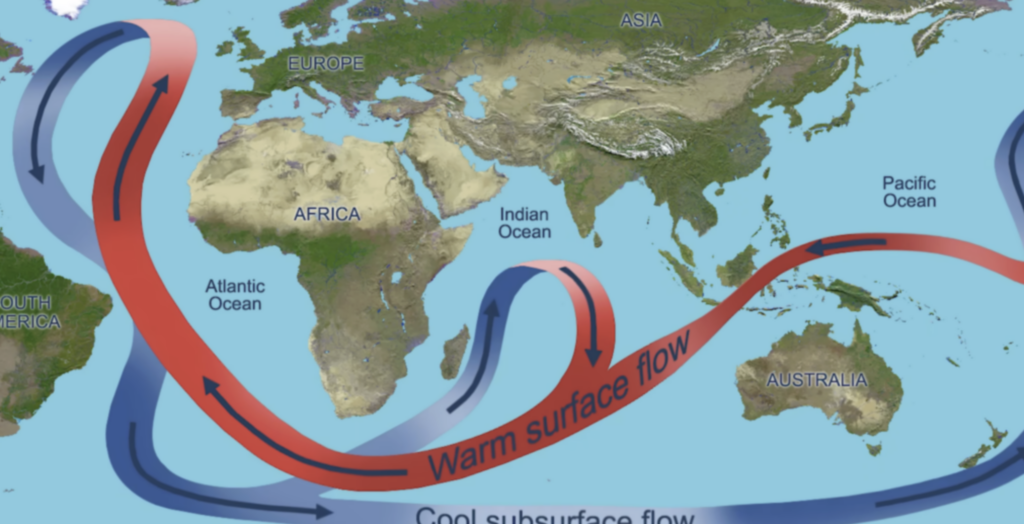
The planet’s climate would face another major disruption. Ocean currents depend partly on differences in temperature and salinity, which affect how dense seawater becomes. These currents transport heat around the world and help keep temperatures from becoming too extreme between different regions.
Without salt, major circulation patterns could weaken or disappear. Tropical areas could retain more heat, while colder regions might receive less warmth from ocean currents. This could create larger temperature differences across the planet.
Weather patterns could become increasingly unpredictable as well. Ocean circulation influences rainfall, storms, atmospheric movement, and seasonal conditions. Some regions could experience longer heatwaves, while others might face unusual cold periods or major changes in precipitation.
The consequences would eventually reach human civilization. Fisheries could collapse as marine populations declined, damaging coastal economies and eliminating an important source of food. Animals that depend on ocean species could also struggle as marine food chains broke apart.
Agriculture would face serious challenges despite the sudden abundance of freshwater. Crops still require suitable temperatures, predictable seasons, stable rainfall, and functioning ecosystems. A dramatically altered climate could make farming far more difficult.
In the end, freshwater oceans would not create a perfect world. They would interfere with marine life, ocean circulation, climate regulation, and global food systems simultaneously.
What initially looks like a miraculous solution to the world’s water problems could become an environmental catastrophe. Earth’s oceans are much more than enormous bodies of water. Their salt, chemistry, currents, and ecosystems are all essential parts of the planetary system that allows life to survive.