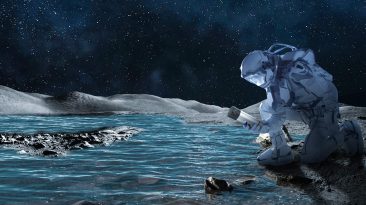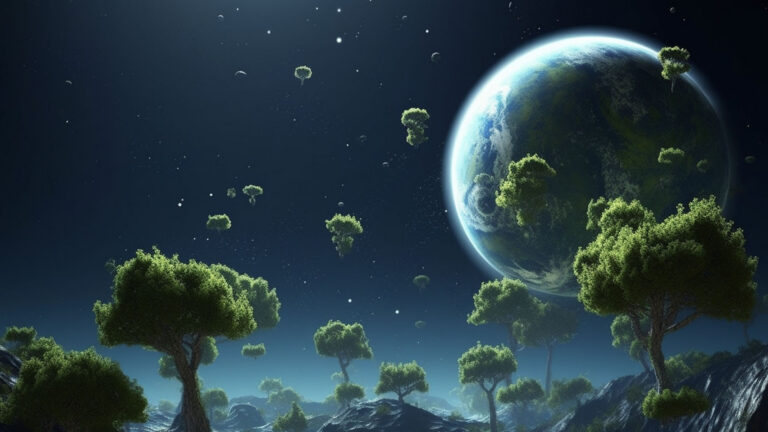
Imagine floating outside a spacecraft on a routine spacewalk when something goes terribly wrong. Your helmet suddenly comes loose. Normally, that would be a fatal accident within seconds. But this time, instead of gasping for air, you take a deep breath. Somehow, outer space has become filled with breathable air.
It sounds like the ultimate science fiction dream. Exploring planets and stars without bulky life support systems would become possible. But while breathing in space might seem like an incredible breakthrough, it would also unleash a series of catastrophic consequences that could destroy the entire Solar System.
Earth’s atmosphere is made up of about 78% nitrogen, 21% oxygen, and small amounts of argon and other gases.
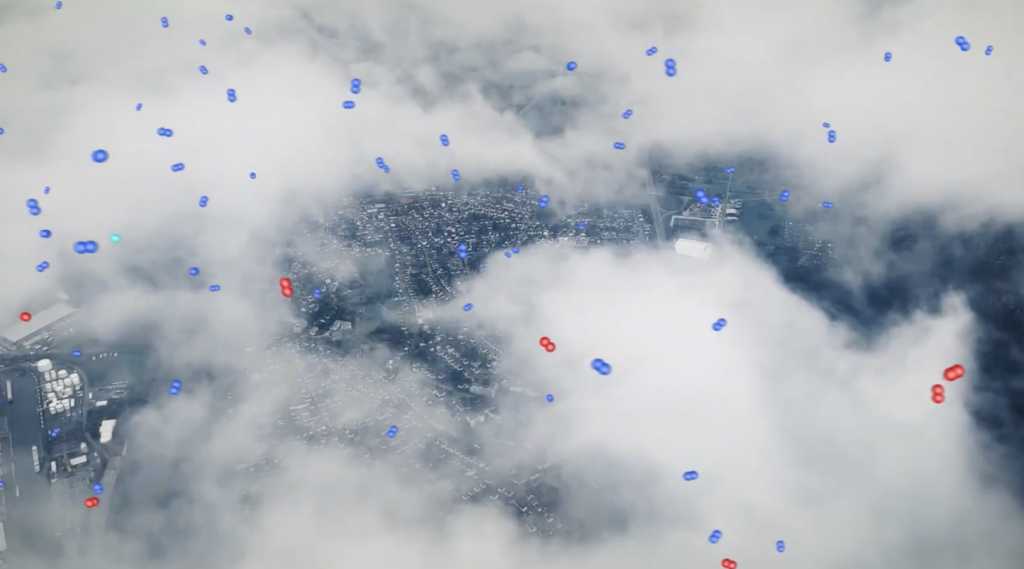
The oxygen molecules in this mixture make life possible. Beyond Earth’s atmosphere, however, molecular oxygen is extremely rare.
In the vacuum of space, oxygen atoms usually bond with hydrogen to form water ice or attach themselves to dust particles instead of remaining as breathable oxygen.
Now imagine that this same breathable atmosphere stretched far beyond Earth, all the way to the edge of the heliosphere, the enormous bubble created by the Sun’s solar wind that extends roughly 90 astronomical units from the Sun.
The first thing you would notice would not be the ability to breathe. It would be the noise.
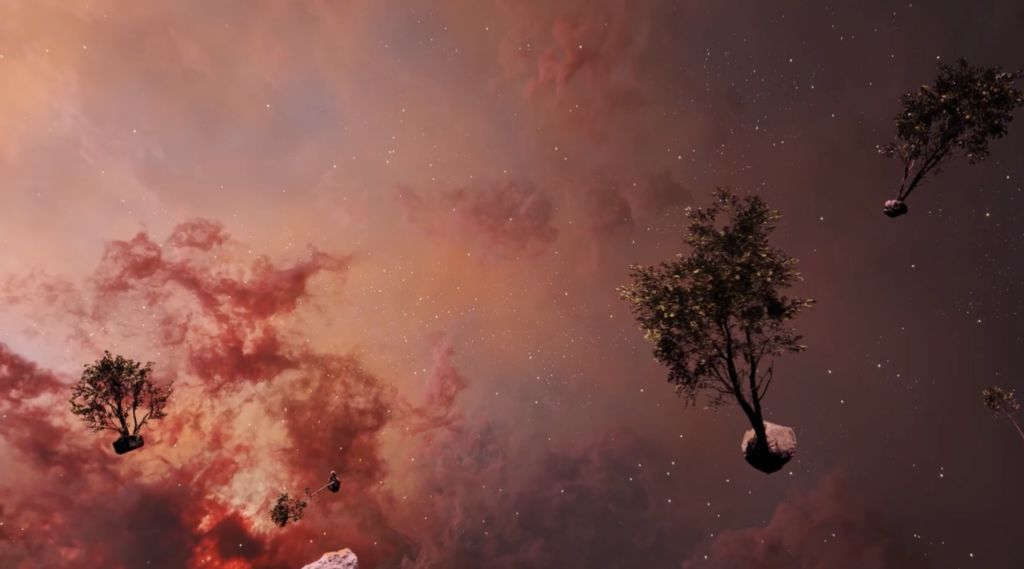
Space is famously silent because sound needs molecules to carry vibrations. In a vacuum, there are simply too few particles for sound waves to travel. Fill space with air, however, and that silence disappears forever.
Suddenly, the Solar System would become surprisingly loud. The Sun constantly vibrates with powerful sound waves generated deep inside its interior. Today, those vibrations cannot travel through the vacuum between the Sun and Earth.
But with air filling space, they could. Scientists estimate the Sun’s constant rumble could reach Earth at roughly 125 decibels, about as loud as standing next to thousands of blaring police sirens. Every moment of every day would be filled with an overwhelming roar.
Unfortunately, the noise would be the least of humanity’s concerns.
The vacuum of space allows planets, moons, and asteroids to travel with almost no resistance. Without friction slowing them down, they maintain stable orbits for billions of years.
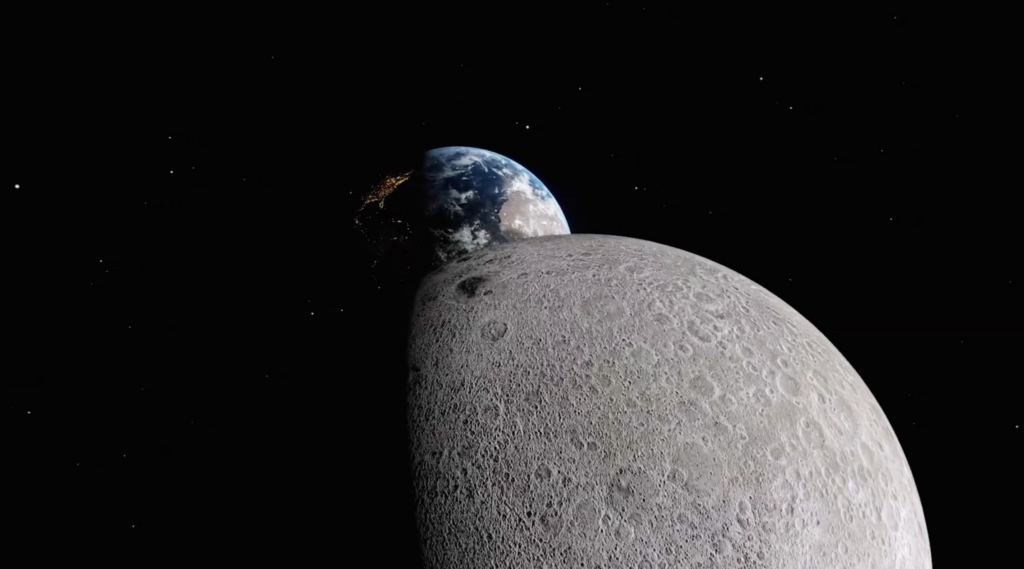
A breathable atmosphere spread across the Solar System would change that completely.
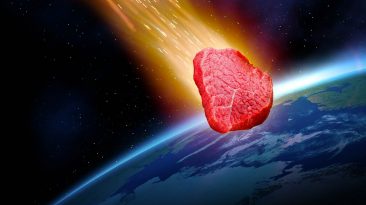
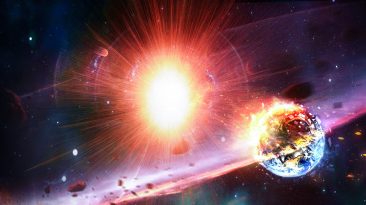
As Earth raced around the Sun at nearly 30 kilometers per second, it would slam into trillions upon trillions of air molecules. The resulting drag would create unimaginable friction, similar to what happens when meteors enter Earth’s atmosphere. Except this time, the entire planet would become the meteor.
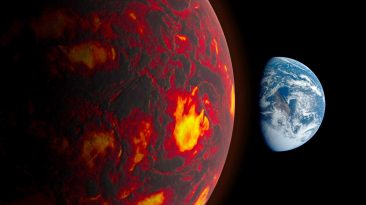
The surface would heat dramatically, scorching the planet as it struggled against the dense atmosphere surrounding its orbit.
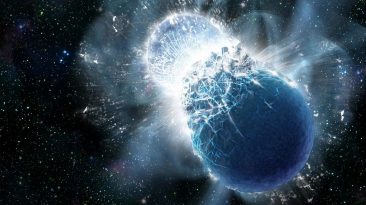
The Moon would also begin losing speed. Over time, its orbit would decay until Earth’s gravity pulled it inward. Eventually, the Moon would crash into Earth, releasing enough energy to shatter both worlds.
Even then, the disaster would not be over.
Filling the entire heliosphere with breathable air would require an astonishing amount of matter. All that gas would have mass, adding roughly five billion times the mass of the Sun to the Solar System.
Gravity would begin pulling this enormous cloud of gas inward. As it compressed, the density would continue increasing until the entire Solar System collapsed under its own weight.
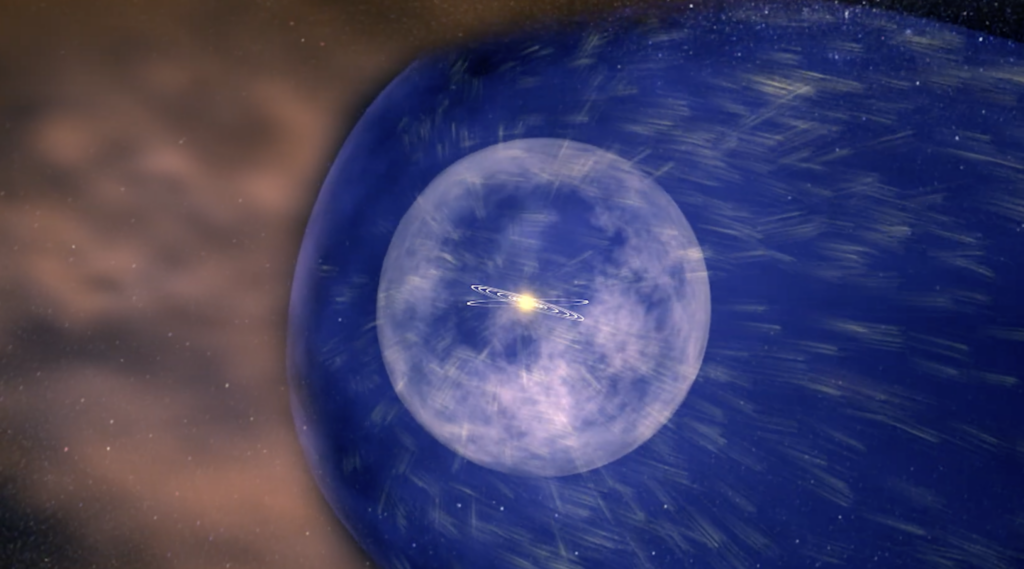
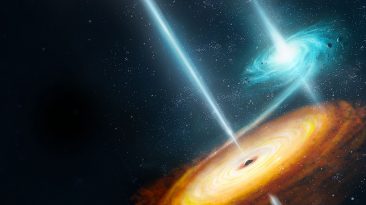
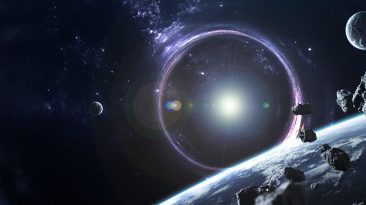
Eventually, enough mass would be squeezed into a small enough region to create a black hole. This object would dwarf anything humanity has ever encountered, becoming even more massive than the supermassive black hole at the center of the Milky Way.
Long before that happened, life on Earth would already be extinct.
Breathable space sounds like the perfect solution for exploring the cosmos. Astronauts could travel without cumbersome suits, and distant planets would suddenly feel much more accessible. Yet the vacuum of space is not an obstacle to life by accident. It is one of the reasons the Solar System remains stable.
Without the emptiness between the planets, friction would tear apart their orbits, collisions would become inevitable, and gravity would eventually collapse everything into a single cosmic monster.
Sometimes, the silence and emptiness of space are exactly what keep the Universe alive.