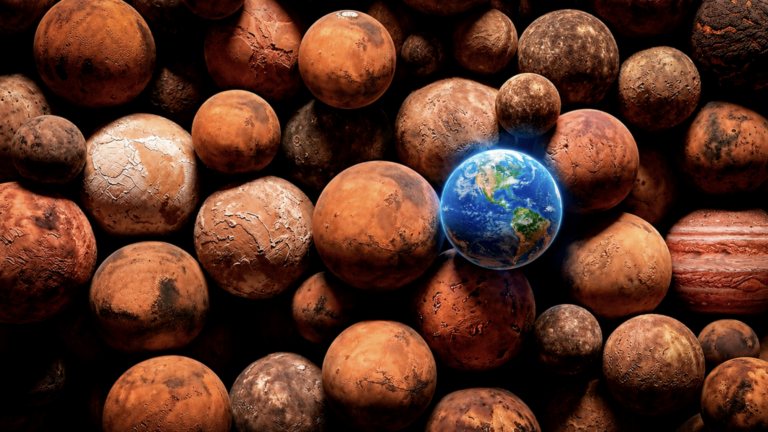
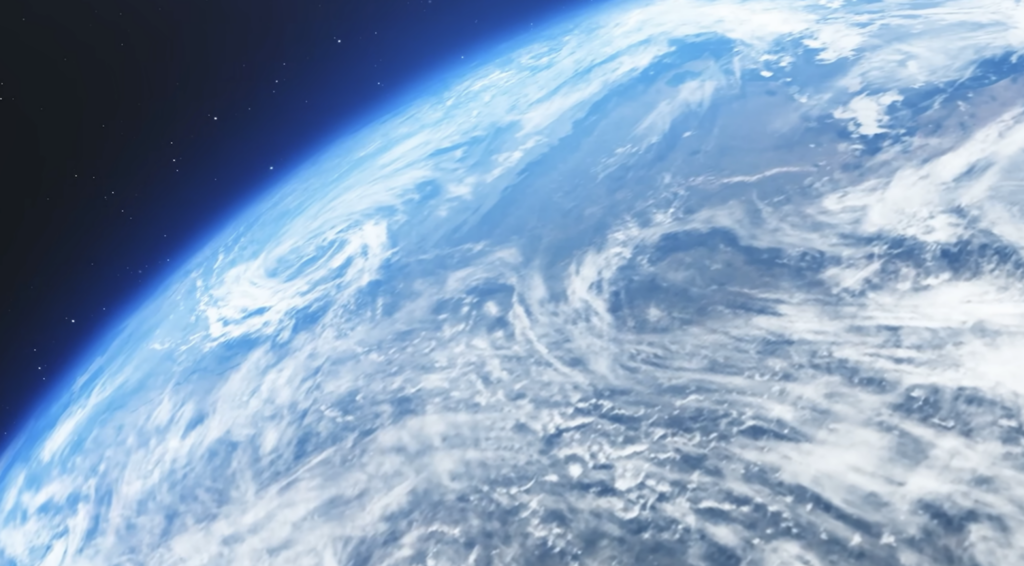
You are the result of a chain of events that began billions of years ago. Earth has liquid water, a protective atmosphere, a magnetic field, a stable orbit, and the chemical ingredients needed for life. Put all of these conditions together, and our planet can seem almost suspiciously perfect.
But why Earth? Why did life appear here when the other planets around us look so hostile? Is our planet genuinely special, or does it only seem that way because we are here to witness it?
One of the biggest advantages Earth has is its distance from the Sun. Our planet sits about 150 million kilometers from its star, placing it within the habitable zone, where temperatures can allow liquid water to remain on the surface.
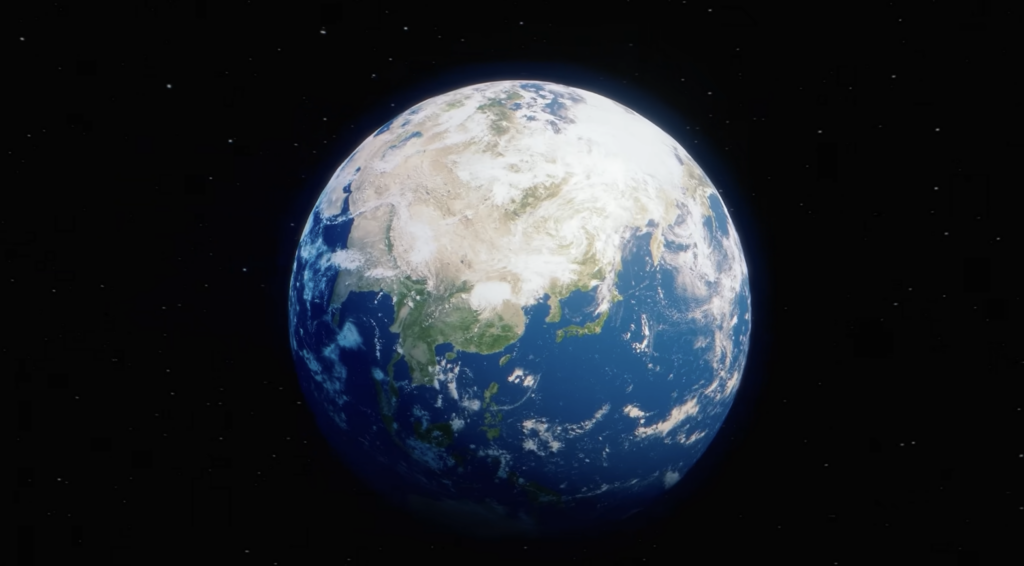
Water is essential to every form of life we know. It allows chemical reactions to occur, transports nutrients, and makes up a large portion of living organisms.
Earth’s water probably came from several sources during its early history, including volcanic activity and water rich asteroids. Over time, enough remained on the surface to create the oceans that became the foundation for life.
Then there is the Moon. Scientists believe it formed about 4.5 billion years ago after a massive collision between the young Earth and another planetary body called Theia.
The Moon’s gravity helps stabilize Earth’s axial tilt, which currently sits at about 23.5 degrees. This helps maintain relatively stable seasons, while its gravitational pull creates the tides that constantly move water through the oceans.
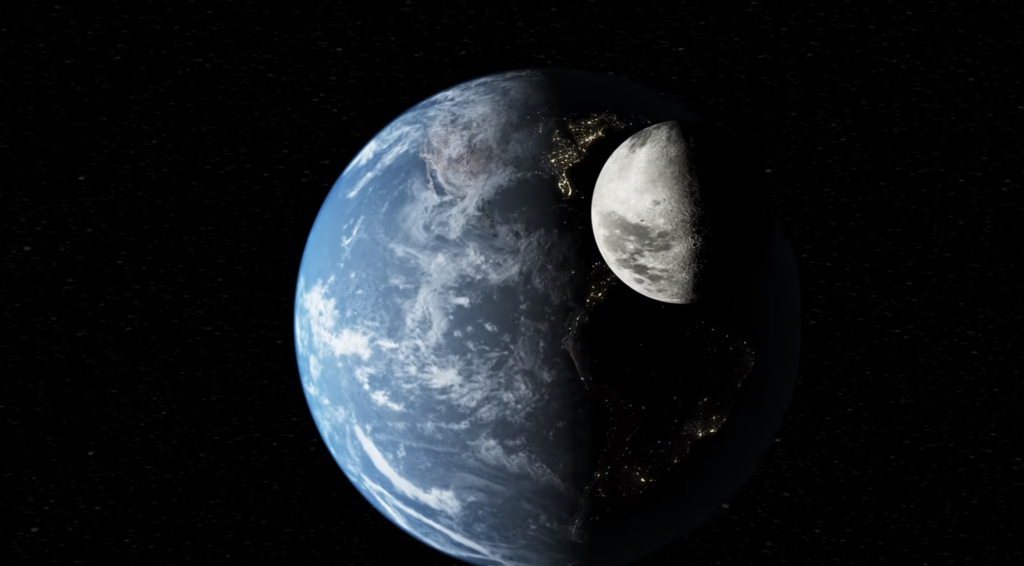
The Moon has also gradually slowed Earth’s rotation. The young Earth probably had much shorter days, but billions of years of interaction between our planet and its satellite helped produce the roughly 24 hour day we experience today.
Deep beneath the surface, another invisible system protects life. Earth’s outer core contains moving liquid iron and nickel, and their motion generates the magnetic field surrounding the planet.
This magnetic field helps shield Earth from solar wind and charged particles released by the Sun. It also helps protect the atmosphere from being gradually stripped away over enormous periods of time.
Mars provides an interesting comparison. It is smaller than Earth, has a very thin atmosphere, and lost its global magnetic field billions of years ago, leaving behind a cold and extremely dry world.
Earth also contains the chemical ingredients life needs. Carbon, hydrogen, oxygen, nitrogen, phosphorus, and sulfur are all important components of biological molecules.
Our planet’s active interior continually moves material between the deep Earth and the surface. Volcanoes and plate tectonics recycle minerals, reshape continents, and create environments where important chemical reactions can occur.
Some scientists believe hydrothermal vents on the ocean floor may have provided an environment where early life began. These locations combine water, heat, chemical energy, and minerals, creating conditions that could support complex chemical reactions.
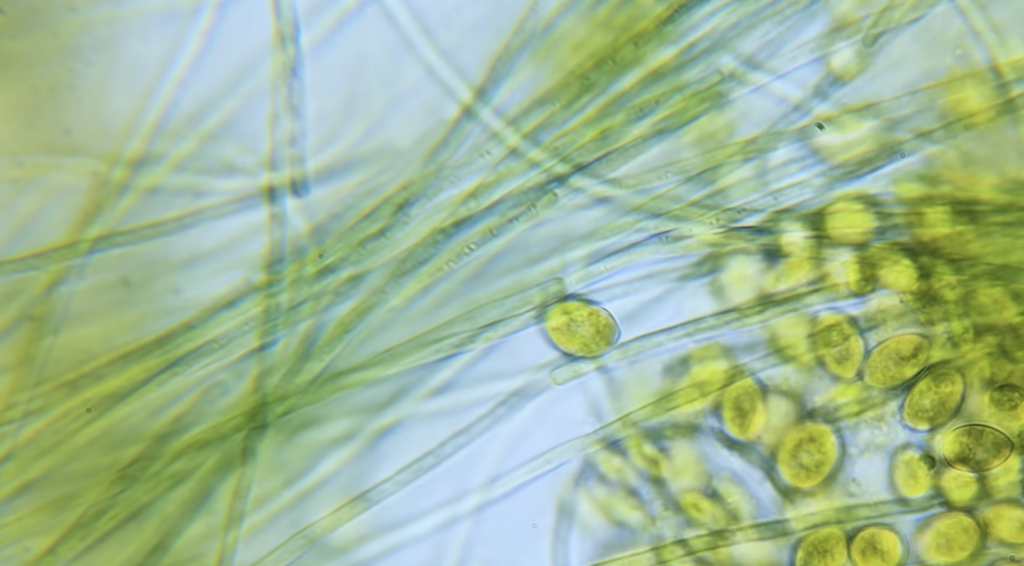
The earliest organisms were extremely simple. Eventually, cyanobacteria evolved the ability to use sunlight for energy while releasing oxygen, gradually transforming Earth’s atmosphere and helping create conditions for increasingly complex life.
Even Jupiter may have influenced Earth’s history. Its enormous gravity can capture, destroy, or redirect asteroids and comets, although scientists know that Jupiter can also send some objects toward the inner Solar System.
When all these factors are considered together, Earth can look incredibly fortunate. The right distance from the Sun, abundant water, a large Moon, a magnetic field, an atmosphere, essential chemicals, and billions of years of evolution all contributed to the world we know.
But calling Earth perfect creates another question. We only know of one planet where life definitely exists, so we naturally treat the conditions that produced us as requirements for life itself.
Maybe they are not.
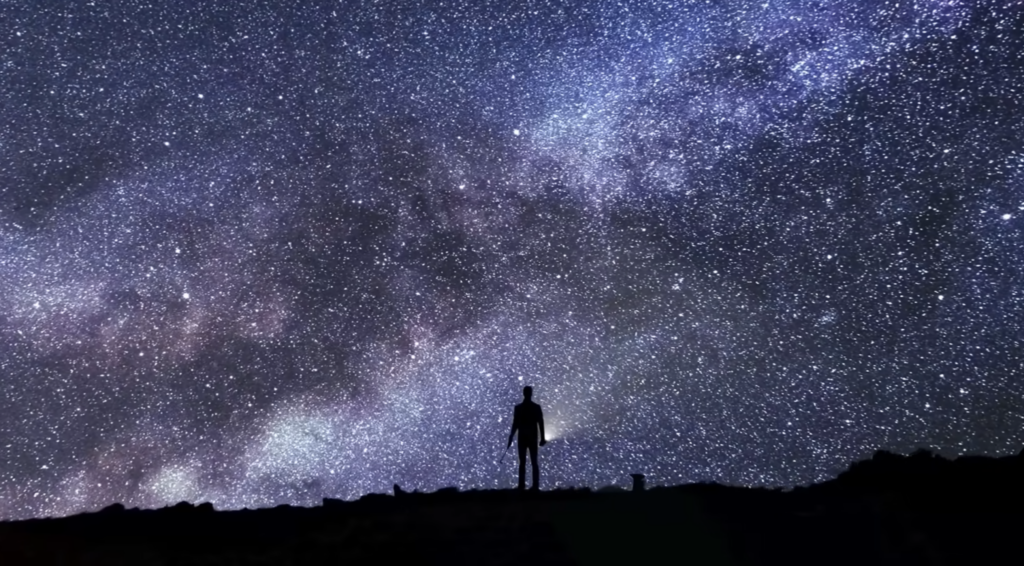
Life could simply have adapted to the environment available on Earth. If another planet developed under completely different conditions, its life might look nothing like anything we have ever imagined.
This connects to the Fermi Paradox, which asks why we have not discovered another civilization despite the enormous number of stars and planets in the Universe. Perhaps other civilizations existed millions of years before humanity and disappeared before we were capable of detecting them.
So Earth may not be perfect for life. It may simply be perfect for us, and that could be the most fascinating explanation of all.