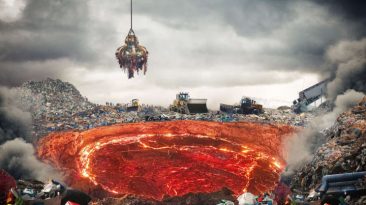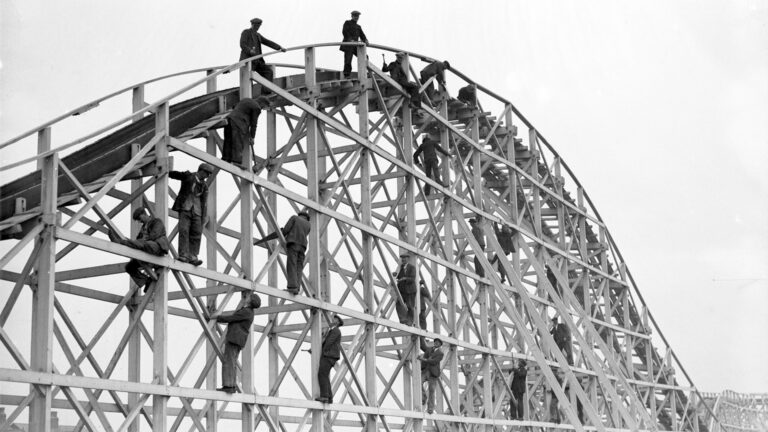
Every year, hundreds of millions of people willingly climb into machines designed to make them scream. They are lifted to terrifying heights, dropped at incredible speeds, thrown around sharp turns, flipped upside down, and occasionally pushed so hard that some riders faint or become sick.
And after surviving the experience, many people happily buy a photograph capturing the exact moment they thought they might regret getting on.
This is the roller coaster, one of the world’s most popular forms of entertainment. Today, there are thousands of them around the globe, generating billions of dollars and ranging from classic wooden rides to enormous steel machines with loops, corkscrews, and seemingly impossible drops.
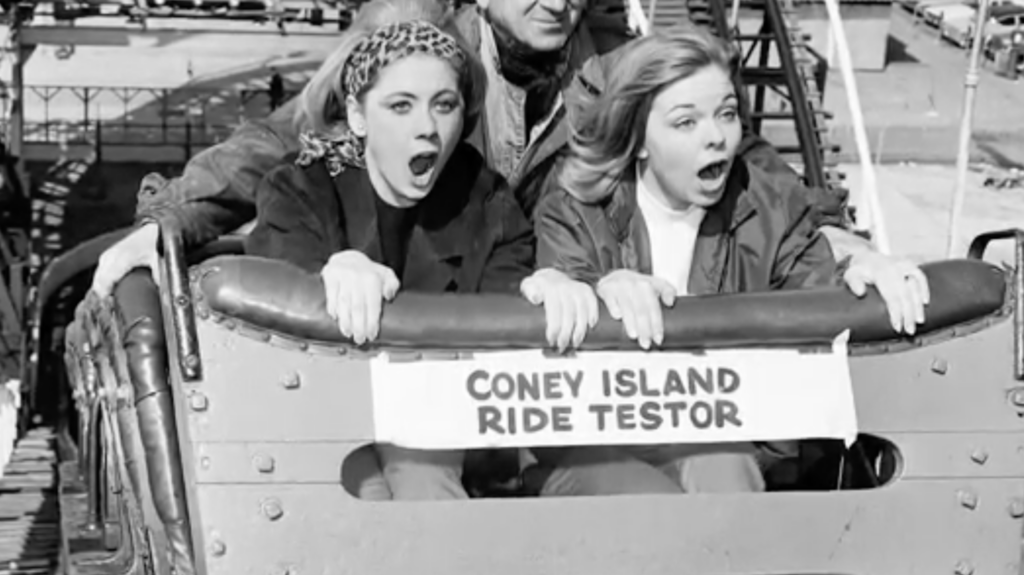
Some are built on top of buildings, others are designed around elaborate stories, and some take riders through environments that would have seemed unimaginable when the first thrill rides appeared. But the road to the modern roller coaster was a strange one, involving frozen mountains, coal trains, failed experiments, and an attempt to protect Americans from what one inventor considered immoral behavior.
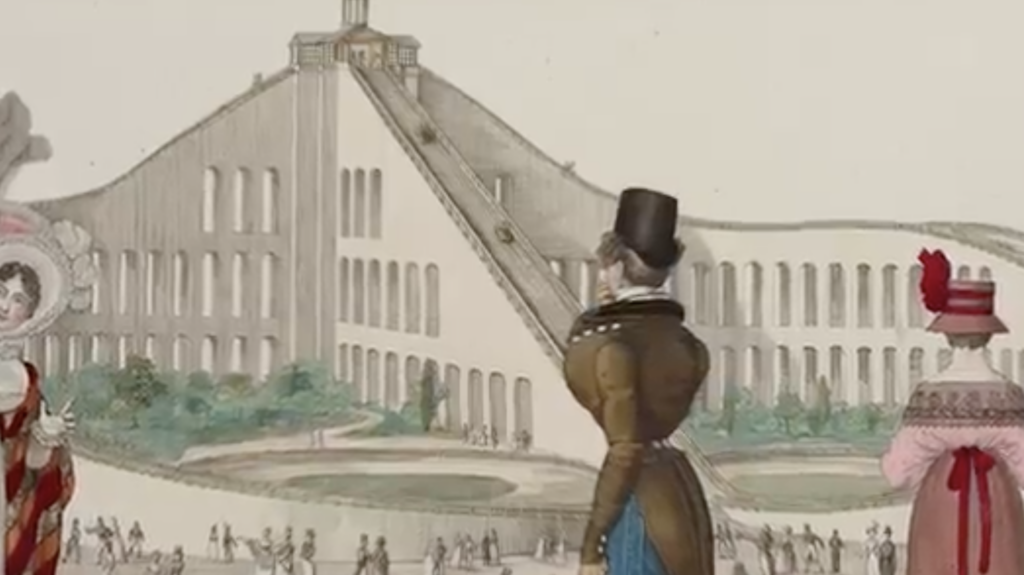
The story begins in Russia during the 17th century, long before roller coasters had wheels, safety restraints, or even tracks.
People built enormous ice slides and raced down them on specially prepared sleds or blocks. Riders would launch down steep frozen slopes and eventually come to a stop in a pile of sand or other soft material at the bottom. It may not have looked much like a modern amusement ride, but it delivered the same essential ingredient, speed and excitement.
The idea eventually caught the attention of visitors from France, who wanted to recreate the experience back home. There was one obvious problem, however. France did not have the consistently freezing temperatures needed to maintain giant ice slides.
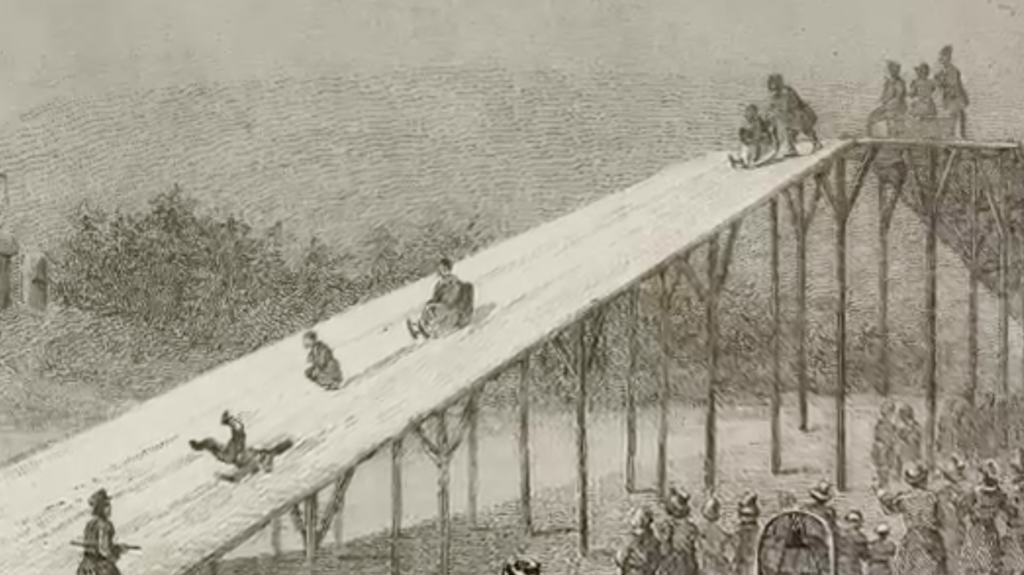
Instead of abandoning the idea, French designers adapted it. Ice was replaced with tracks, and sleds were gradually replaced by wheeled carts. This important change helped create one of the earliest versions of what would eventually become the roller coaster.
The concept later crossed the Atlantic, where Americans found their own inspiration in an unlikely place, a railway built for transporting coal.
In the mountains of Pennsylvania, the Mauch Chunk Switchback Railway was originally constructed to move coal from the mines to a transportation network. The railway eventually became known for scenic passenger trips, taking visitors through the mountains before sending them back down on a fast and bumpy journey.
While the experience was very different from modern roller coasters, it demonstrated something important. People were willing to pay for the excitement of rushing downhill in a railway car.
That idea caught the attention of LaMarcus Adna Thompson, a wealthy inventor who would become one of the most important figures in the early history of amusement rides.
Thompson believed that Americans were becoming distracted by activities he considered morally dangerous, including gambling, drinking, and visiting brothels. He thought people needed healthier forms of entertainment, something exciting enough to pull them away from these temptations.
His answer was surprisingly simple, give them a different thrill.
In 1884, Thompson opened his famous Switchback Railway at Coney Island. The ride featured a relatively short track with gentle drops compared with modern standards, but riders could reach speeds of around 10 miles per hour. At the time, that was enough to make the experience exciting.
The coaster became a success, and other inventors quickly recognized its potential. Soon, amusement parks were competing to build rides that were faster, stranger, and more thrilling than anything that had come before.
As the industry grew, designers began experimenting with new ideas. Some built coasters that could turn riders upside down, while others attempted increasingly ambitious track layouts in their search for the next great thrill.
Not every experiment ended well.
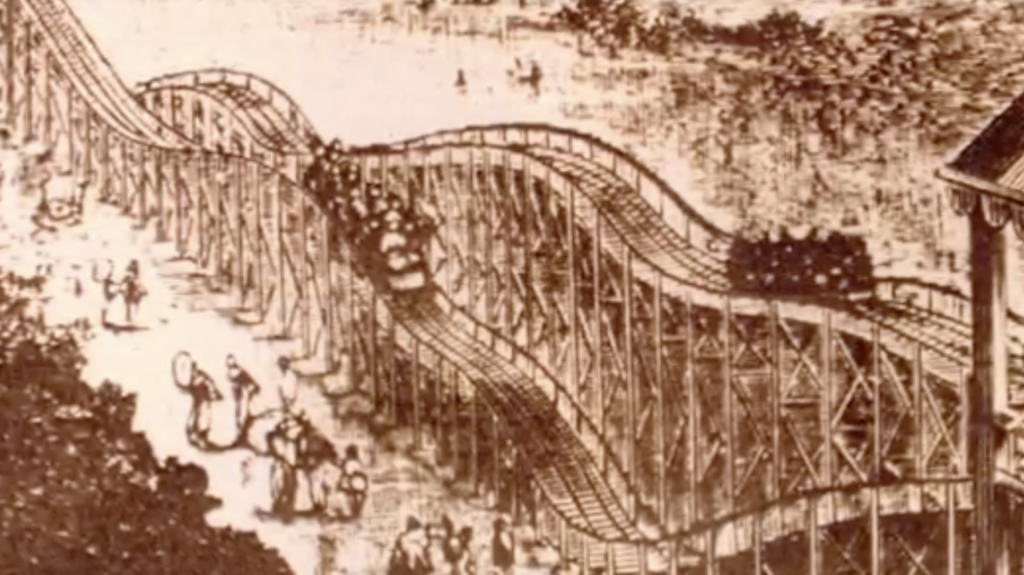
One particularly dangerous concept attempted to send coaster cars across gaps in the track. As you might expect, launching a passenger vehicle through open air and hoping it lands safely was not a design that became a permanent part of the industry.
Still, each experiment pushed roller coaster technology forward. Designers continued looking for ways to make rides faster and more exciting while also finding safer methods of controlling the vehicles.
One of the biggest breakthroughs arrived in 1959 with the introduction of tubular steel tracks.
Unlike older track designs, tubular steel gave engineers far more freedom. It could be shaped into complex curves and dramatic elements, allowing roller coasters to perform smoother loops, corkscrews, and other maneuvers that would have been much more difficult with earlier materials.
The development transformed the industry. Steel coasters could take riders through increasingly complicated layouts, and designers no longer had to limit themselves to the shapes that traditional wooden structures could easily support.
Over time, roller coasters became taller, faster, and more elaborate. Engineers developed floorless trains, suspended rides, inverted coasters, and countless other variations designed to make riders experience speed and height in entirely new ways.
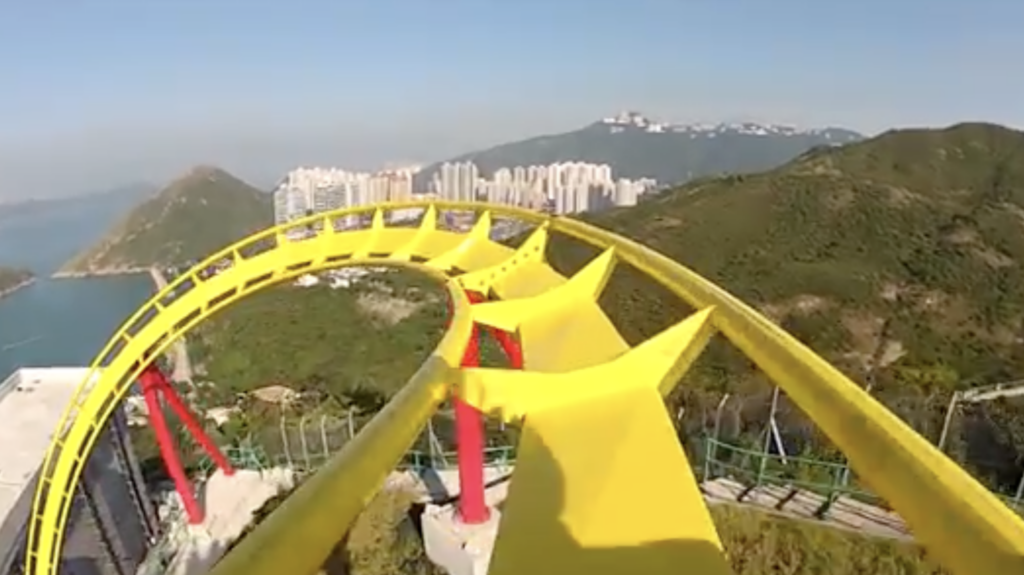
Today, roller coasters are found in thousands of locations around the world, with parks constantly competing to create the next record breaking attraction. Some focus on incredible speed, others on extreme height, and many attempt to combine storytelling with increasingly sophisticated technology.
It is strange to think that these giant steel machines can trace part of their history back to people sliding down frozen hills in Russia. Even stranger is the role played by LaMarcus Adna Thompson, who believed thrilling rides could offer Americans an alternative to drinking, gambling, and other activities he viewed as immoral.
His idea may not have saved society from immorality, but it certainly helped turn amusement rides into a massive industry.
From giant ice slides and coal railways to towering steel tracks that twist riders through the air, roller coasters have spent centuries becoming more extreme. And if history is any indication, the next generation of thrill rides will probably find new ways to make people scream, hold on tightly, and then immediately line up to do it all over again.