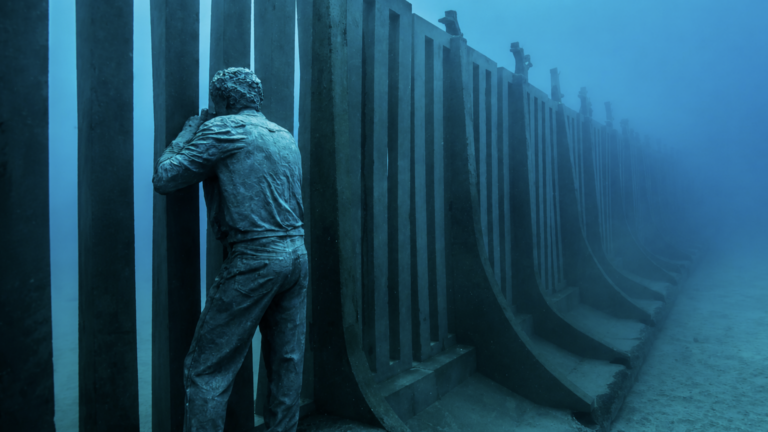
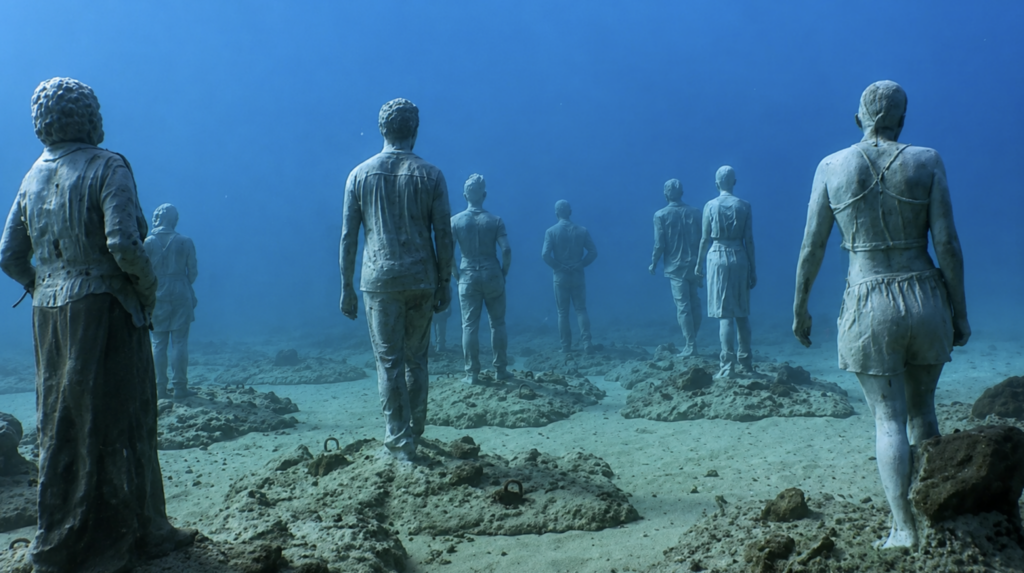
Divers off the coast of Lanzarote come across something that stops them mid descent. Human figures standing on the seafloor, dozens of them, silent in the blue while fish move between their shoulders.
Coral has crept across their skin. Algae covers their faces. They look like they’ve been down there for centuries, waiting.
They haven’t. And they aren’t the remains of anything.
This is the Museo Atlántico, the largest underwater art museum in the world, sitting beneath the Atlantic off Spain’s Canary Islands.
It was created by sculptor Jason deCaires Taylor, and it manages something unusual by being three things at once: an art gallery, a conservation project, and an active piece of marine science.
There are no walls and no opening hours in any normal sense. To see the collection you have to dive, and once you’re down there, dozens of life sized sculptures rise out of the seafloor into a landscape that feels genuinely eerie.
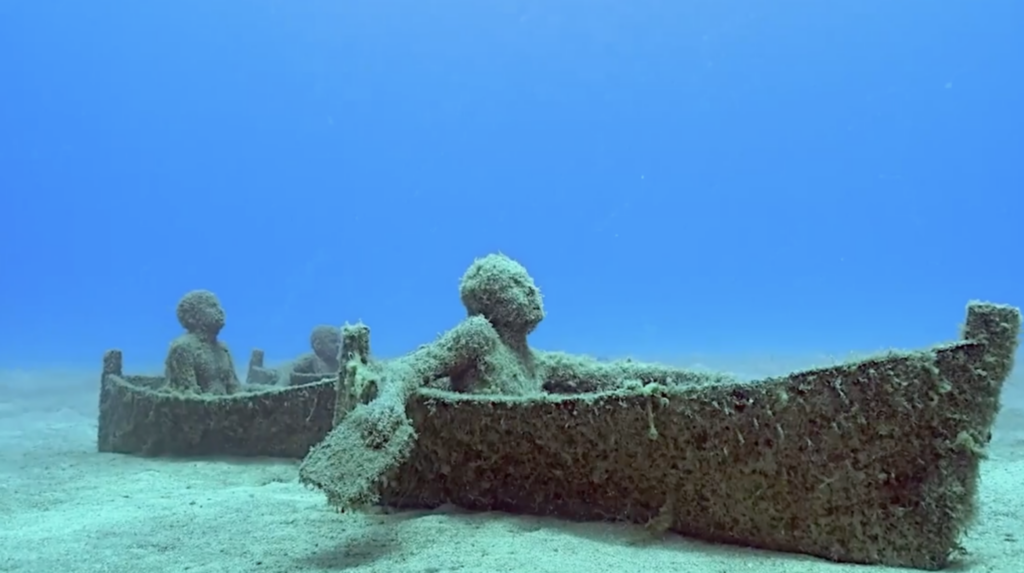
The centerpiece is a crowd. Hundreds of human figures standing together in complete silence, and here’s the part that makes it strange: they were modeled on real people who live in the Lanzarote region.
Ordinary residents, turned into permanent fixtures of the seabed.
They look frozen, but almost nothing about them is staying still. The ocean has been quietly rebuilding them since the day they went in.
That was always the plan. Every sculpture was made from materials safe for marine ecosystems, specifically so algae, coral, and other organisms would colonize their surfaces. Fish shelter among the structures, and what began as artwork has become habitat.
Which means no two dives are the same. The ocean joins in as a collaborator, adding colors and textures nobody designed, reshaping the collection year after year.
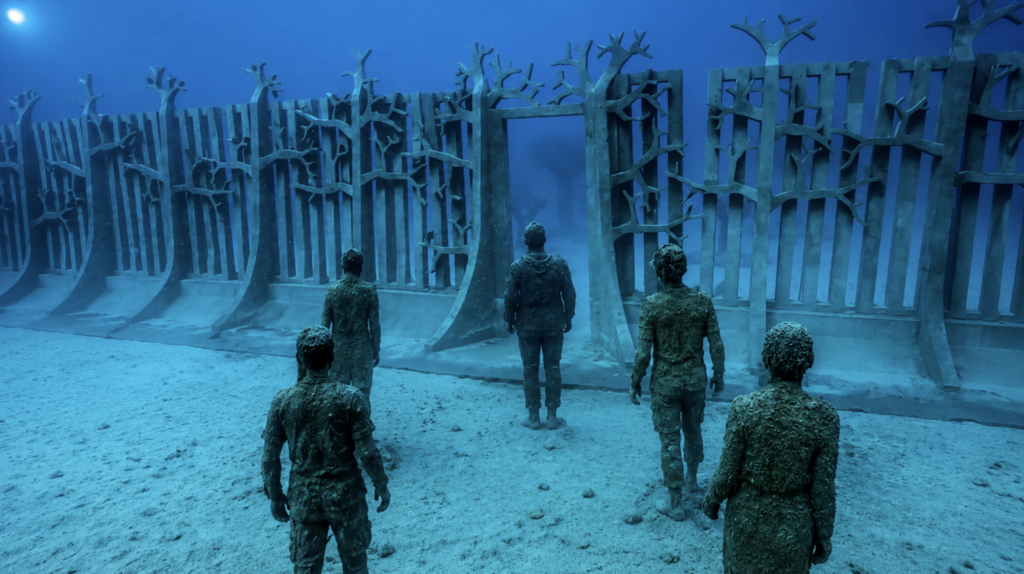
There’s a serious purpose underneath the spectacle too.
Coral reefs worldwide are under pressure from climate change, pollution, and human activity. Artificial reef structures like these create additional habitat for marine species while taking some of the strain off fragile natural reefs.
They also give divers somewhere to go. People get to see a thriving marine ecosystem up close without trampling through sensitive coral, which makes the sculptures a kind of bridge between visitors and the underwater world.
And then there’s what it does to the idea of art itself.
Most artwork gets protected. Climate controlled rooms, restoration teams, everything possible done to hold it exactly as the artist left it.
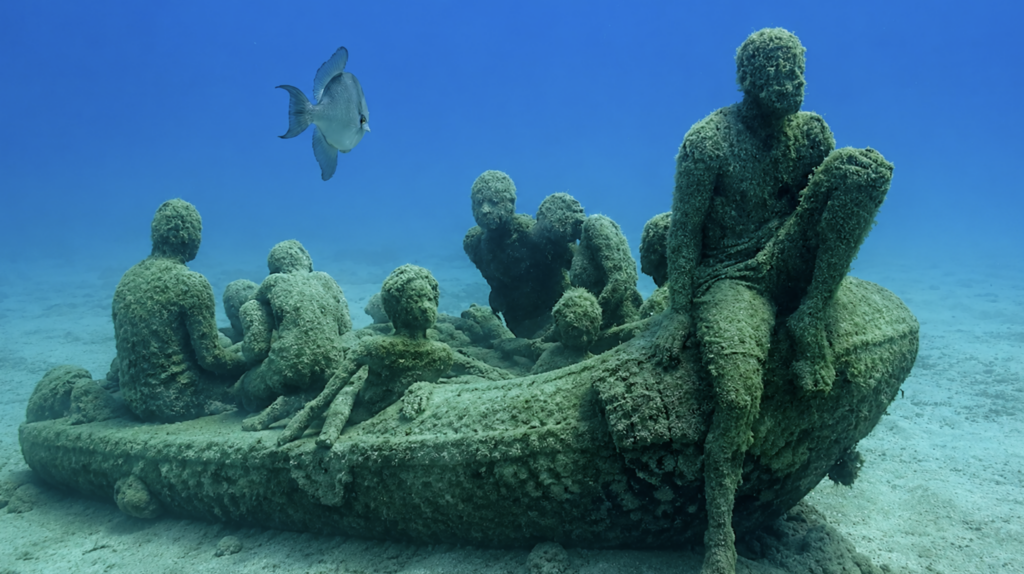
This does the opposite on purpose. The sculptures were handed over to the sea, with currents, marine growth, and time all invited to work on them.
So the boundary between the art and the environment keeps dissolving. Fish dart through the figures. Coral spreads across their surfaces. Entire communities of marine life have moved in and settled.
For divers, floating above all of it while fish weave between the standing figures is a genuinely disorienting experience. Part museum, part reef, part experiment.
Which is why the question of what’s hidden down there has a better answer than art.
It’s a living ecosystem built in the shape of people, and it will never be finished, because the ocean keeps working on it.