The coils tighten, and somewhere inside all that muscle, the snake is listening.
It is not waiting for you to stop struggling. It is not waiting for you to stop breathing. A green anaconda holds on until it detects that your heart has stopped, and only then does it release.
That is not instinct guessing. That is measurement.
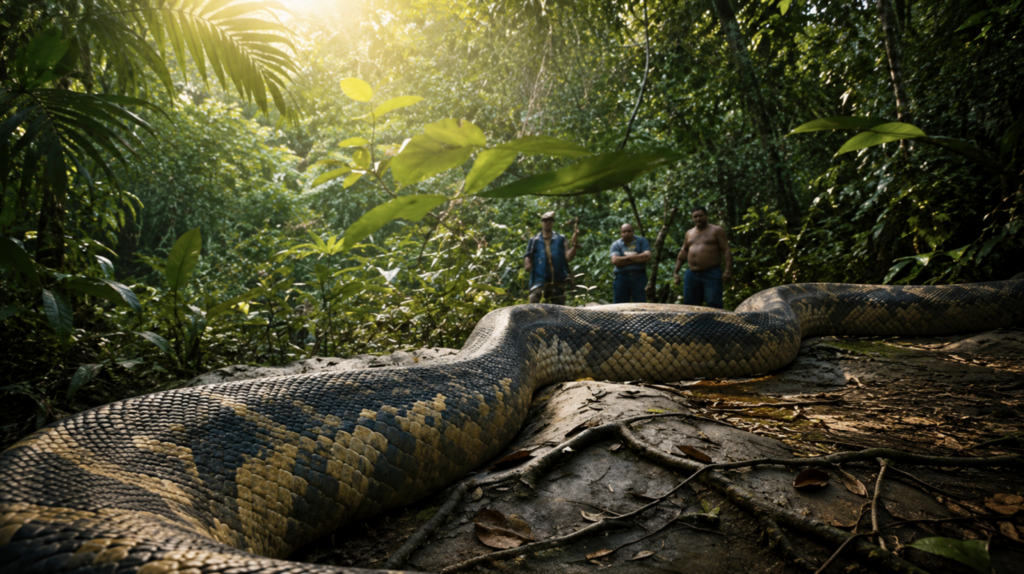
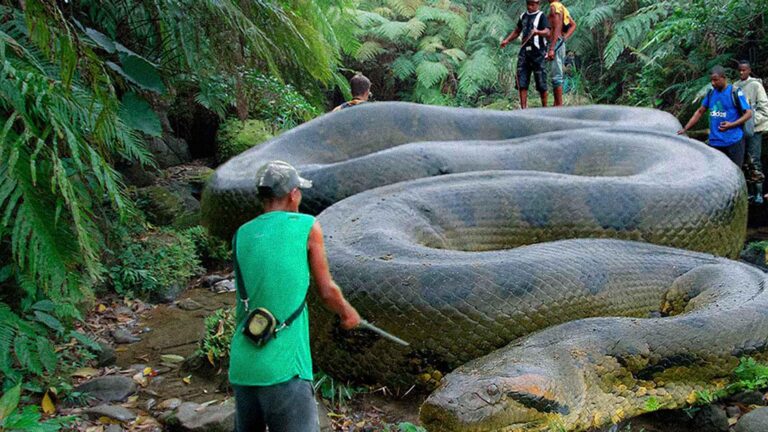
The expedition began like any other trip into the remote wetlands of South America. Thick jungle, slow rivers, and a silence that makes every sound feel like a warning. What the team reported afterward became one of the most shocking reptile encounters ever recorded.
They had found the biggest anaconda ever seen.
Being trapped among countless snakes sounds terrifying. This is worse. One predator, moving through the water like a living shadow.
Start with how it kills, because anacondas do not fight the way most feared snakes do. No venom, no lightning strike. They belong to the boa family, and they win through raw physical force, wrapping around the victim and beginning to constrict.
And constriction is not simply suffocation. The pressure disrupts blood flow, collapses circulation, and shuts the body down from the inside.
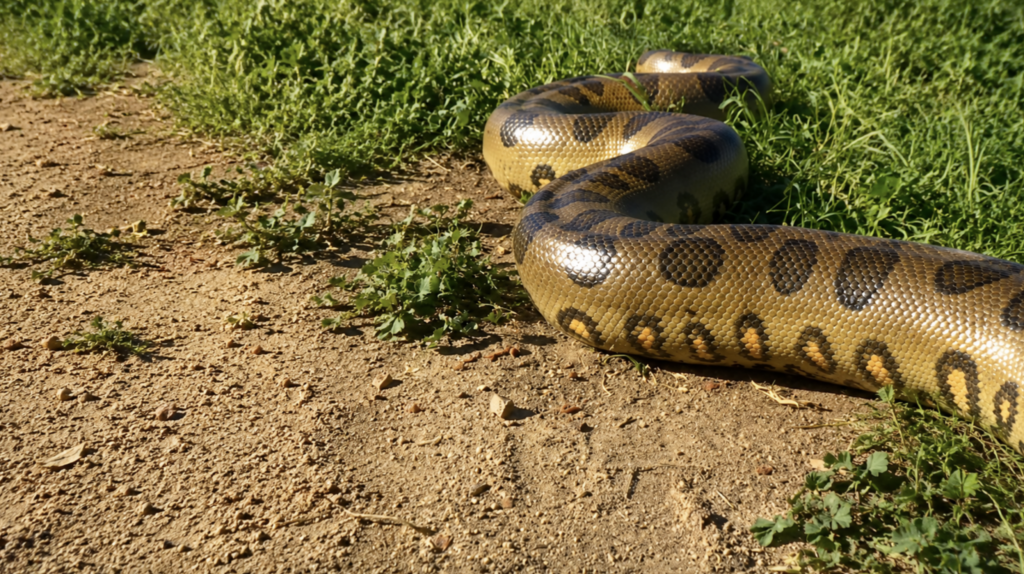
Which brings us back to the heartbeat. Sensing the exact moment the fight ends lets the snake stop spending energy it no longer needs. Brutal, precise, and shaped by evolution into one of the most efficient hunting systems on Earth.
The specimen this team encountered went far past normal expectations. Green anacondas already hold the title of heaviest snake in the world, typically reaching around 6 meters and, in exceptional cases, well over 100 kilograms. This one pushed those limits to an extreme, with a body so thick it took several people just to estimate its width.
On land, though, they are not the nightmare you imagine. Anacondas manage a steady slither and nothing more, and no human would struggle to outrun one.
The water is where that changes completely.
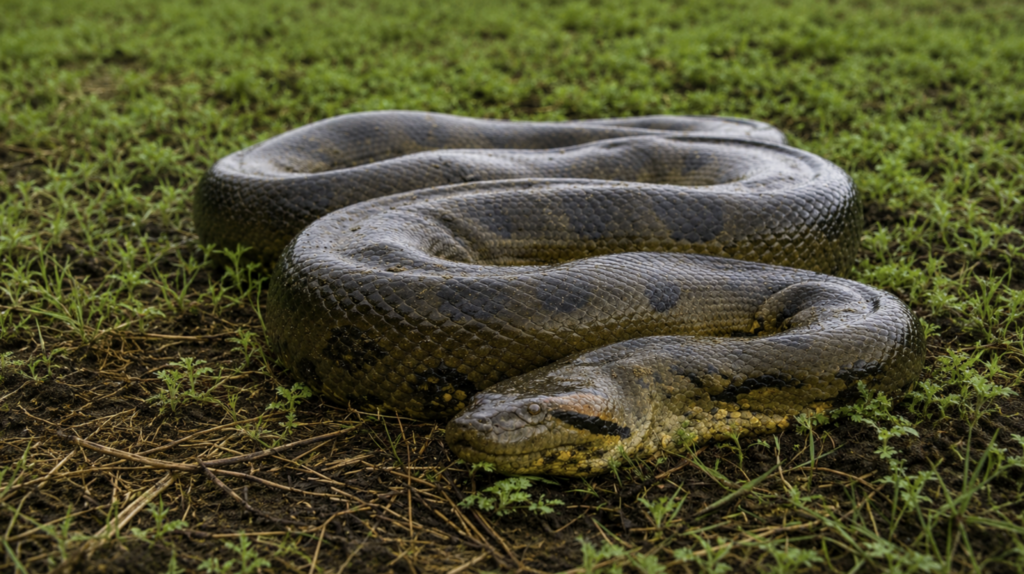
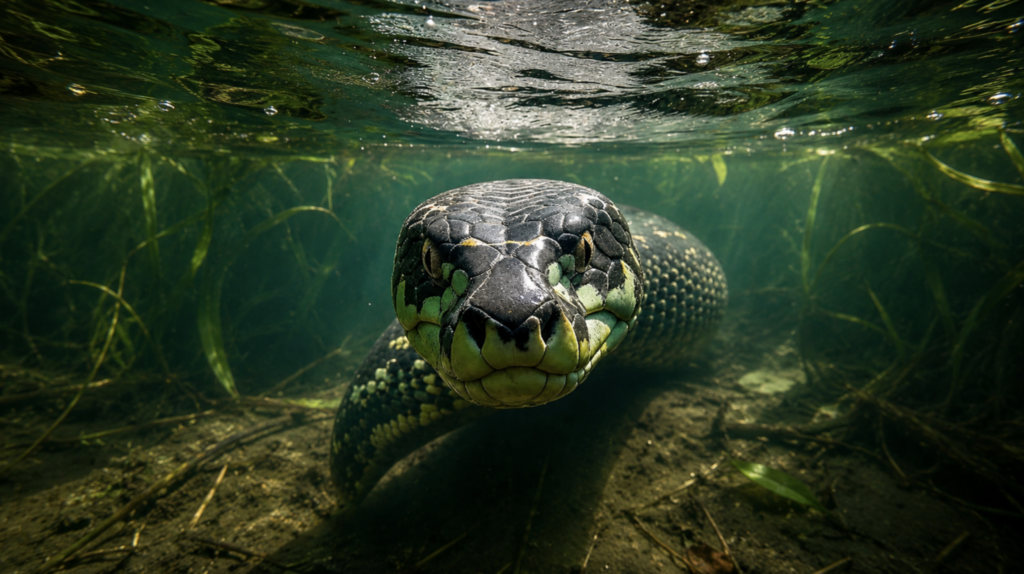
Their entire body is engineered for swimming, with eyes and nostrils positioned on top of the head so they can breathe and watch while almost fully submerged. Underwater they turn silent, powerful, and considerably faster, closing distance quicker than anyone expects.
The team described how effortlessly the giant vanished beneath the surface and reappeared without warning, controlling its movement with unsettling ease. Anacondas can also hold their breath for long stretches, staying hidden until the perfect moment arrives.
So what does an animal eat to reach that size?
Anacondas are apex predators, feeding on fish, birds, rodents, and reptiles. But the largest individuals take on prey most people would never expect: capybaras, deer, caimans, and in rare cases even jaguars.
Not every attempt succeeds. That the attempt happens at all tells you enough.
The snake documented here was not simply long. It was massive in girth, thick and heavy enough to look unreal against the forest behind it, the kind of size that makes experienced researchers hesitate before stepping closer.
In the water it moved with slow certainty, carrying more than enough force to control anything unlucky enough to be in its path.
Encounters like this are extraordinarily rare. Almost everything we know about anacondas comes from indirect observation rather than direct confrontation, because these animals are elusive, patient, and perfectly built for places where visibility is poor and survival depends on going unseen.
That is what finding the biggest anaconda in the world really means. Not a number on a measuring tape, but the reminder that the water itself can hide something capable of disappearing in complete silence and reappearing without warning.
And if it ever does reach you, it will not let go until it knows your heart has stopped.