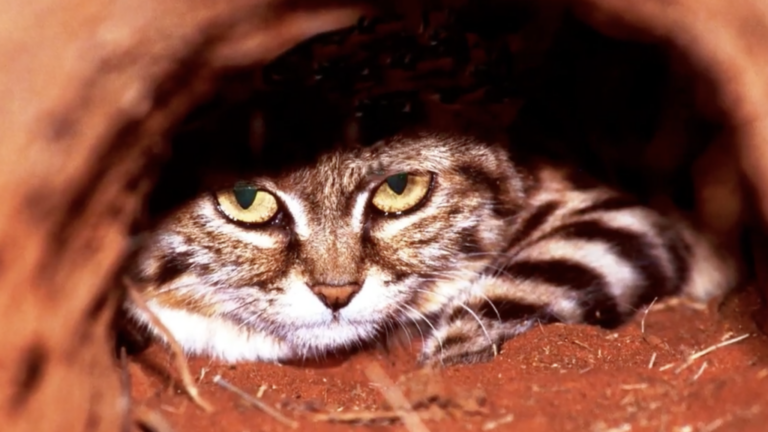
Put a lion and this animal side by side and the comparison looks absurd.
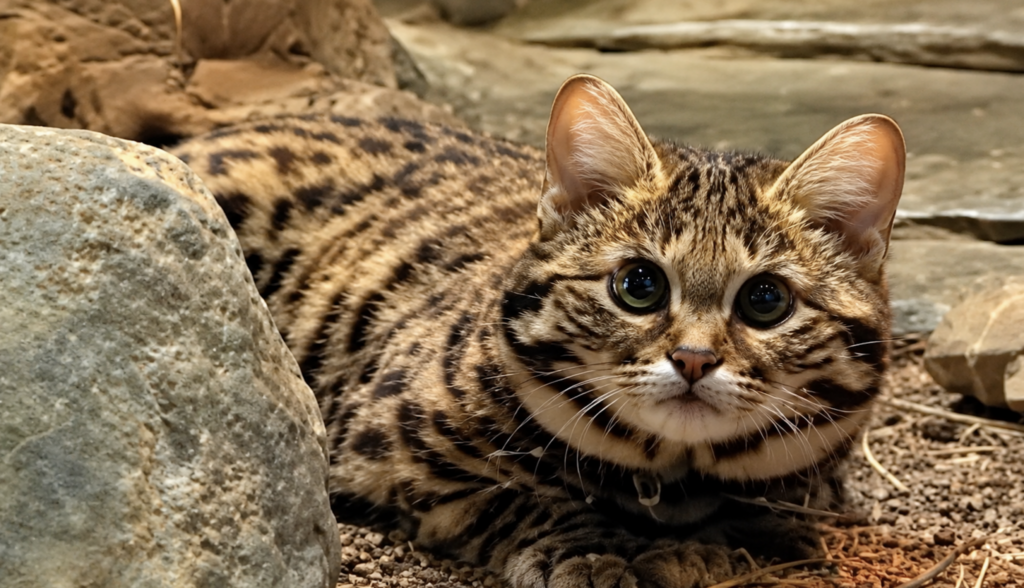
One weighs a couple of hundred kilograms and dominates every documentary ever filmed in Africa. The other weighs a few pounds, has enormous eyes and a spotted coat, and looks like something you would want to pick up and take home.
The kitten is the better hunter.
Deep in the grasslands and dry regions of southern Africa lives the black footed cat, and behind that harmless appearance sits one of the most efficient predators in the animal kingdom.
It is the smallest wild cat on the continent, dramatically smaller than lions, leopards, and cheetahs. And it survives in some of Africa’s harshest terrain, including deserts, scrublands, and open grassland.
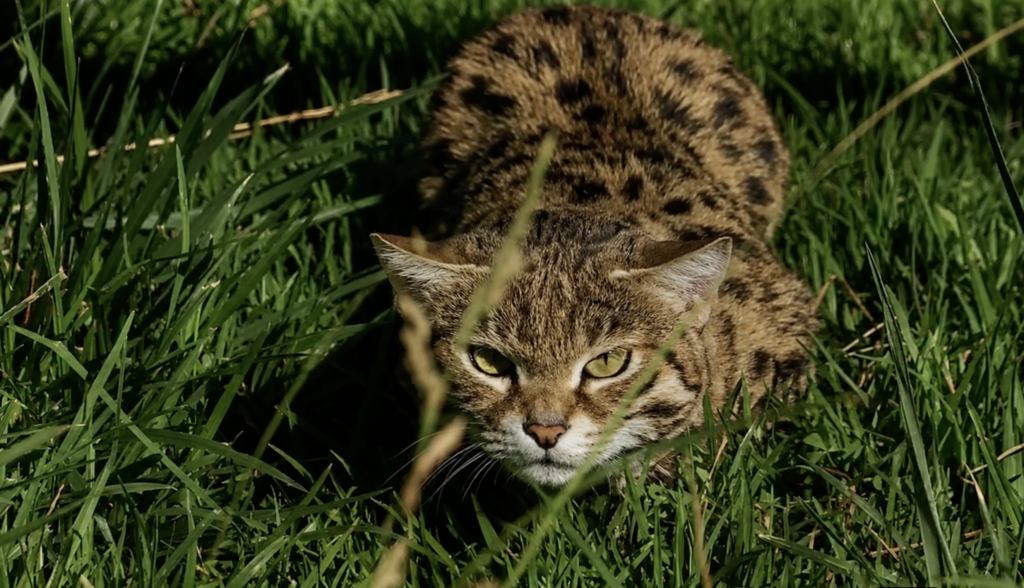
What separates it from everything else is the success rate. Researchers have found the black footed cat succeeds in a large percentage of its hunting attempts, matching and frequently beating predators many times its size.
A lion may stalk for hours before making a single kill. This cat can take multiple animals in one night.
The secret is relentlessness. Black footed cats come alive after sunset, emerging from their burrows and beginning a search that does not stop. In a single night, one cat may cover several miles of its territory, constantly moving, scanning the landscape with sharp eyesight and excellent hearing.
Its prey list covers rodents, birds, insects, and other small animals, and it switches tactics depending on the situation. Sometimes it waits patiently beside a likely hiding place until something appears.
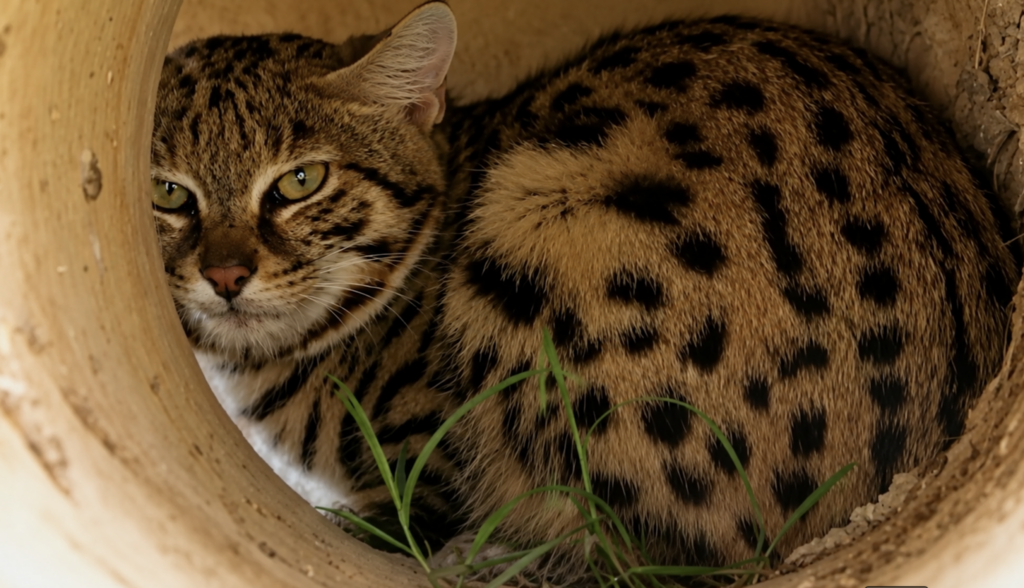
Other times it stalks silently through vegetation before exploding into a strike. And when neither works, it simply searches through grass and bushes, flushing out anything trying to hide.
Then there is the attitude. Despite being tiny next to nearly every other African predator, this cat shows no hesitation, chasing prey with total confidence. Its speed, agility, and precision let it bring down animals that should be beyond the reach of something that small.
Daylight is for resting. Black footed cats spend it in abandoned burrows, hollow logs, and other sheltered spots, avoiding the heat and reducing the odds of running into a larger predator. Their spotted coats provide excellent camouflage whenever danger comes close.
They also live alone. Unlike lions and their prides, males and females generally come together only to breed.
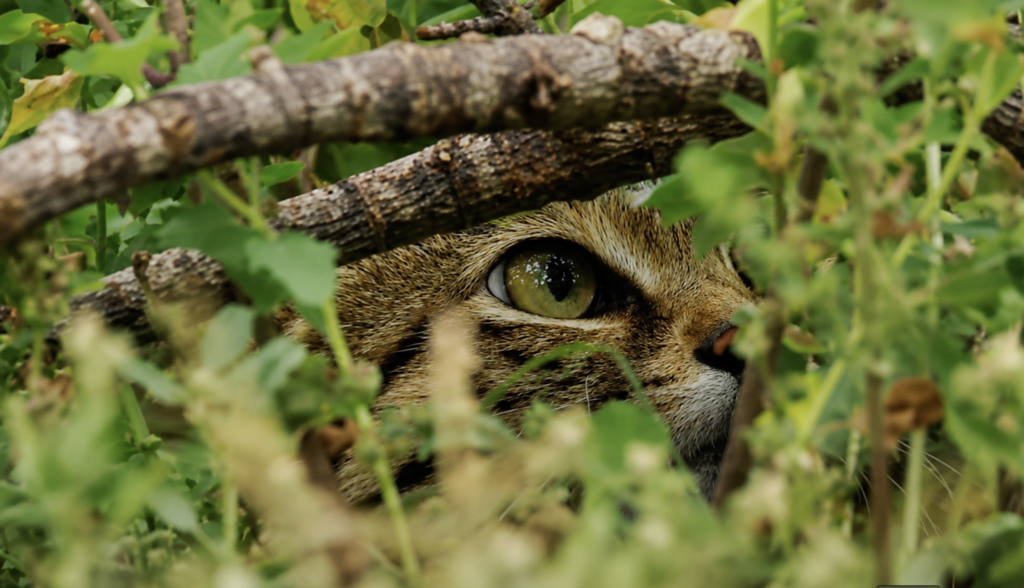
Each cat holds its own territory and spends most of its life in solitude. Being nocturnal and deeply secretive, they are almost never seen, and many people living inside their range will go a lifetime without spotting one.
That elusiveness makes them genuinely hard to study. Researchers depend on tracking devices, camera traps, and nighttime observation to learn anything at all, and every new finding adds to a thin picture of how the species survives and what threatens it.
And there are threats. Habitat loss, shrinking prey populations, and accidental poisoning all take a toll. Because the cats are so difficult to observe, population estimates remain uncertain across much of their range.
Conservation work focuses on protecting habitat and raising awareness that this species is worth preserving at all.
The lesson here is simple. Size is a terrible measure of strength or success. Africa built its reputation on giant predators, and yet one of its most effective hunters is also one of its smallest, working alone in the dark while everything larger sleeps.
Anyone lucky enough to glimpse one is looking at proof that nature builds extraordinary hunters in shapes nobody expects.