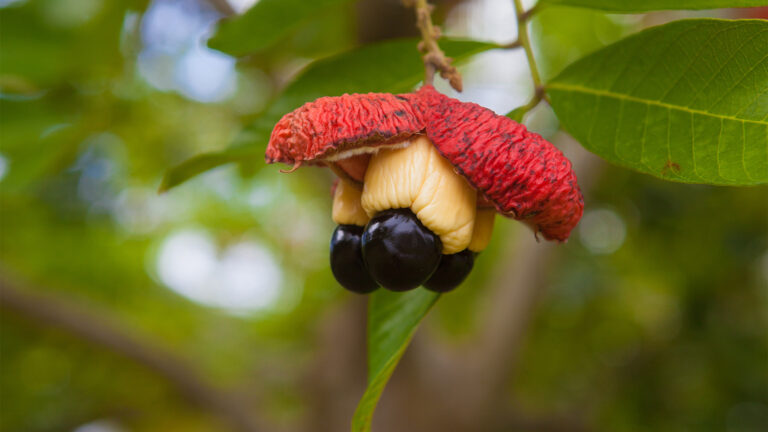
There is a rule in Jamaica that sounds like folklore and functions like a safety protocol.
Never pick the fruit until it smiles.
That is the local description for what happens when ackee finally ripens: the red shell splits open on its own, revealing the yellow flesh inside, and people say the fruit is smiling or yawning at you. Wait for that moment and you get a national delicacy. Pick it early and you may end up in a hospital.
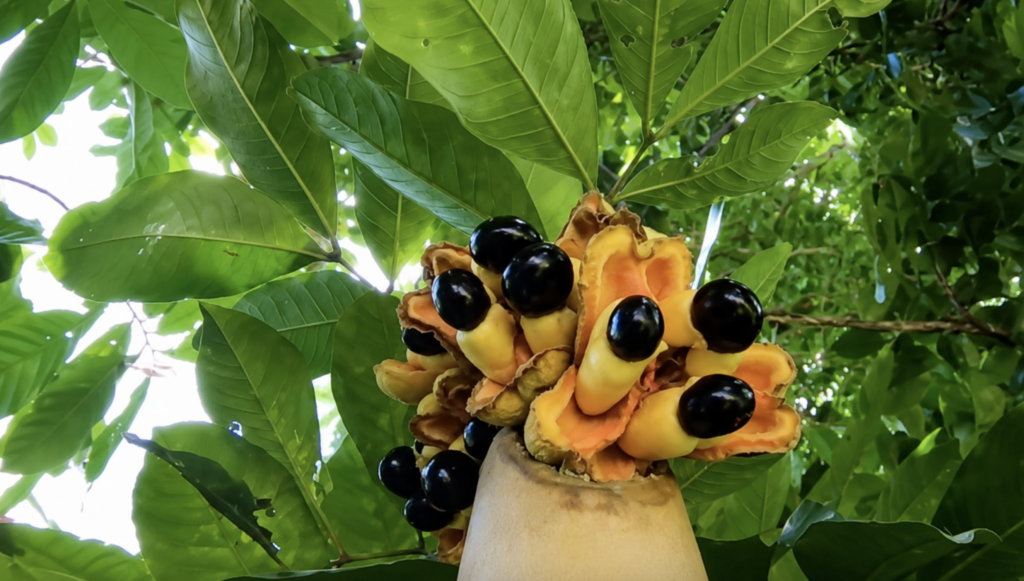
Ackee looks like something from another planet. Rough skin, strange shapes, and a bright reddish shell that splits open as though it were alive. See it hanging on a tree and you would probably hesitate before touching it.
That instinct is not wrong. This is widely considered one of the most dangerous fruits in the world.
And yet it is a national symbol of Jamaica and a beloved ingredient across the Caribbean, including Haiti, Trinidad, and Barbados. The entire difference between food and poison comes down to timing.
The tree itself grows tall, reaching up to 15 meters. Ackee is originally native to West Africa, particularly regions like Ghana and Benin, and it arrived in the Caribbean in the late 18th century during the transatlantic slave trade before becoming deeply rooted in Jamaican cuisine and culture.
The edible part is called the aril, hidden inside the pod beneath glossy black seeds that look unsettlingly like eyes. Once the fruit splits open naturally, that soft yellow flesh is safe and highly valued.
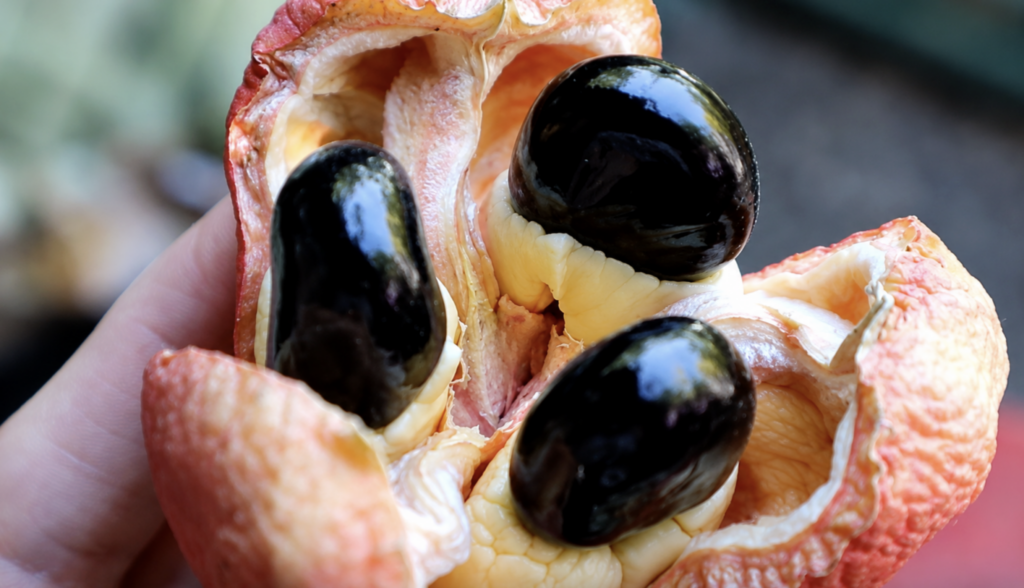
Cooked properly, it is remarkably versatile. The texture resembles scrambled eggs, and the flavor is buttery with mild nutty and slightly sweet notes. It can be fried, boiled, mashed, or stirred into soups and sauces, and in some regions it even appears in custards, cakes, and ice cream.
Its most famous role is in Jamaica’s national dish, ackee and saltfish, where salted cod is cooked with onions, tomatoes, and boiled ackee, often lifted with Scotch bonnet peppers and allspice, then served alongside fried plantains, dumplings, or rice.
Now for the reason the smiling rule exists.
Unripe ackee contains a toxic compound called hypoglycin A. It interferes with the body’s ability to produce glucose, which can trigger a sudden and dangerous crash in blood sugar.
The result has a name: Jamaican vomiting sickness. Symptoms typically begin within a few hours and can include severe vomiting, confusion, loss of consciousness, and in extreme cases seizures. Untreated, it can kill.
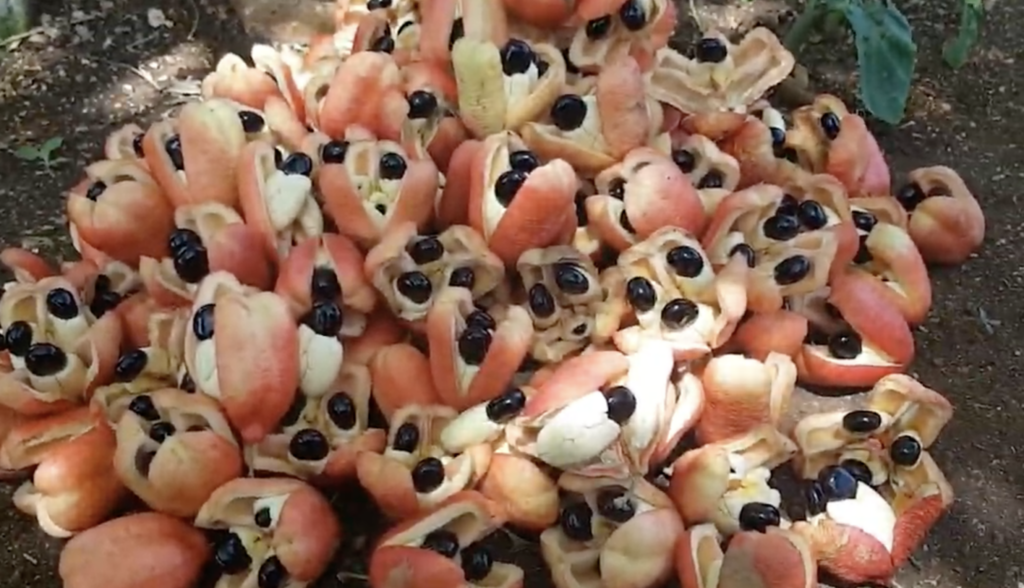
This is not theoretical. Documented outbreaks of illness and death have been linked to improperly prepared ackee, particularly before safety regulations improved. Even today it remains a fruit that demands knowledge rather than casual consumption.
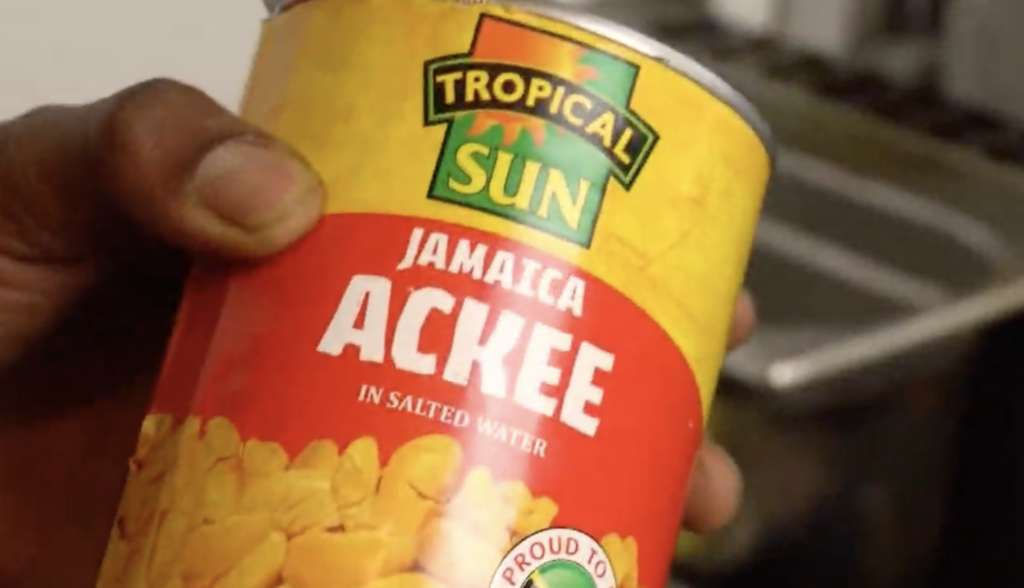
Preserving it does not remove the risk either. Improperly processed canned ackee can be dangerous too, which is exactly why only properly regulated and approved products are considered safe for export.
But ackee is far more than a warning label with a shell. Prepared correctly it delivers real nutritional value, including potassium, magnesium, and calcium, and it has become both a dietary staple in Caribbean households and a genuine source of cultural identity.
Which brings everything back to that one simple test.
A ripe ackee announces itself. The outer shell turns red and opens on its own, exposing the yellow arils inside. Once it smiles, the toxic seeds are removed and only the safe flesh is cooked.
No laboratory required. No chemistry knowledge needed. Just generations of people who learned to read a fruit and pass that reading down.
Nature balanced risk and reward inside a single pod here, and the people who live alongside it worked out the difference long before anyone identified hypoglycin A. In the wrong condition it harms. In the right hands it becomes a dish enjoyed across generations.
You will probably never grab this one off a supermarket shelf without thinking. But it stands as one of the most remarkable examples of deadly and delicious arriving in the same package, separated only by the moment the fruit decides to open.