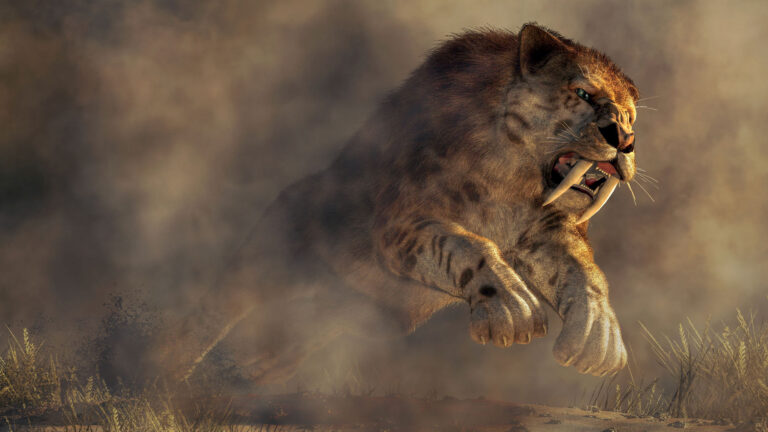
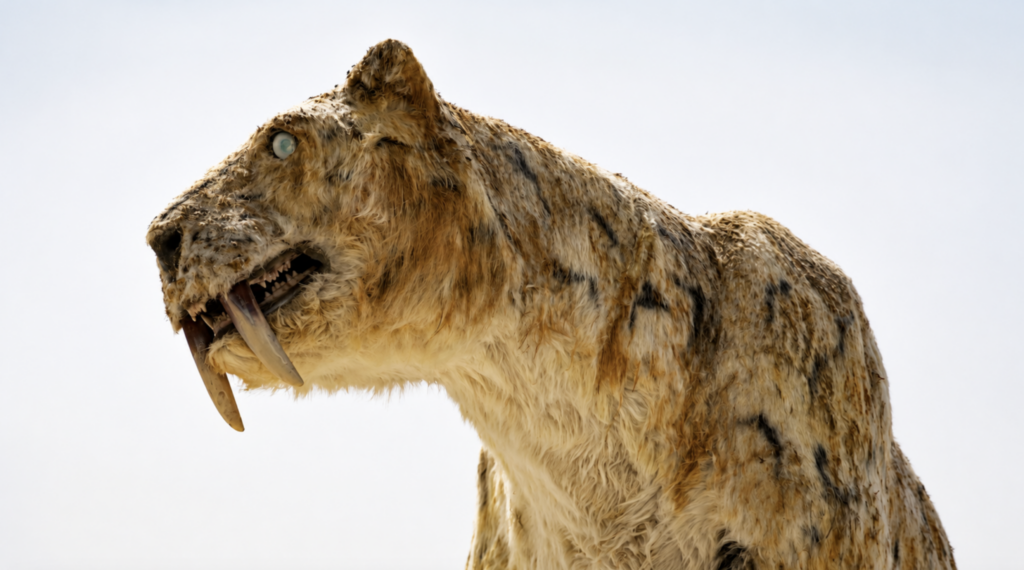
Imagine hiking through a forest when you notice a large cat watching you from the shadows. At first, it looks like a modern tiger. Then it steps into the light, revealing a pair of massive curved canine teeth stretching nearly 20 cm (8 in) past its jaws. A saber toothed tiger has returned, and after thousands of years, it is hunting once more.
For generations, saber toothed cats existed only in fossils and museum displays. They disappeared roughly 10,000 years ago, along with many other large Ice Age animals. Scientists still debate exactly why they vanished, but many researchers believe a combination of climate change and increasing human hunting pushed these powerful predators toward extinction.
Now imagine that modern science changes everything.
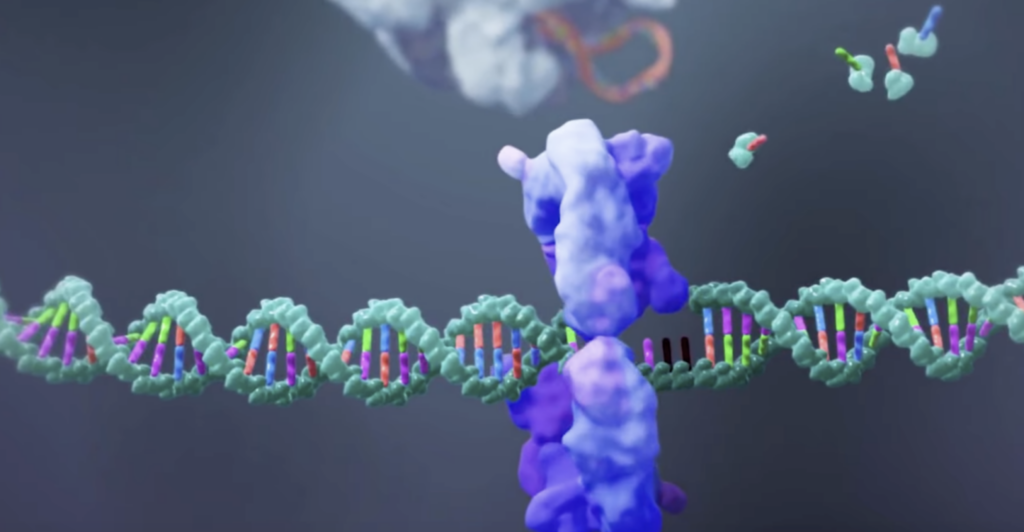
Researchers have been exploring a field known as de extinction, the process of bringing extinct species back using advances in genetics. While the idea once belonged entirely to science fiction, recent breakthroughs in DNA sequencing and genome editing suggest that recreating certain extinct animals may one day become possible.
Unlike dinosaurs, saber toothed cats lived recently enough that recovering usable genetic information may not be completely out of reach. DNA does not survive forever. Over long periods, it breaks apart until it becomes unreadable, making species that disappeared tens of millions of years ago impossible to recreate. Dinosaurs, which vanished about 66 million years ago, are simply too ancient for this technology.
Saber toothed cats are a different story.
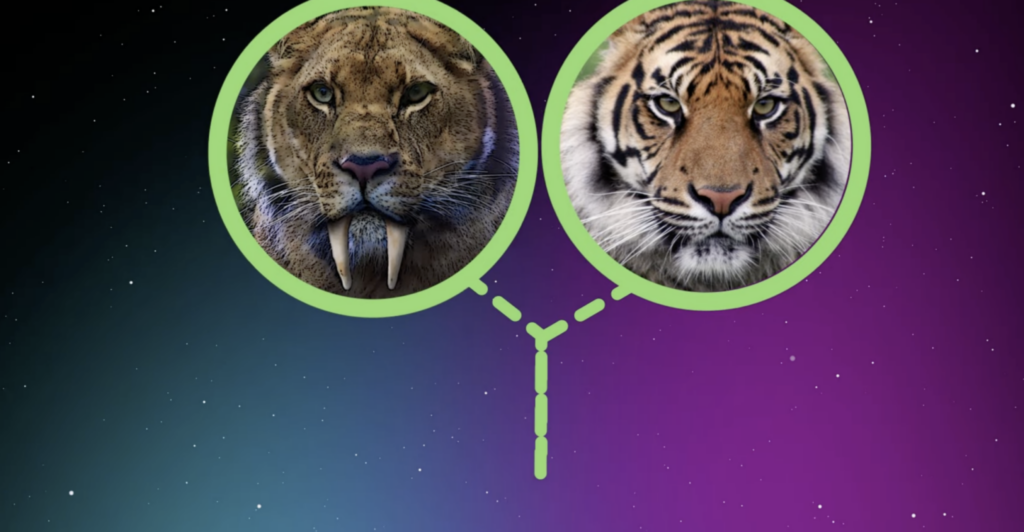
If scientists could recover enough genetic material from exceptionally preserved fossils, they could compare it with the DNA of modern big cats. By editing the genome of a closely related living species, researchers might gradually recreate many of the physical and biological traits that made saber toothed cats unique.
The result would not appear overnight. Early generations would likely resemble modern cats with a growing number of ancient characteristics. Over many generations of selective breeding and genetic refinement, the animals could become increasingly similar to the predators that once ruled Ice Age ecosystems.
If that day ever arrives, Earth would once again have one of its most formidable hunters.
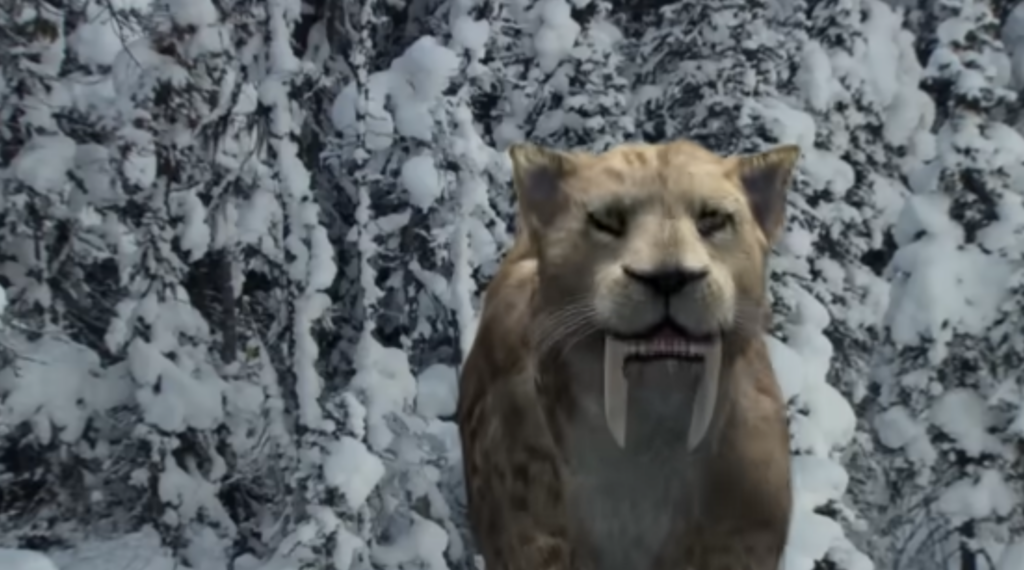
Despite their nickname, saber toothed tigers were not actually tigers. They belonged to a different branch of the cat family and evolved specialized weapons unlike anything seen in today’s predators. Their enormous canine teeth were designed for delivering deep, precise bites to large prey after overpowering it with powerful forelimbs.
Their bodies were built differently from modern lions or tigers. Saber toothed cats had muscular shoulders, shorter tails, and incredibly strong front legs that helped pin struggling animals to the ground before delivering a fatal bite.
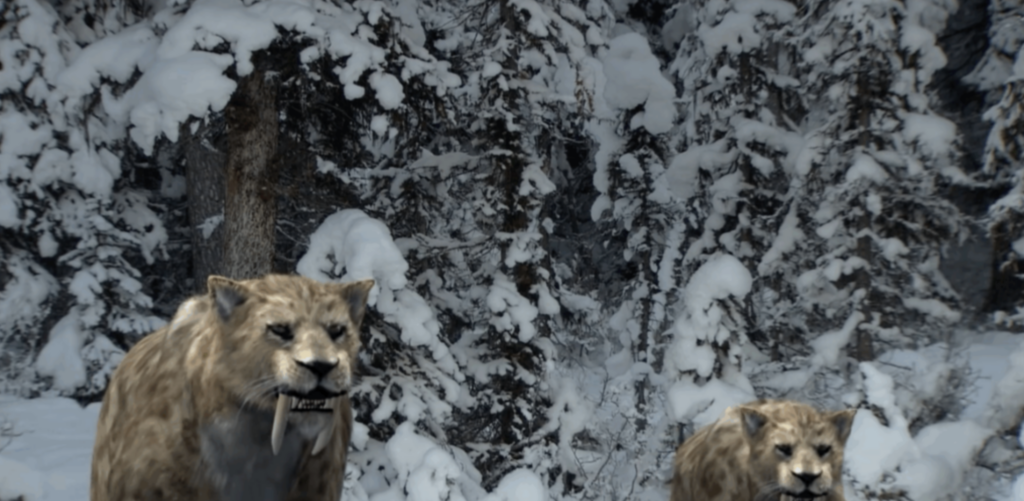
Back in the Ice Age, they hunted giant herbivores that no longer exist in most parts of the world. Returning to today’s ecosystems would present an entirely new challenge.
Modern prey is generally smaller and faster than the massive mammals these predators evolved to hunt. Deer, wild boar, elk, and even livestock could become potential targets, bringing them into frequent conflict with humans.
Protecting both people and the animals themselves would become a major challenge.
Scientists could not simply release saber toothed cats into national parks and hope everything worked out. Their territories would overlap with farms, highways, cities, and existing predator populations. Every hunting success could increase tensions with nearby communities.
Even carefully managed reserves might not solve every problem. Large predators require enormous territories, and introducing a new apex hunter could disrupt food chains that have remained stable for thousands of years.
There is also the question of reproduction.
If recreated saber toothed cats were capable of breeding with closely related modern species, scientists would need to understand what effects hybrid offspring could have on existing wildlife populations. New genetic combinations might produce animals with unexpected traits, making long term conservation even more complicated.
Then comes the biggest question of all.
Why bring them back?
Supporters argue that de extinction could repair damage humans caused thousands of years ago and restore lost ecosystems. Others believe the same technology could one day save endangered species before they disappear forever, preserving biodiversity for future generations.
Critics see significant risks. Reviving extinct predators could consume enormous amounts of funding that might otherwise protect animals already struggling to survive. Some also worry that successful de extinction could create a dangerous attitude toward conservation, making people believe extinction is no longer permanent because science can always reverse it.
That assumption could prove disastrous.
Preventing extinction is almost always easier, safer, and far less expensive than trying to reverse it thousands of years later.
For now, saber toothed cats remain part of Earth’s distant past. But every advance in genetics brings researchers a little closer to answering one of science’s biggest questions. If these legendary predators ever walk the planet again, the world they return to will be very different from the one they left, and humanity will have to decide whether bringing back one of history’s greatest hunters was an extraordinary achievement or a mistake that changed nature forever.