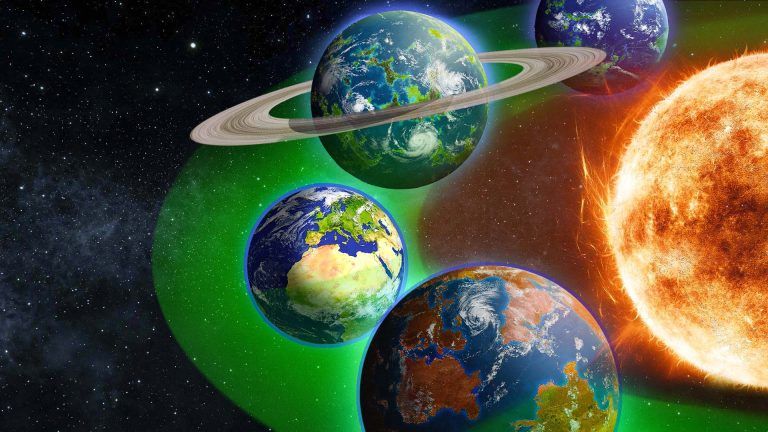
Earth sits in the one narrow band of our Solar System where liquid water can exist on a surface. Astronomers call it the habitable zone, or the Goldilocks zone, because the conditions here are just right.
So here is the plan. Move every other planet into that same band and see whether life starts appearing across the Solar System.
It almost works. Then Jupiter arrives, carrying two and a half times the mass of every other planet combined, and the whole arrangement begins tearing itself apart.
Start with the basics of why this zone matters. Any closer to the Sun and water boils away. Any further and it freezes solid.
The size of that band depends entirely on how hot or cool a star burns. Scientists have found 4,000 exoplanets sitting inside habitable zones, and only 24 of them might actually be able to support life.
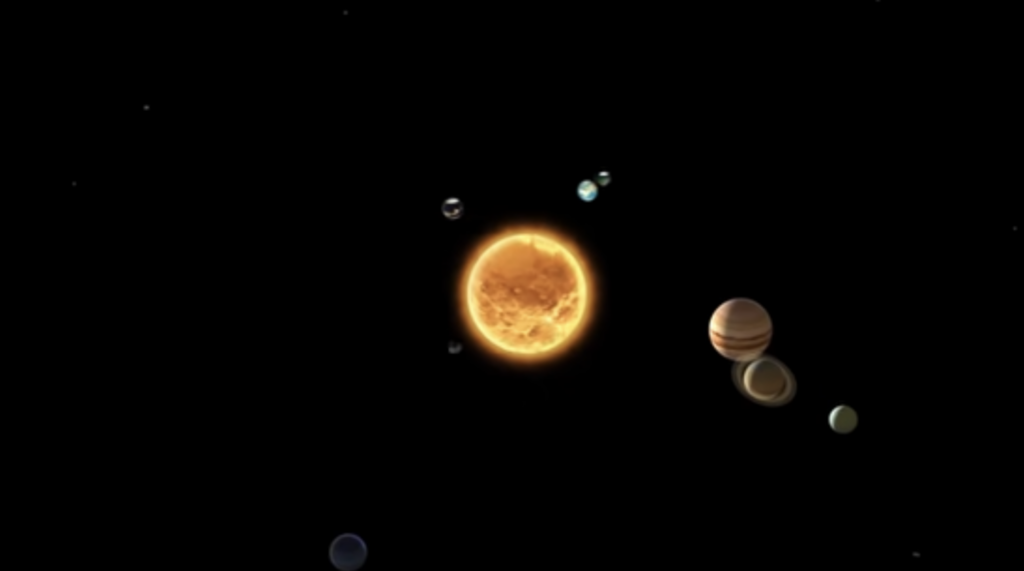
In our system, the zone runs from 0.9 to 1.2 AU from the Sun, which gives us roughly 45 million kilometers of prime real estate to work with. Eight planets, one narrow strip, and a strict requirement not to wreck conditions on Earth in the process.
Mercury goes first, parked at the innermost edge around 0.9 AU. That is more than twice its current distance from the Sun, and almost nothing about the planet changes except a refreshing coolness after billions of years of being roasted.
Venus is easier, since it already orbits close to the zone at 0.72 AU.
There is genuine history there too. When our Sun was younger and dimmer, Venus effectively sat inside a habitable zone and may have had conditions for life, complete with a shallow ocean of its own. As the Sun heated up, the zone shifted outward, temperatures climbed, and those oceans boiled away.
Move Venus to a cooler position and it might become habitable a second time.
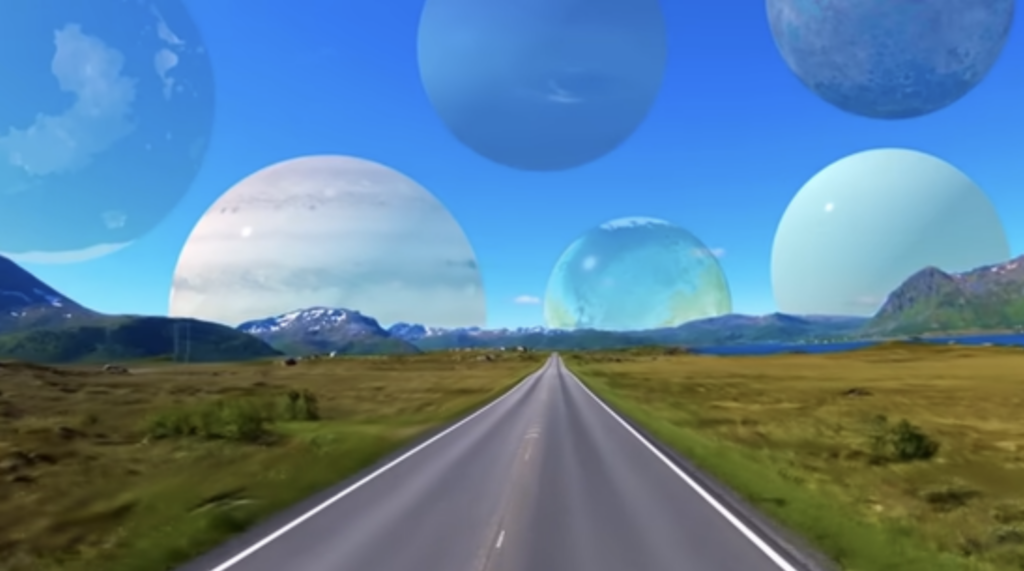
Now the arithmetic gets tighter with five planets left to place. Spacing them evenly makes the most sense, which works out to about 6.5 million kilometers between each one, roughly 30 times the distance between Earth and the Moon.
Shifting our own planet slightly keeps the experiment less chaotic, though at around 0.97 AU things would get noticeably warmer here. Bad news for an already strained climate.
Mars is the exciting one, and also the disappointment. Even with liquid water available, it would stay barren, because water alone is not enough.
Mars has no magnetic field, which means solar radiation strips away any atmosphere it tries to hold. Terraforming would still be mandatory.
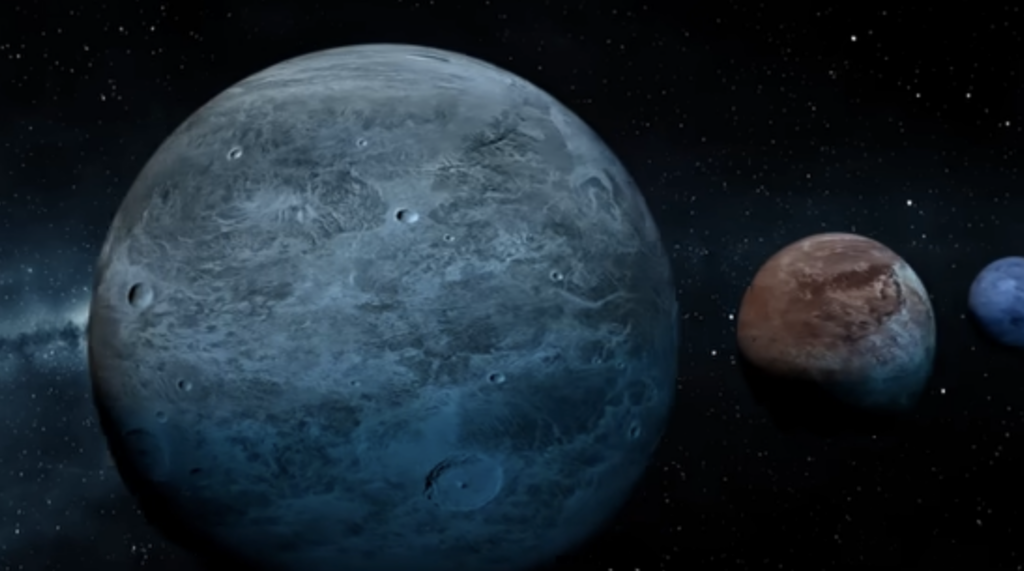
The gas giants offer nothing either. Atmospheric pressures and temperatures on Jupiter and Saturn are far too intense for molecules like DNA to remain stable.
Their moons are a different story. Europa, moved this close to the Sun, would see its thick ice layer melt, which makes it the one place in this new arrangement where you could genuinely go swimming.
And the practical upsides are real. With Neptune now closer to us than Mars currently is, planet hopping becomes an ordinary trip. Even using today’s technology, you could travel between planets in 90 days.
Resources follow from that. Hydrogen fuel from Jupiter and Saturn could drive a transition to a low carbon future, while cobalt mined from asteroids would feed renewable energy systems.
Which is where the plan stops working.
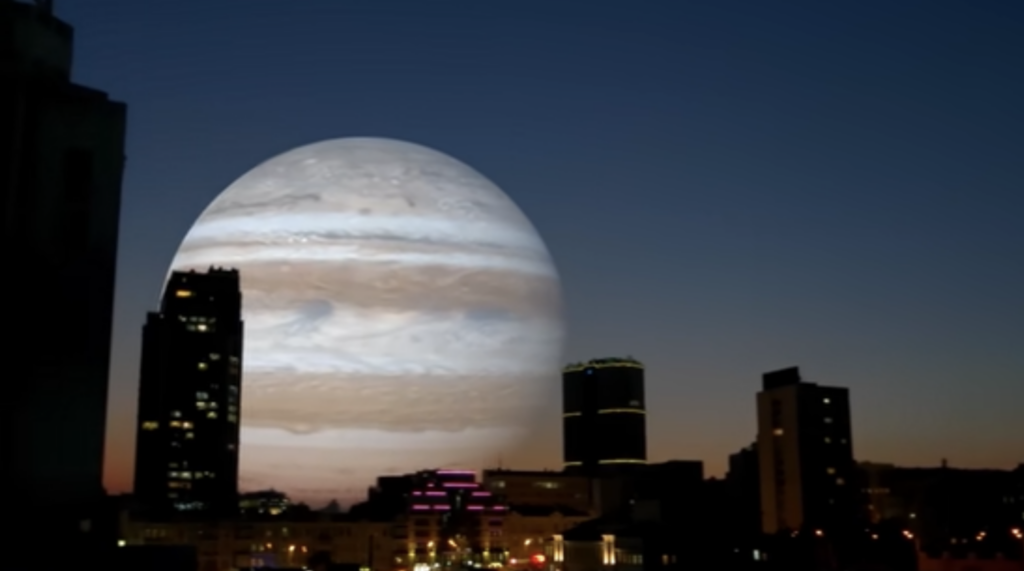
Scientific reports suggest a star like ours could host six Earth sized planets in its habitable zone without trouble. Earth sized being the operative phrase.
Jupiter is not Earth sized. Placing something with that much mass in a crowded band throws gravitational stability completely out of balance, and those imbalances do not stay theoretical.
Planets and moons would be ejected from orbit or reshuffled into a completely different order. You would end up with a messy new Solar System, an unpredictable one, and life on Earth facing extinction inside the very zone that made it possible.