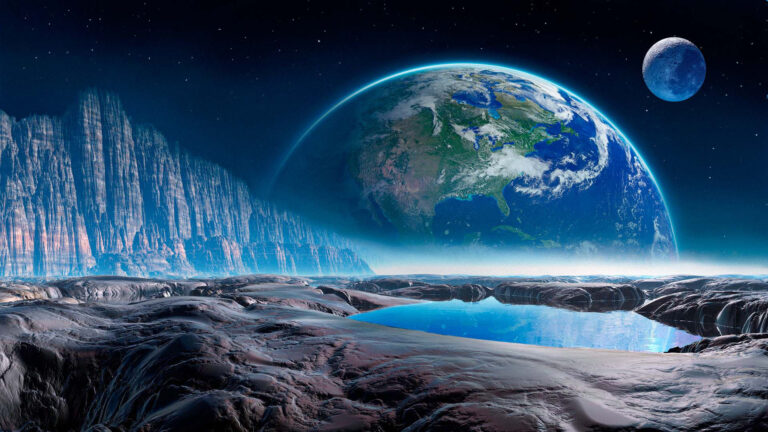
The Solar System looks stable. Planets in their lanes, everything running on schedule, the same arrangement holding for billions of years.
Now picture looking up one evening and noticing something that shouldn’t be there. A faint speck, brighter than the stars around it, and slightly larger than it was the night before.
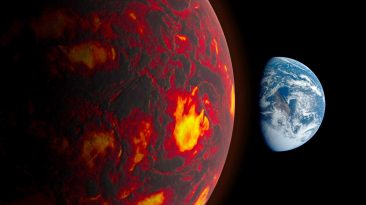
Give it enough nights and the shape resolves into something unmistakable: a planet, bigger than ours, coming our way.
The first real sign of trouble wouldn’t be visual at all. It would be the sky misbehaving.
As the intruder’s magnetic field met ours, the result would be violent thunderstorms and auroras spreading far beyond the poles. Genuinely spectacular, and the last beautiful thing that would happen.
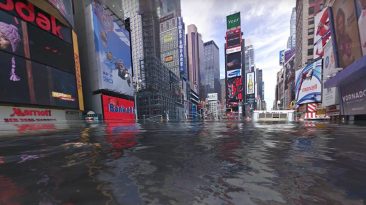
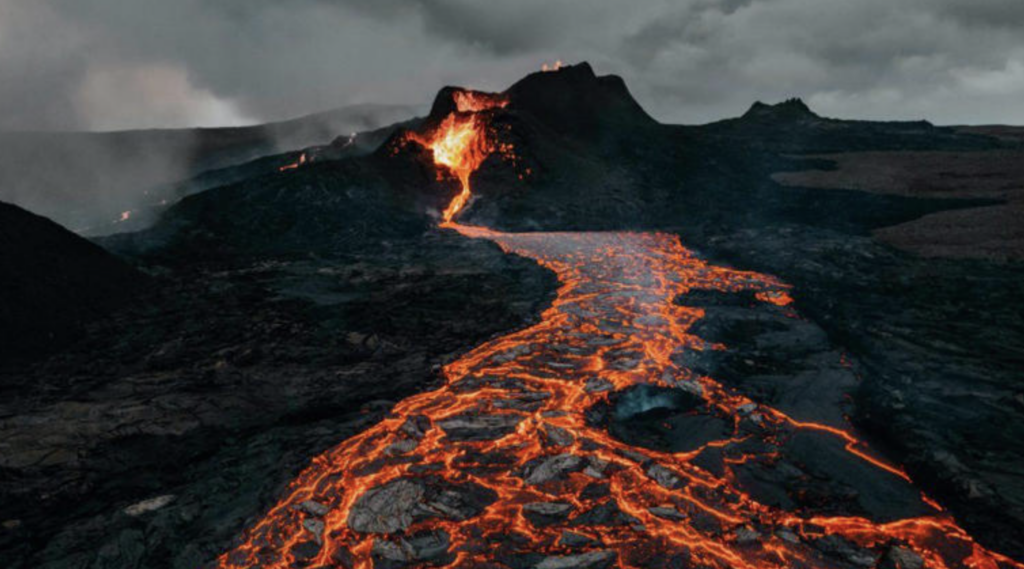
Then the oceans respond to the new gravity. Tidal waves larger than anything in recorded history would come ashore, earthquakes would hit across the entire planet, and the atmosphere would begin thinning and bleeding out into space.
Push it far enough and Earth itself starts coming apart. Darkness, plummeting temperatures, and nothing left alive.
So where would something like this even come from?
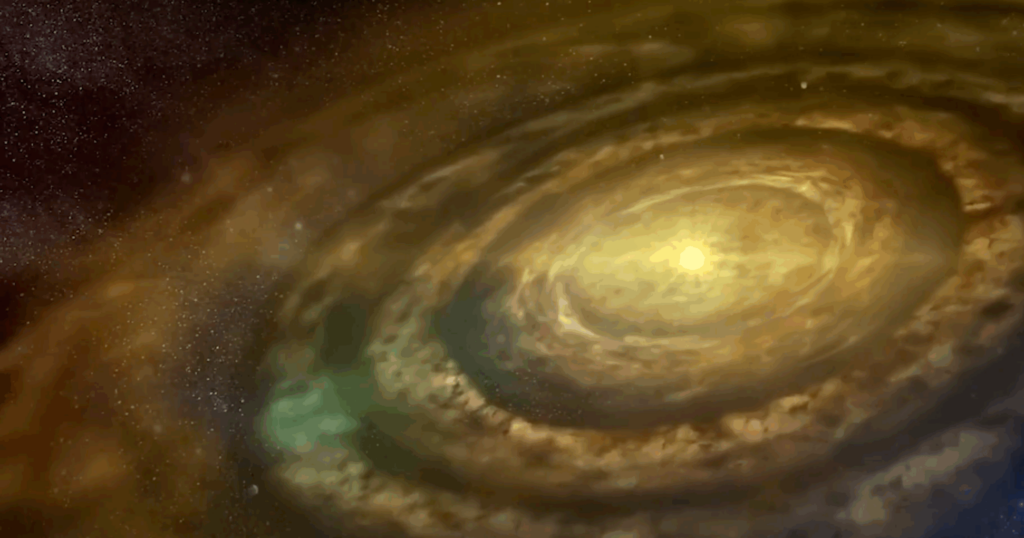
To answer that you have to go back roughly four and a half billion years, when our Solar System formed out of a cloud of gas and dust. Particles collided, clumped together, and became planets, and everything left over got swept away by solar winds long ago.
Which means there’s no spare material floating around here to build anything new. Any arriving planet has to come from outside.
That’s a rare event, since the space between stars is enormous and mostly empty. Rare is not impossible, though, and wandering planets definitely exist.
Before going further, it’s worth clearing up a common confusion, because some astronomers think there may already be an unseen planet out there.
They call it Planet Nine. Nobody has observed it directly, but its gravity could explain why distant objects in the outer Solar System behave so oddly.
If it’s real, it poses no threat whatsoever. It sits hundreds of times farther from the Sun than we do and takes thousands of years to complete a single orbit. New telescopes may confirm it soon, though for now it stays theoretical.
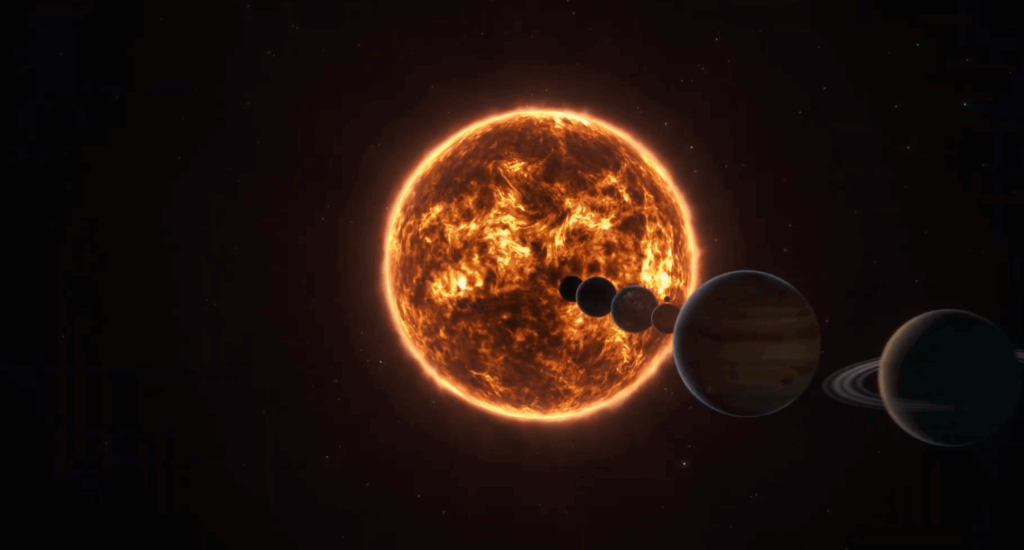
The genuine danger is something else entirely: a rogue planet.
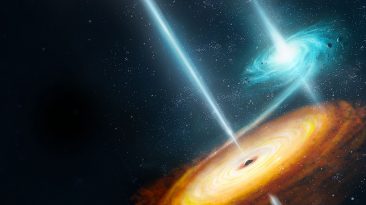
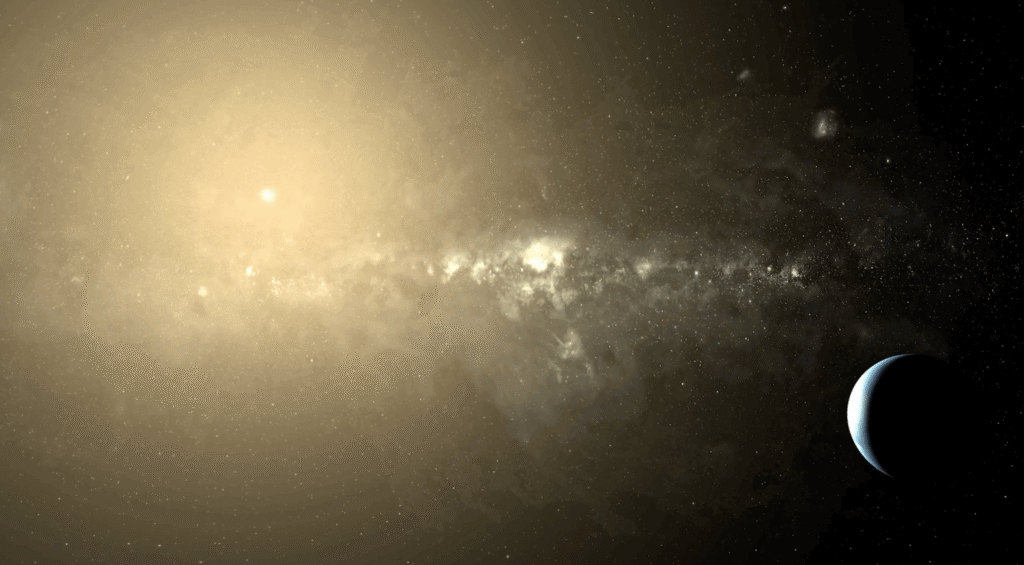
These are worlds drifting through space without orbiting any star at all. Some were thrown out of their original systems, while others never formed around a star to begin with. Scientists estimate there could be billions of them in our galaxy alone.
Let a Jupiter sized rogue into the Solar System and bring it within a few million kilometers of Earth, and its gravity would tear at our crust, wreck the atmosphere, and trigger floods, eruptions, and earthquakes simultaneously.
Nothing survives that.
Smaller doesn’t mean safer, either.
A Pluto sized object hitting Earth would wipe out nearly all life. Even an asteroid comparable to the one that finished the dinosaurs would be enough to end civilization. A near miss from something Mercury sized would still deliver massive earthquakes and tidal waves.
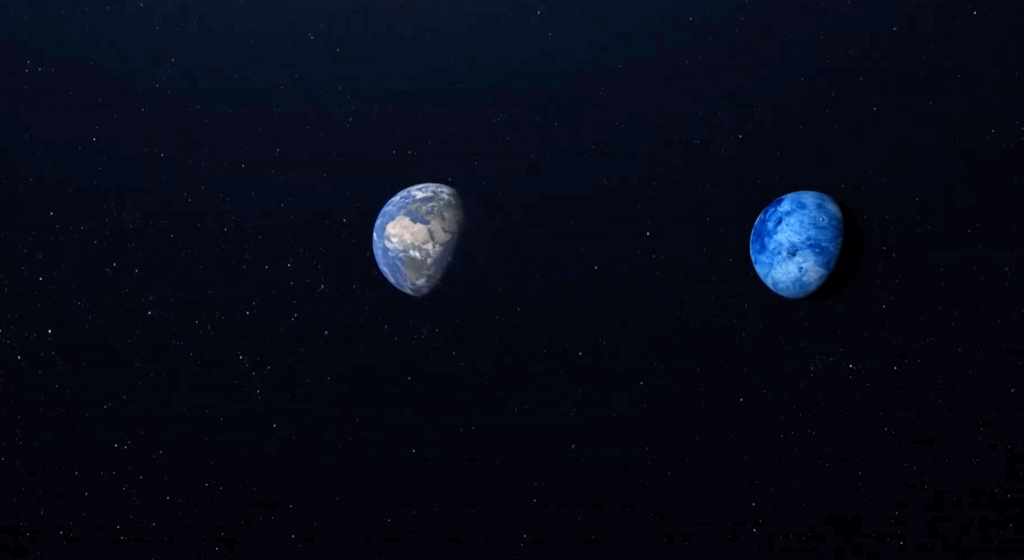
An Earth sized visitor creates the strangest scenario of all. Two worlds of similar mass passing close would pull at each other’s oceans and land, distorting both, throwing debris into orbit that could briefly form rings around either planet.
Eventually they’d collide.
Although there is one version of this where a new planet arrives and nothing terrible happens.
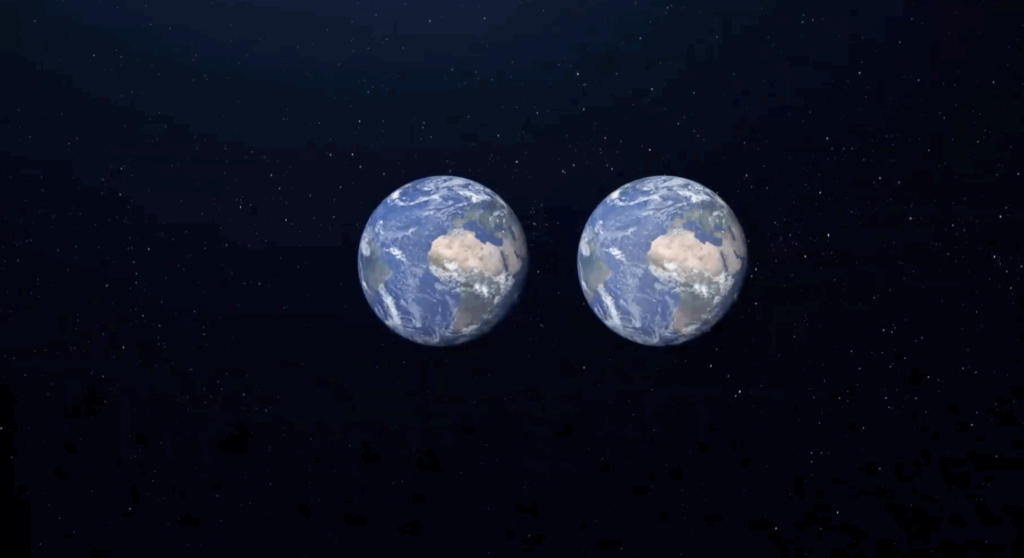
A rare arrangement called a horseshoe orbit allows two bodies to follow intertwined paths around the same star without ever colliding. Some of Saturn’s moons already do exactly that.
Give Earth a twin in that configuration and the two worlds would pass near each other every few decades, swapping positions gently instead of crashing. Over long stretches of time they might even develop synchronized climates and matching seasons, mirroring each other around the Sun.
Then there’s the possibility that the rogue never reaches us and hits the Sun instead.
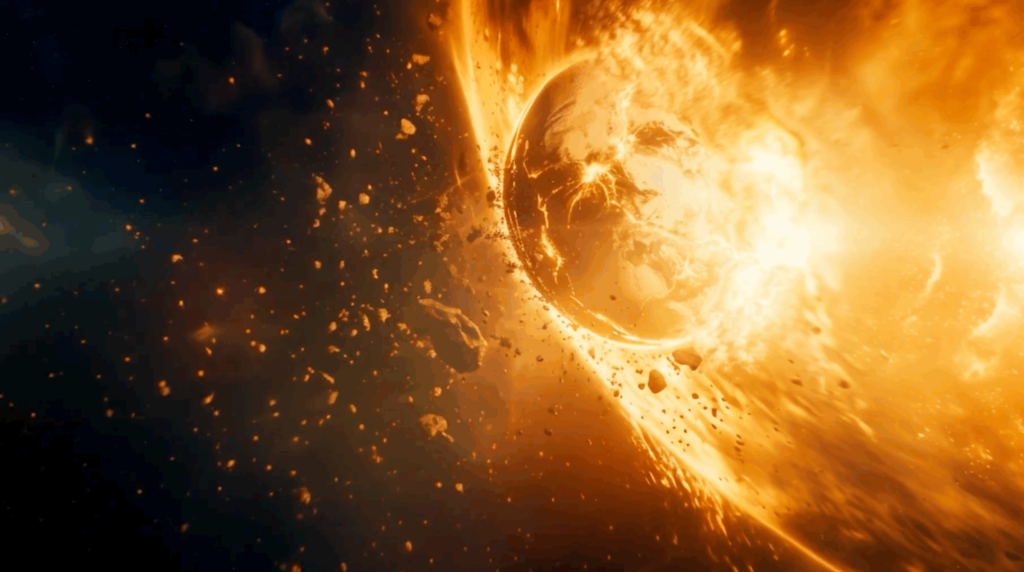
That doesn’t save us. An impact that large could brighten the Sun for thousands of years, warming Earth and rewriting our climate. Alternatively, debris from the collision could form a dust cloud around the Sun and block enough light to cool us dramatically.
Either direction produces temperature swings capable of collapsing ecosystems and weather systems worldwide, with mass extinction as a realistic outcome.
And a planet doesn’t need to touch us to finish us.
A close pass could shove Earth into a different orbit. Move closer to the Sun and we cook. Drift outward and we freeze. Either way the seasons become unrecognizable, or stop happening at all.
The worst version has us ejected from the Solar System entirely, turning Earth into a rogue planet of its own, drifting through deep space with no sunlight reaching the surface.
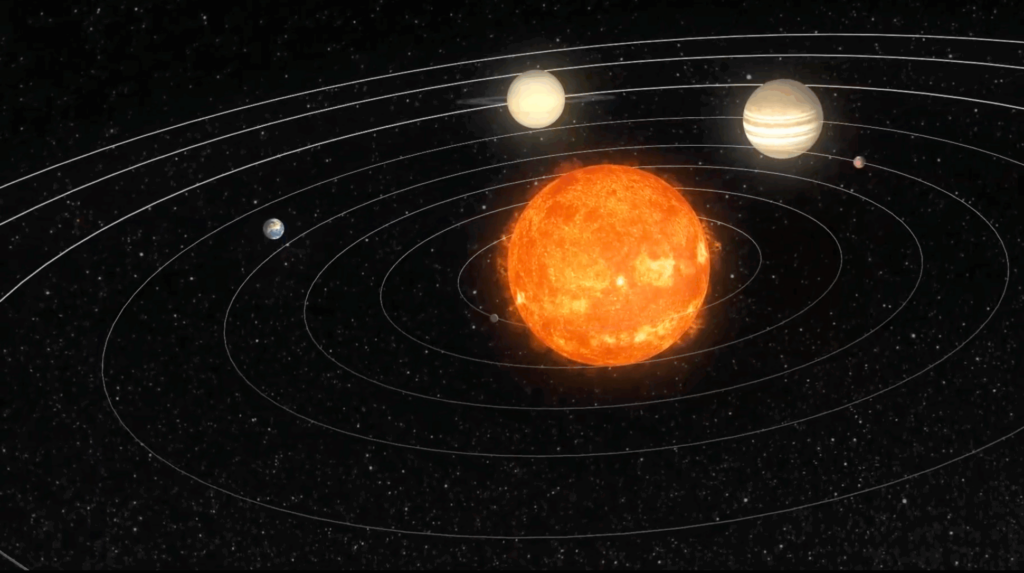
So how worried should anyone actually be?
Barely at all, as it happens. Scientists put the odds of a rogue planet entering our Solar System within the next thousand years at less than one in two trillion.
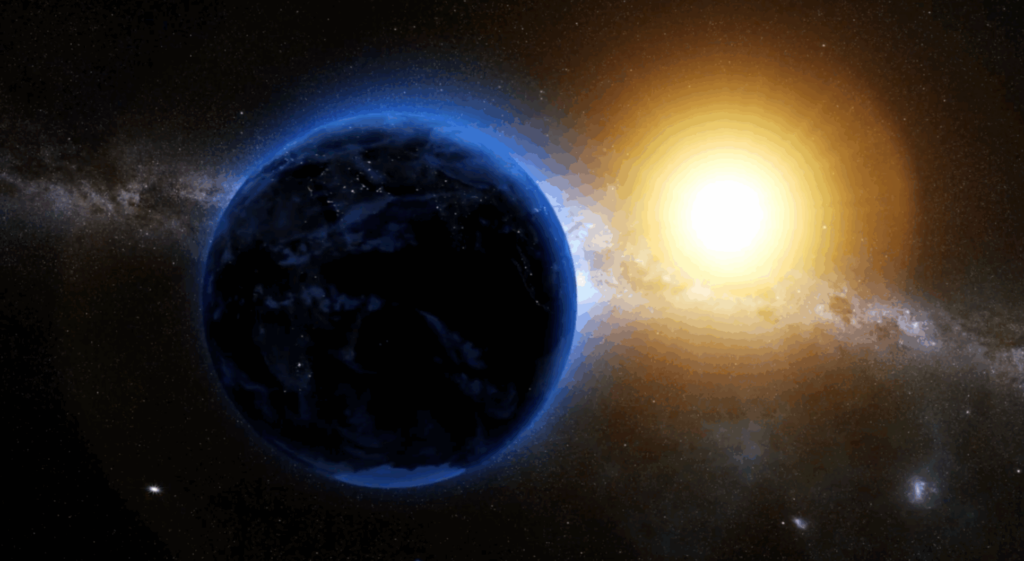
Which is about as safe as anything gets in astronomy.
Still, the universe has a habit of producing surprises, whether that’s a hidden planet at the edge of our own system or something wandering in from between the stars.
Let’s just hope none of those stories start with an unfamiliar speck of light in the evening sky.