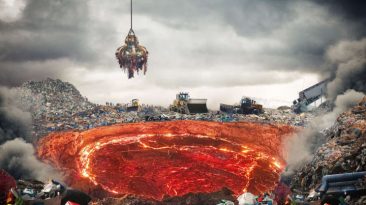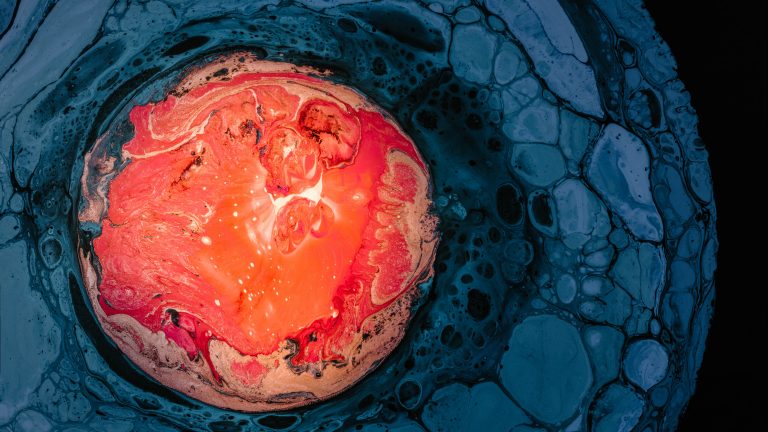
Your planet has a heartbeat. You have never heard it, but you have depended on it every second of your life.
It pulses thousands of kilometers beneath your feet: a colossal sphere of iron and nickel burning at roughly 6,000 degrees Celsius, nearly matching the surface of the Sun. That furnace has been running since Earth was born more than 4.5 billion years ago, quietly powering the processes that keep this world alive.
So let us ask the forbidden question. What happens on the day that heartbeat stops? What follows when Earth’s core goes completely cold?
The answer unfolds like a slow motion apocalypse, and it starts with the death of something invisible.
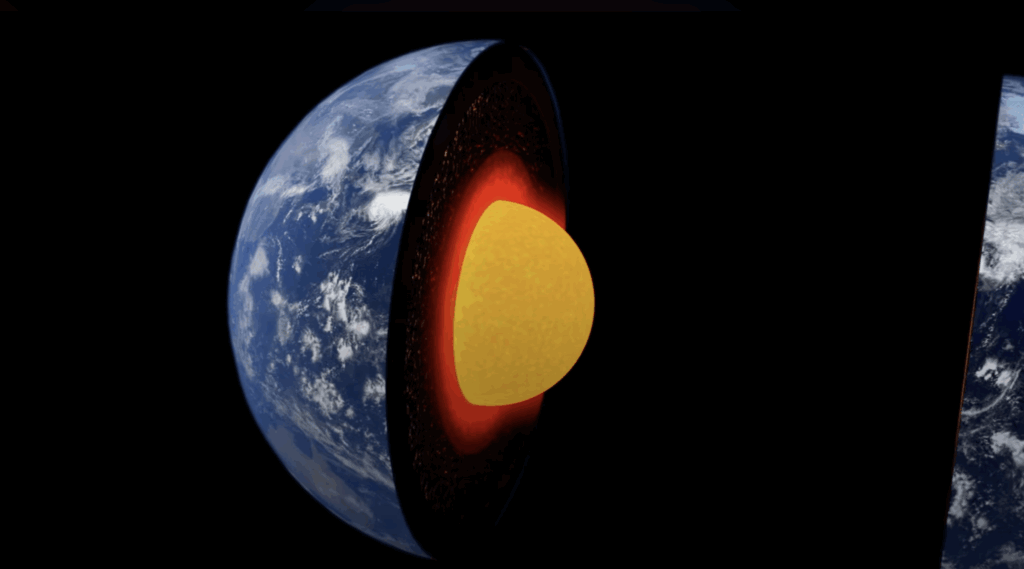
To understand the disaster, you first need to see the machine. The inner core is a solid ball of metal, wrapped in an outer core of swirling liquid iron. As the planet spins, that churning molten metal generates enormous electric currents, and those currents produce Earth’s magnetic field, the invisible shield surrounding everything you know.
That shield is fighting a war on your behalf right now. It deflects the storm of charged particles constantly pouring off the Sun, particles that would otherwise strip away our atmosphere piece by piece.
We know exactly how that story ends, because we have seen the victim. Scientists believe this same process is what murdered Mars, transforming it from a world with potential into the cold, barren desert we photograph today.
The day the core freezes, the liquid metal stops swirling. The currents die. The shield falls.
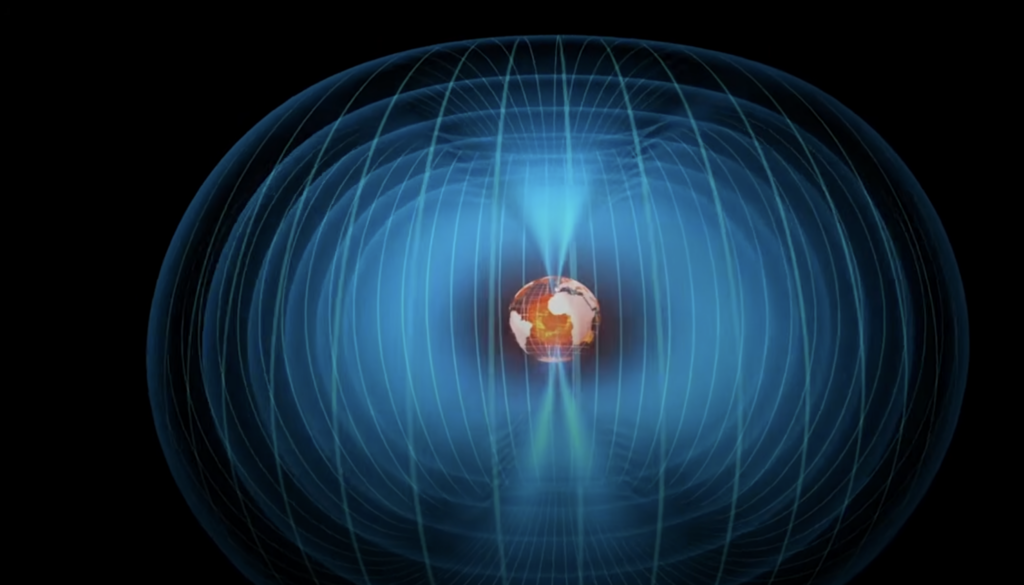
From that moment, Earth is exposed. Solar radiation begins eroding the atmosphere, slowly at first, then relentlessly, while the surface absorbs ever more dangerous radiation. Our blue world starts down the same road Mars already traveled, becoming a little more hostile to life with every passing millennium.
And the magnetic shield is only the first casualty, because a frozen core also switches off the engine that shapes the planet itself.
The internal heat driving plate tectonics fades away. Volcanoes fall silent forever. Earthquakes become vanishingly rare. The continents, which have drifted and collided and reshaped themselves for billions of years, simply stop moving. The most geologically alive planet we know becomes a still, silent rock.
Then the cold arrives. As the last internal heat bleeds away into space, global temperatures begin their long decline. This would take millions or even billions of years, but the destination is fixed: a dimmer, quieter, far less habitable world, coasting through space on momentum alone.
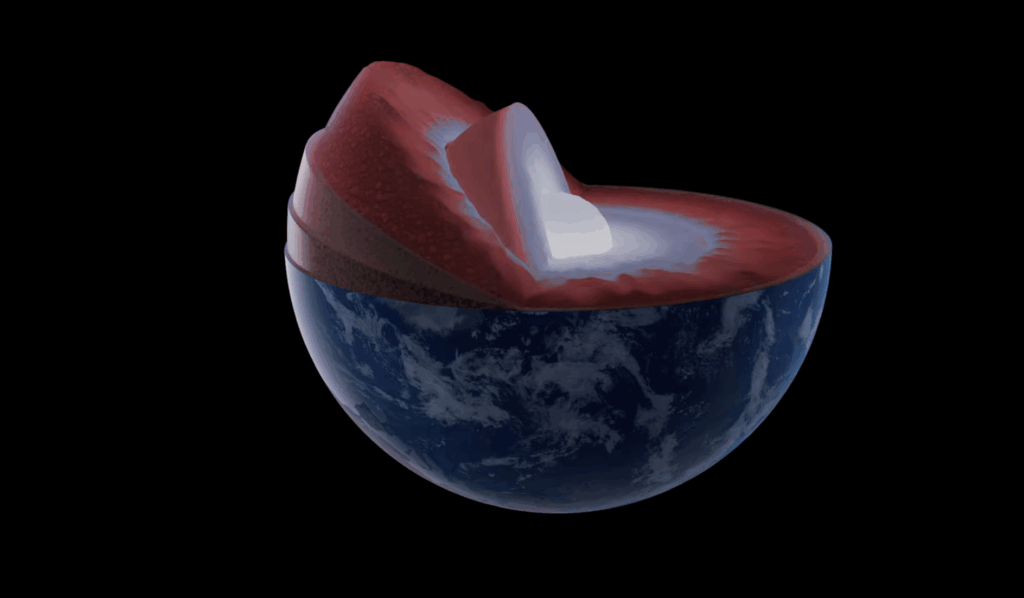
Strangely, even in death, the core would remain one of the most extreme places in the Solar System. The pressure at Earth’s center is estimated at more than 3.5 million times the pressure at sea level. Frozen or not, anything that somehow reached it would be crushed into oblivion. The heart would stop beating, but it would never stop being deadly.
Now, before you look nervously at the ground, here is the reassuring truth: this is not a forecast. Scientists expect Earth’s core to stay hot and active for billions of years to come, spinning its liquid metal, holding its shield in place, and sustaining the conditions that let life flourish.
The heartbeat continues. You will never hear it, and it will never miss a beat in your lifetime, or in the lifetime of our species.
But now you know what it is worth. Because the day Earth’s heart finally stops, everything that follows has already been written, and Mars is the preview hanging in our night sky.