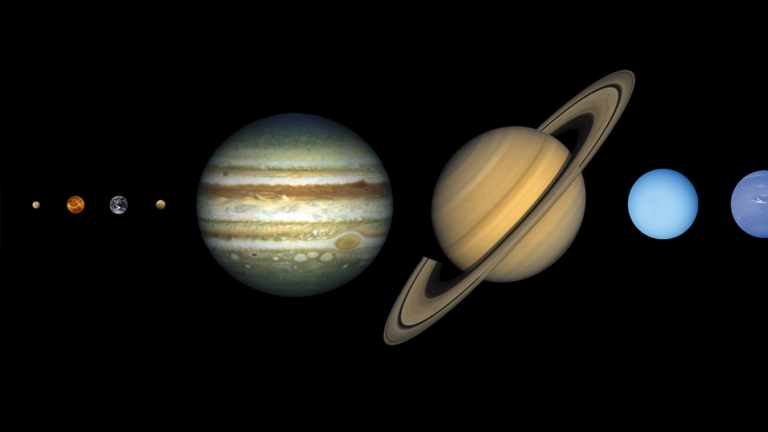
Nobody has ever been inside a planet. Not ours, not any of them.
What we know comes from indirect evidence: seismic waves moving through rock, gravity measurements, and data sent back by spacecraft. Piece enough of that together and you can start to see what’s down there.
And the picture gets progressively weirder the further in you look. Oceans of liquid metal. Hydrogen behaving like a conductor. Diamonds falling as rain.
Mercury
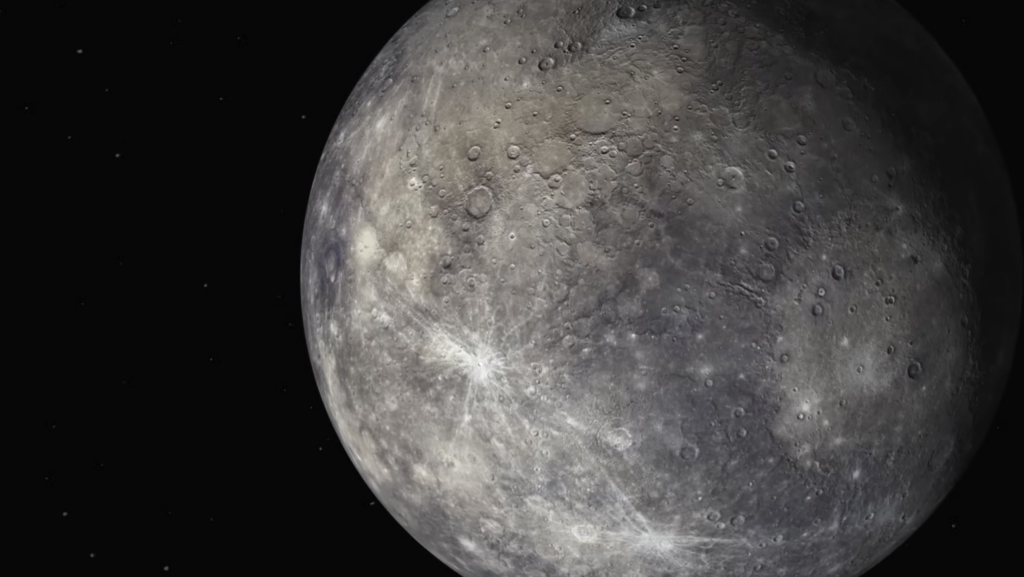
Mercury barely qualifies as a rocky planet once you understand its proportions.
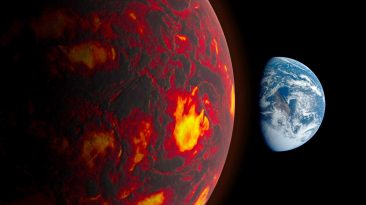
Its metallic core accounts for about 85 percent of the planet’s radius, leaving only a thin crust and mantle wrapped around it. That core is mostly iron and likely still partly molten, kept that way by sulfur and radioactive elements.
Some scientists have suggested a hidden layer of diamonds sitting deep inside, formed under the extreme pressure down there.
Surface temperatures swing violently between day and night, but the interior stays relentlessly hot. Really, Mercury is closer to a giant iron sphere with a thin coating than a planet in the way we usually picture one.
Venus
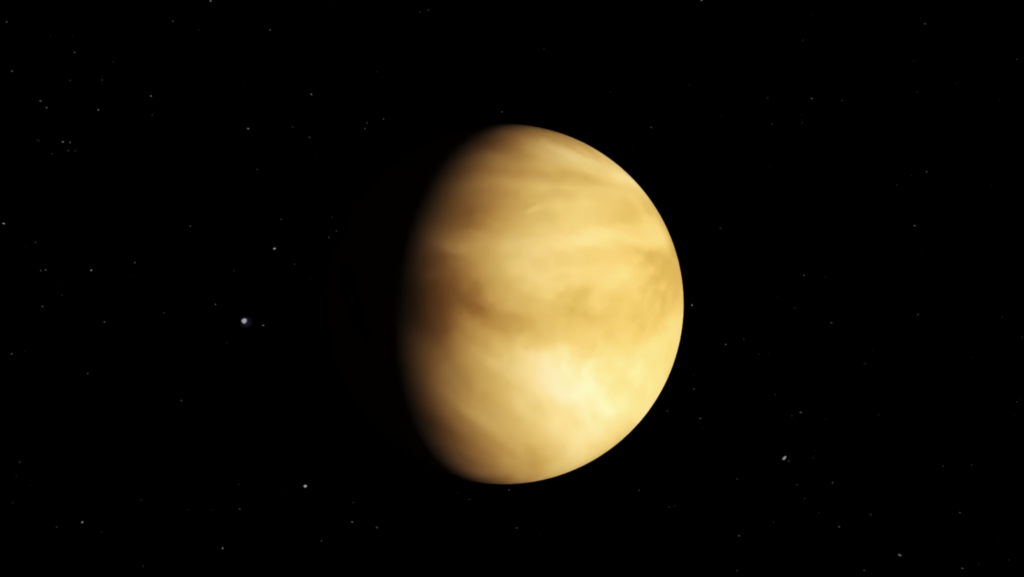
People call Venus our twin, which holds up on the outside and falls apart underneath.
Below the thick crust is a superheated mantle with nowhere to release its energy, because Venus has no plate tectonics. Heat builds until it forces its way out through massive volcanic resurfacing events that repave the planet.
At the center sits a metallic core of iron and nickel, much like ours.
The difference is that Venus generates no global magnetic field, most likely because it rotates too slowly for the core to produce one. Geologically alive, and completely hostile.
Earth
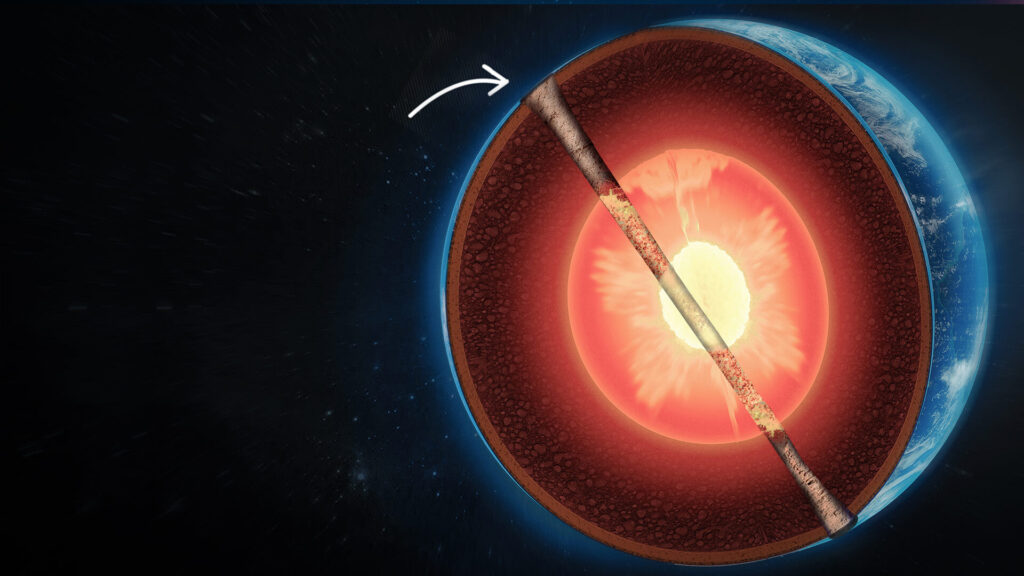
Ours is the interior we understand best, and it’s worth appreciating how fortunate the arrangement is.
A thin crust sits on top of an enormous mantle that churns slowly and drives plate tectonics. Below that is a molten outer core of iron and nickel, and its constant motion generates the magnetic field around the planet.
Right at the center is a solid inner core, blisteringly hot but crushed into solidity by the pressure above it.
That layered structure is doing something important. The magnetic field it produces shields the surface from solar radiation, which is a large part of why anything is alive here at all.
Mars
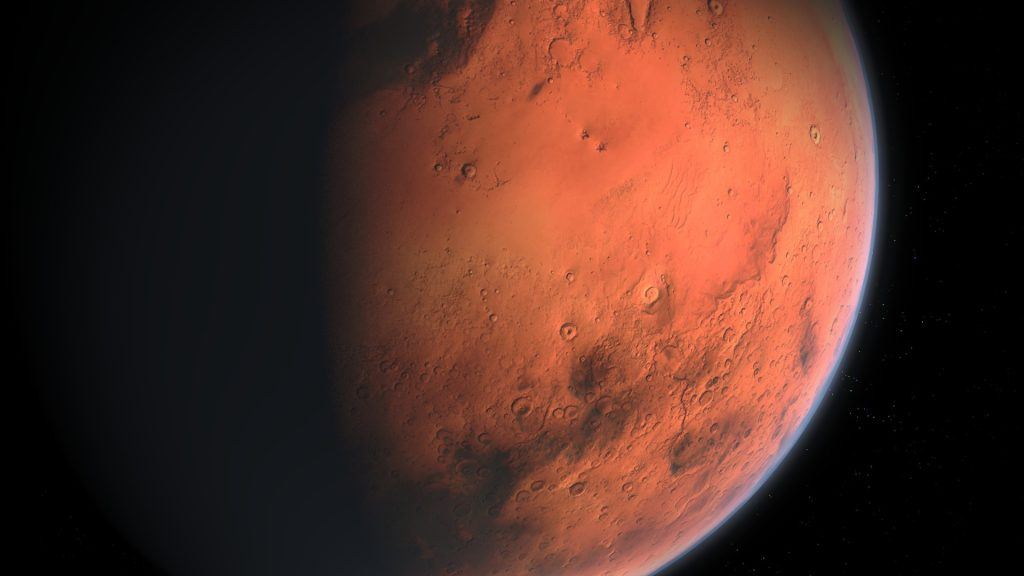
Mars is the cautionary version of the same story.
Under the surface lies a thick crust and an iron rich mantle, wrapped around a large molten core of iron, nickel, and lighter elements including sulfur.
It once had a magnetic field, exactly like ours. Then the core cooled and slowed, and the field faded out.
With nothing left to deflect the solar wind, much of the atmosphere was stripped away over time. Mars shows what happens when a planet’s interior runs out of energy.
Jupiter
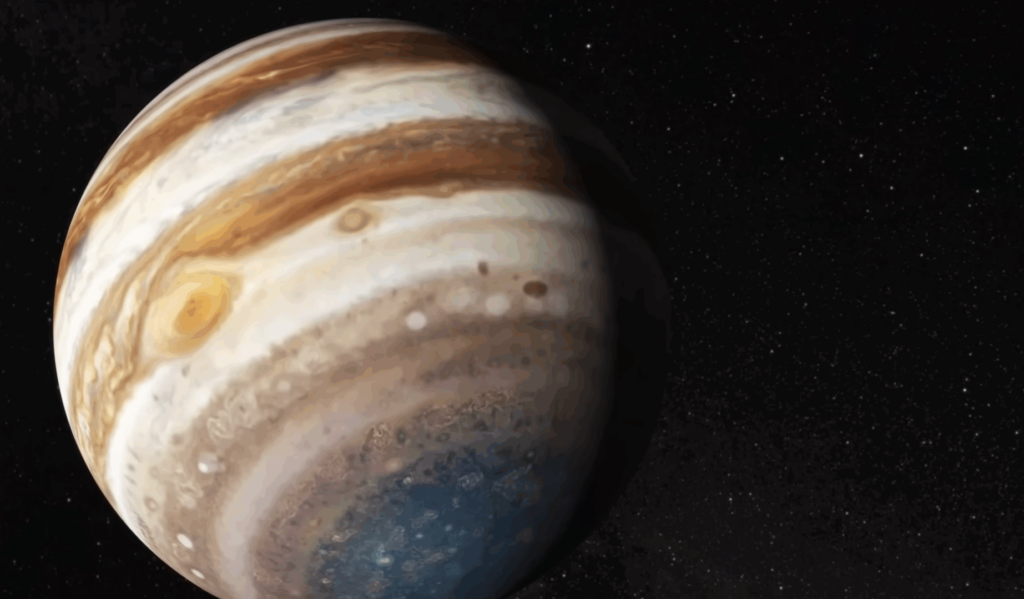
There is no surface on Jupiter. Nothing to land on, nothing to stand on.
The outer layers are swirling hydrogen and helium that grow denser as you descend, until the pressure squeezes the hydrogen into a liquid. Go deeper still and it becomes metallic hydrogen, which conducts electricity.
That layer is what generates Jupiter’s magnetic field, the most powerful in the Solar System.
At the center is what scientists describe as a fuzzy core, a mixture of rock, ice, and metal with no clear boundary separating it from everything above. Inside Jupiter, the distinction between gas and solid stops meaning much.
Saturn
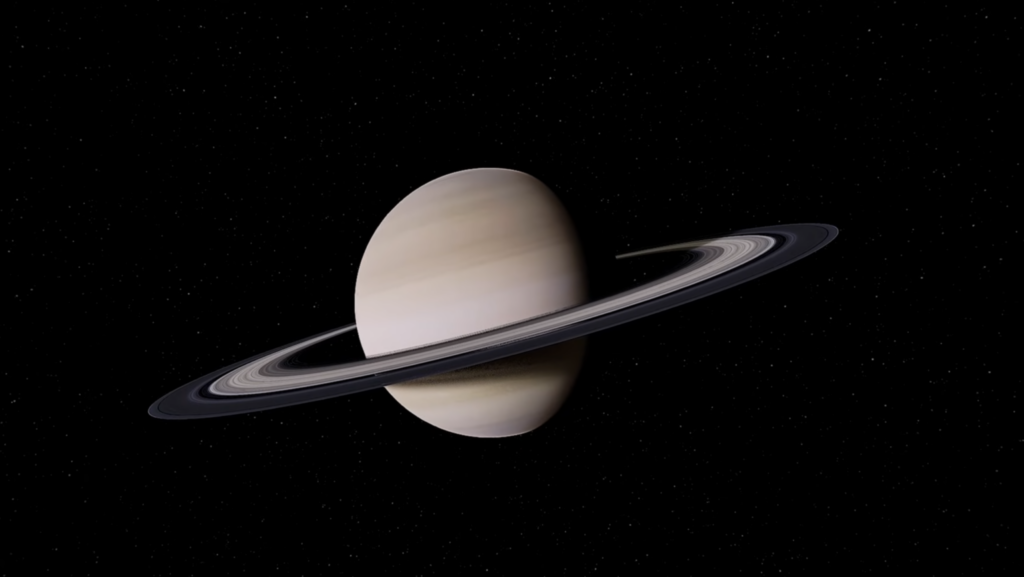
Saturn follows a similar blueprint with its own variations.
Hydrogen and helium in the outer layers transition into liquid and then metallic hydrogen under pressure, producing a magnetic field that’s strong, though weaker than Jupiter’s.
Deep inside there’s likely a dense core of rock, ice, and metals, with boundaries between layers that stay blurry rather than sharply defined.
The planet looks soft from a distance, all pale bands and rings. The interior is anything but.
Uranus
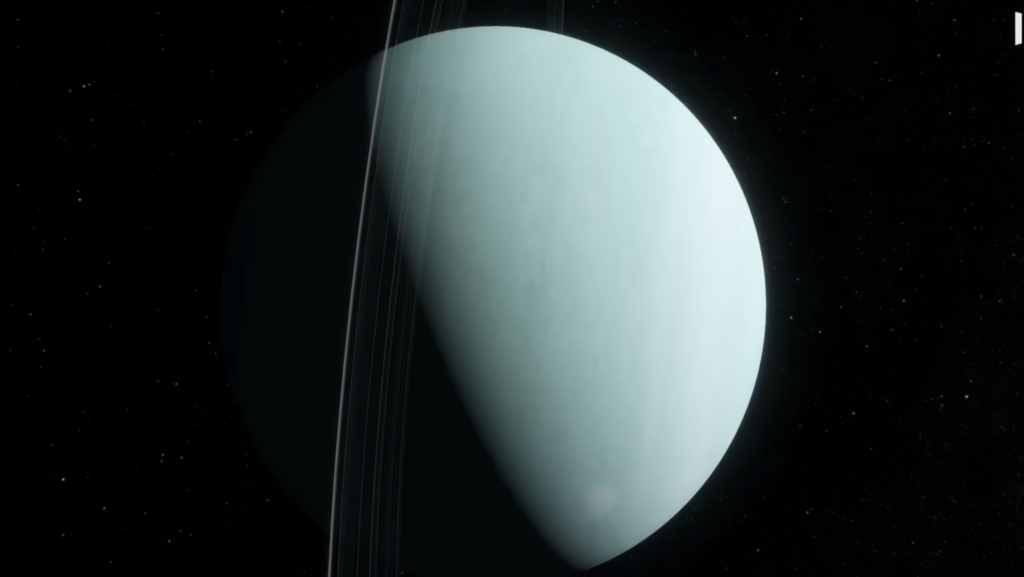
Uranus is an ice giant, which means its composition works differently from the gas giants entirely.
Most of the interior is water, ammonia, and methane held in a superheated, high pressure fluid state, all of it swirling around a small rocky core.
And the pressure down there may be doing something remarkable, forming diamonds that fall through the interior like rain.
Its magnetic field is strange too, tilted and offset from the center of the planet rather than aligned with it. Plenty about Uranus remains unresolved, largely because so few missions have gone anywhere near it.
Neptune
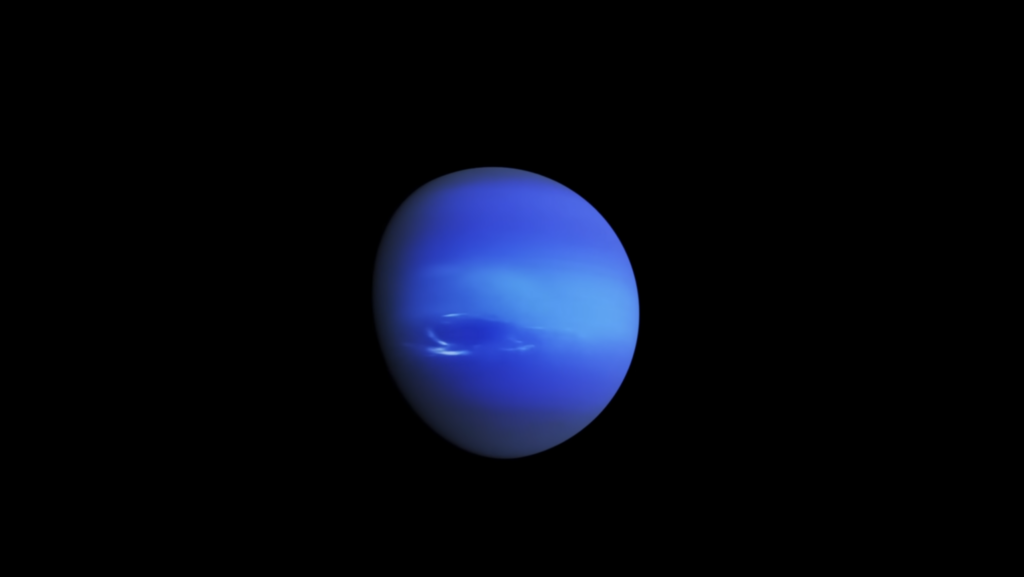
Neptune is built along the same lines as Uranus, only more energetic.
Its interior is dominated by a hot, dense mixture of water, ammonia, and methane under enormous pressure, forming something like a superheated ocean buried deep within the planet.
At the center sits a rocky core roughly the size of Earth, and the conditions surrounding it may generate diamond rain here as well.
Which is the odd note to finish on. Neptune sits at the far edge of the Solar System, starved of sunlight, and its interior is still busy, still hot, and still doing things we’re only beginning to understand.