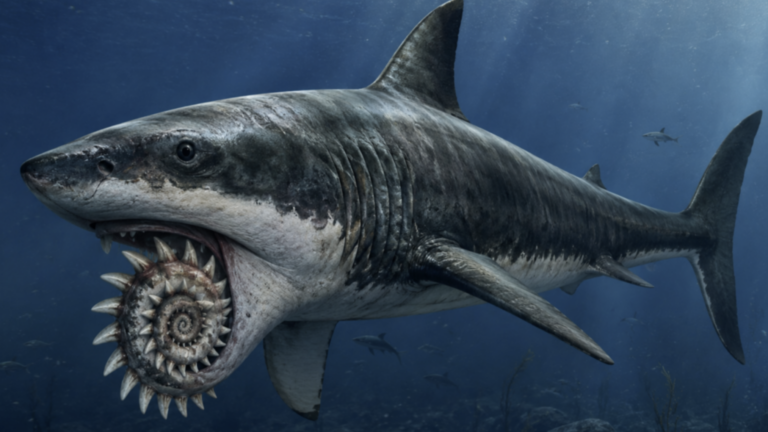
More than 270 million years ago, Earth’s oceans were home to a predator unlike anything alive today. It looked somewhat like a shark, but one feature made it truly unforgettable. Hidden inside its lower jaw was a tightly coiled spiral of razor sharp teeth that resembled a circular saw. This bizarre hunter was the Helicoprion, and if it suddenly returned to modern seas, marine life would never be quite the same.
For decades, scientists struggled to understand how this strange animal actually looked. Early fossil discoveries revealed only its unusual tooth spiral, leading to wild ideas that the structure might have been attached to its nose, back, or even its tail. It wasn’t until more complete fossils were discovered that researchers confirmed the spiral belonged inside the lower jaw, where it acted as an extraordinary feeding tool.
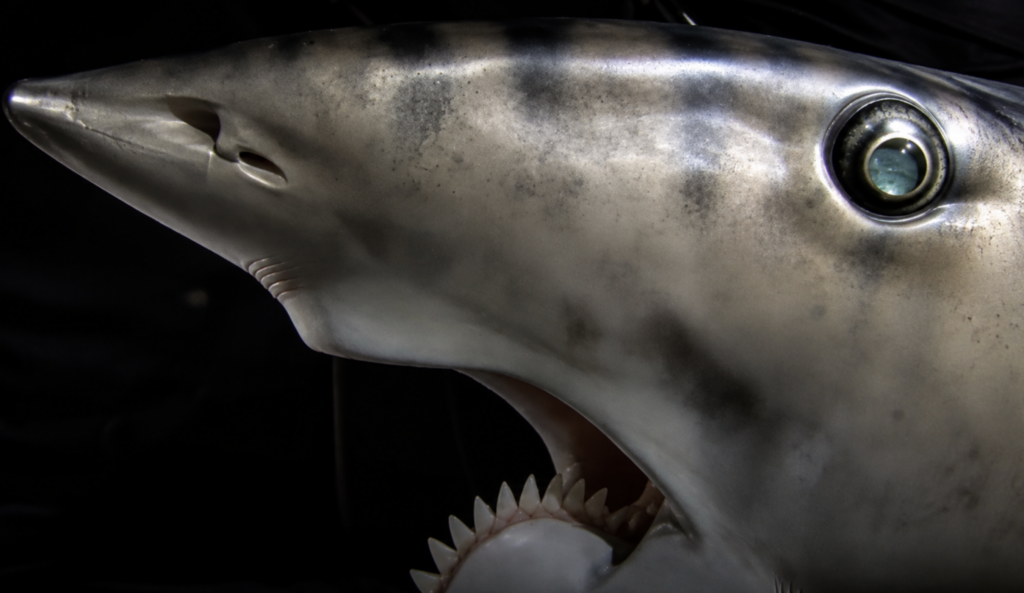
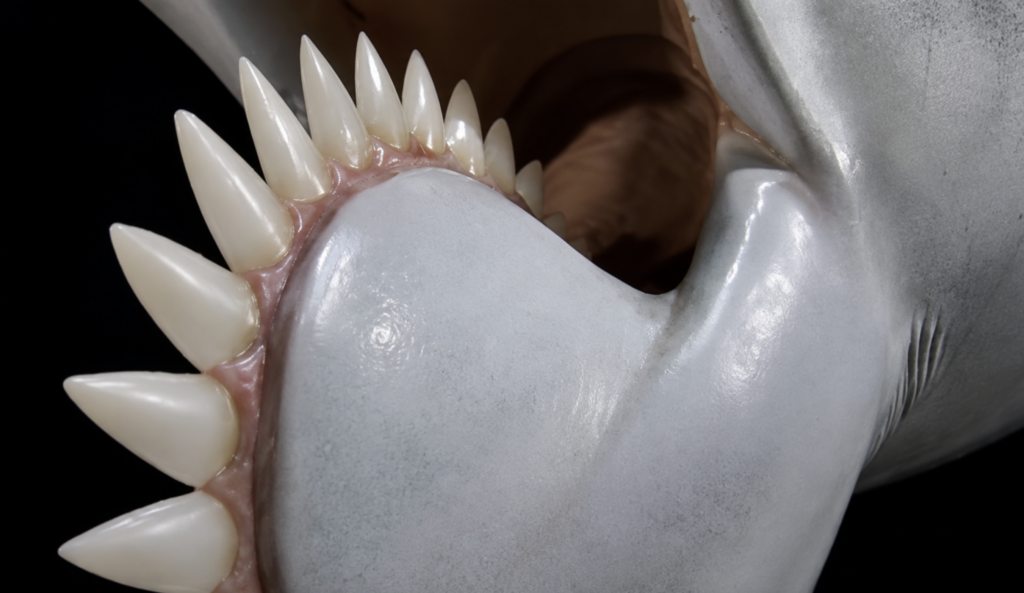
Unlike modern sharks, Helicoprion never shed its old teeth. Instead, new teeth continuously grew at the back of the spiral, pushing older ones forward while remaining connected in a tightly wound coil. Every bite brought fresh cutting edges into position, creating one of the most unusual dental systems ever seen in the fossil record.
Scientists believe Helicoprion specialized in hunting soft bodied animals such as squid, ammonites, and other ancient cephalopods. As it snapped its jaws shut, the spiral pulled prey deeper into its mouth while the sharp teeth sliced through flesh with remarkable efficiency. Rather than crushing bones or tearing large chunks from giant prey, it was built for precision and speed beneath the waves.
If Helicoprion returned today, it would likely find plenty to eat. Modern squid, cuttlefish, octopuses, and other soft bodied marine animals could all become potential prey. Its unique hunting strategy would allow it to occupy a niche that few large predators fill today.
Despite its fearsome appearance, humans probably would not be its preferred target. Reaching lengths of around 8 m (26 ft), Helicoprion was certainly large enough to command respect, but its specialized jaws suggest it evolved to capture slippery marine animals rather than attack large mammals. Divers would still want to keep their distance, especially if one mistook a swimmer or surfboard for struggling prey.
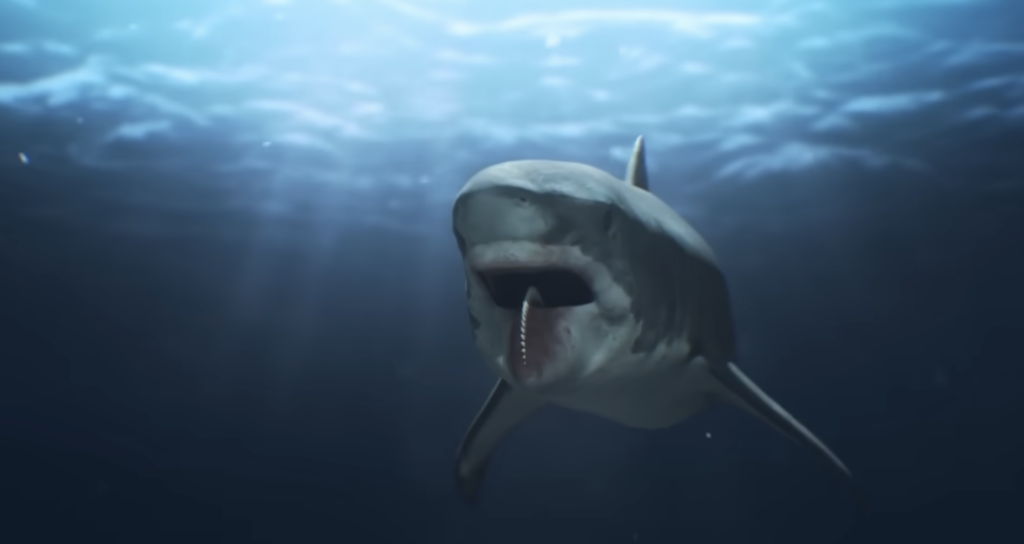
Its return could also reshape marine ecosystems. By hunting large numbers of squid and other cephalopods, Helicoprion might reduce food available to whales, seals, tuna, and other predators that depend on those same species. Even a single new apex hunter can trigger changes throughout an entire food web.
Although Helicoprion vanished millions of years before the first dinosaurs walked the Earth, its remarkable fossils continue to fascinate scientists today. If this ancient predator ever cruised our oceans again, its spinning jaw would remind us that some of nature’s most extraordinary designs were created long before humans ever appeared.