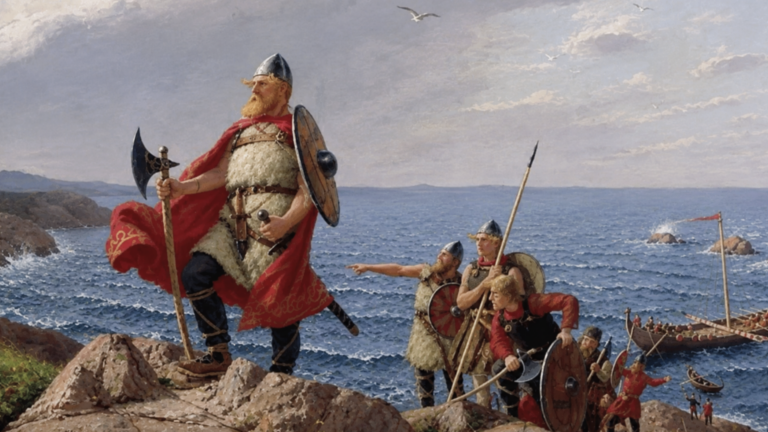
Nearly 500 years before Christopher Columbus sailed across the Atlantic, another group of fearless explorers had already reached North America. At the very edge of the known world, on the northern tip of Newfoundland, they built a small settlement that would disappear from history for almost a thousand years.
Today, that remarkable site is known as L’Anse aux Meadows, the only confirmed Viking settlement ever discovered in North America.
For centuries, historians debated whether the Vikings had truly crossed the Atlantic. The only evidence came from Iceland’s medieval Norse sagas, stories passed down through generations before eventually being written centuries later.
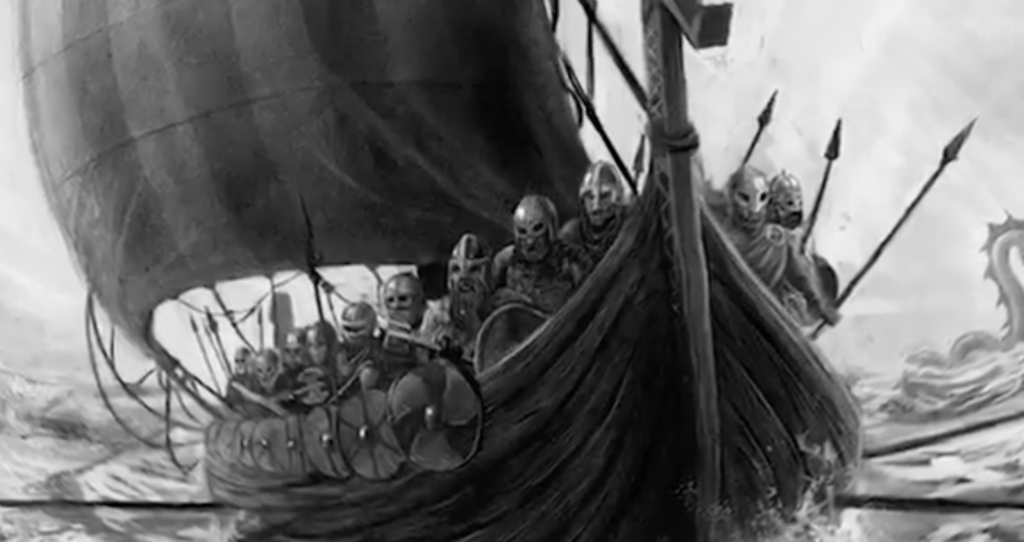
These tales described daring voyages to a mysterious land called Vinland, but many scholars dismissed them as legends filled with exaggeration and fantasy.
The mystery remained unsolved until 1962, when Norwegian explorer Helge Ingstad and archaeologist Anne Stine Ingstad set out to test the old stories. Guided by clues hidden within the Saga of the Greenlanders and the Saga of Erik the Red, they traveled along the rugged coast of Newfoundland searching for any sign of Viking activity.
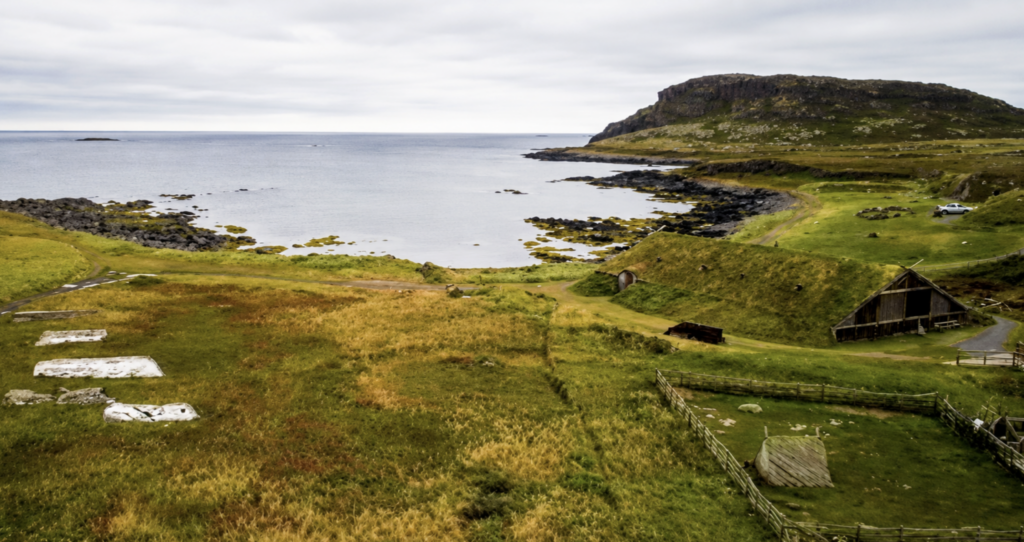
Their breakthrough came after speaking with local residents, who directed them to an unusual area near Epaves Bay. There, hidden beneath grassy mounds, were strange rectangular shapes unlike anything built by the region’s Indigenous peoples.
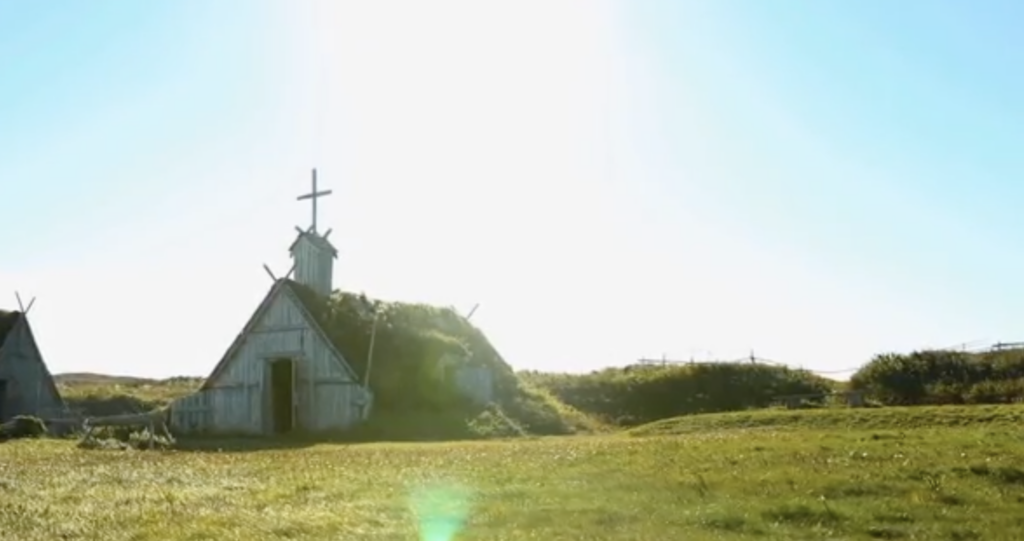
Excavations soon revealed the remains of eight timber and turf buildings, confirming that the Vikings had indeed established a settlement on North American soil around the year 1000.
The discoveries went far beyond the buildings themselves. Archaeologists uncovered a blacksmith’s workshop, cooking pits, handmade iron nails, a spindle used for weaving, and a distinctive bronze ring pin commonly associated with Norse culture.
One of the most surprising finds was the shell of a butternut, a tree that does not grow anywhere near Newfoundland. This suggested that Viking expeditions had traveled much farther south, returning to the settlement with supplies gathered from warmer regions.
Although L’Anse aux Meadows proved the Vikings reached North America, it was probably never intended to become a permanent colony. Many historians believe it served as a temporary base where crews repaired ships, gathered resources, and prepared for expeditions farther into the continent.
According to the Norse sagas, the Vikings also encountered the Indigenous peoples they called Skrælings. While some meetings may have involved trade, others reportedly ended in violent clashes. Combined with the enormous distance from Greenland and Scandinavia, these conflicts may have convinced the Vikings that maintaining a settlement was simply not worth the effort.
The colony appears to have lasted no more than a decade before being abandoned. Yet its brief existence forever changed our understanding of history. It proved that Europeans had reached North America centuries before Columbus, rewriting the story of exploration in the Atlantic.
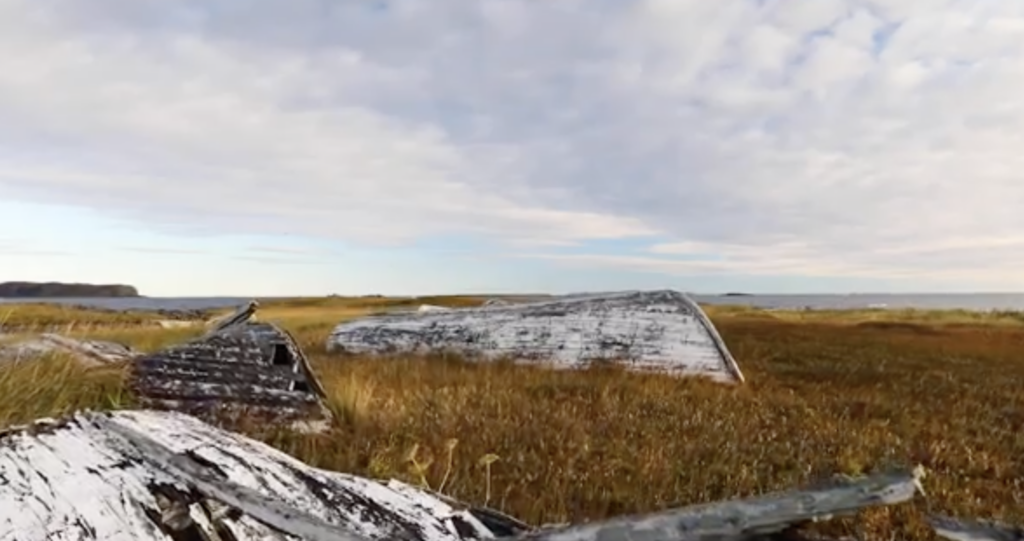
Even today, L’Anse aux Meadows continues to raise fascinating questions. How far south did Viking explorers actually travel? How many other settlements have yet to be discovered?
As archaeologists continue searching for clues, the ancient Norse sagas no longer seem like impossible legends. Instead, they may contain forgotten chapters of history that are still waiting to be uncovered at the edge of the world.