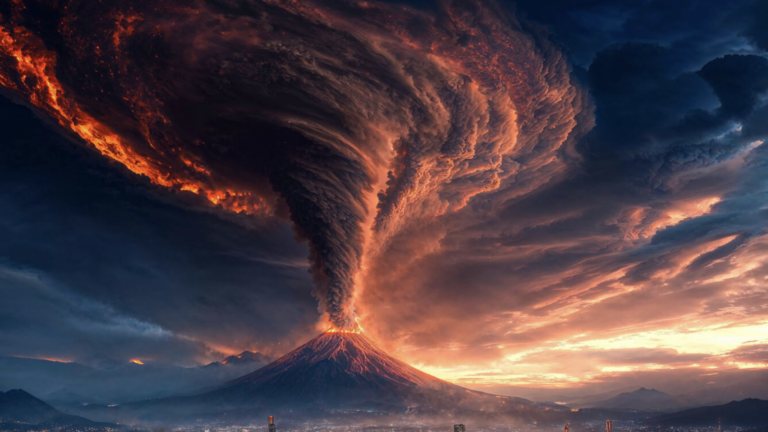
Beneath the landscape of Wyoming sits one of the most closely watched volcanic systems on Earth. Yellowstone is far more than a conventional volcano because it is classified as a supervolcano, capable of producing an eruption vastly larger than the events most people associate with volcanic activity.
A truly enormous Yellowstone eruption would create consequences far beyond the surrounding national park. Ash could spread across huge portions of North America, transportation and agriculture could be disrupted, and the atmosphere could be affected on a global scale. But what would actually happen if Yellowstone suddenly erupted?
Could people escape the immediate danger, or would there be any realistic way to prepare? More importantly, could an eruption beneath Wyoming eventually affect temperatures, food supplies, and weather patterns around the entire planet? To understand that possibility, it helps to look at Yellowstone’s volcanic history first.
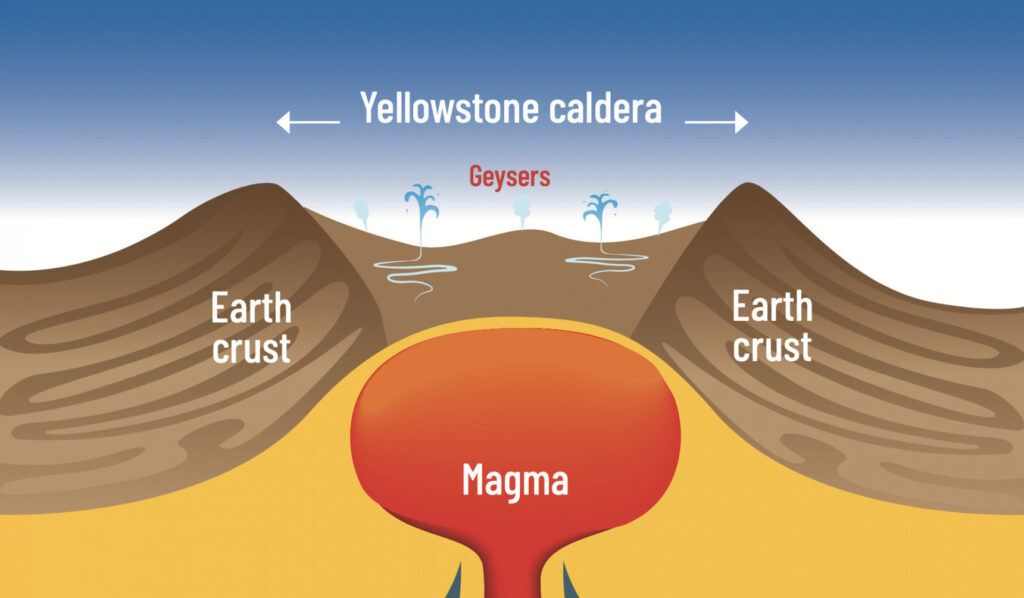
Yellowstone has experienced three enormous eruptions during the past two million years. That history understandably makes people wonder whether another major eruption could be approaching. However, there is no indication that another supervolcanic eruption is about to happen. The next one, if it ever occurs, could be hundreds of thousands of years away.
But imagine that the unlikely scenario happened tomorrow. For people living across much of North America, there would be very little opportunity to prepare once the eruption began. The scale of the event would depend on exactly how Yellowstone erupted, but a supervolcanic event would be dramatically different from an ordinary lava eruption.
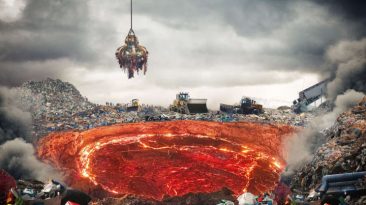
When most people picture a volcano, they imagine rivers of glowing lava racing across the landscape. Yellowstone could produce lava, but during an enormous eruption, that would not necessarily be the greatest threat. A huge quantity of material could instead be blasted high into the atmosphere.
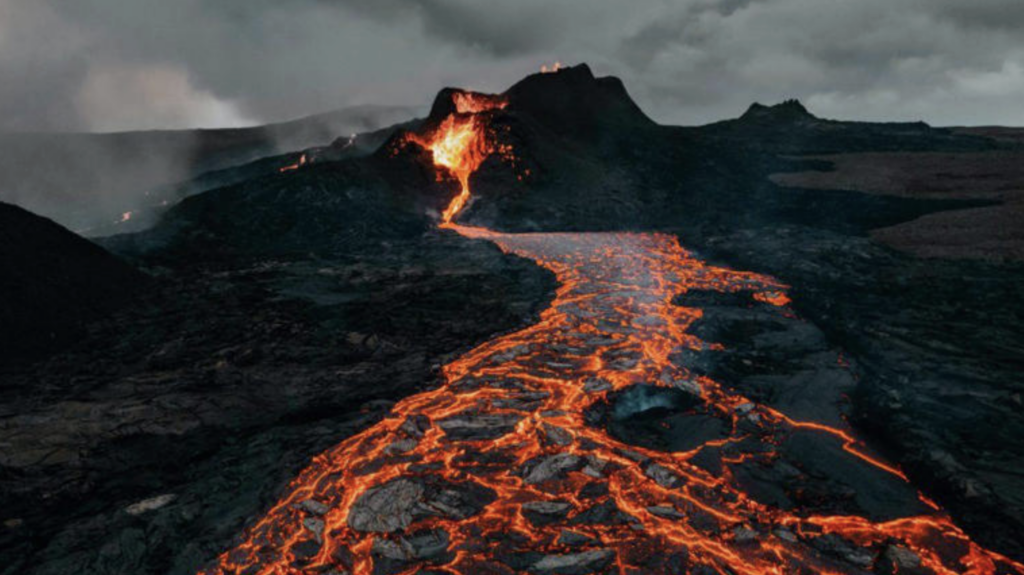
Before molten rock reaches the surface, it exists underground as magma. During an extremely powerful eruption, enormous amounts of this material could be violently fragmented and launched upward. Instead of simply creating rivers of lava, the eruption could fill the atmosphere with vast quantities of volcanic ash.
This would not resemble ordinary fireplace ash. Volcanic ash consists of incredibly fine pieces of fractured rock and minerals. These particles can be abrasive, dangerous to breathe, and capable of spreading over enormous distances when powerful atmospheric winds carry them away from the eruption.
The areas closest to Yellowstone would face the greatest danger. Tens of millions of people living within roughly 1,000 kilometers of the eruption could be exposed to deadly conditions. Breathing extremely concentrated volcanic ash could severely damage the lungs, while enormous deposits accumulating on buildings could place tremendous weight on roofs and structures.
Even areas much farther away would not necessarily be safe. Ash could travel across the continent, eventually reaching regions on the opposite side of the United States. A layer only a few centimeters thick could create serious problems for buildings, transportation, machinery, agriculture, and human health.
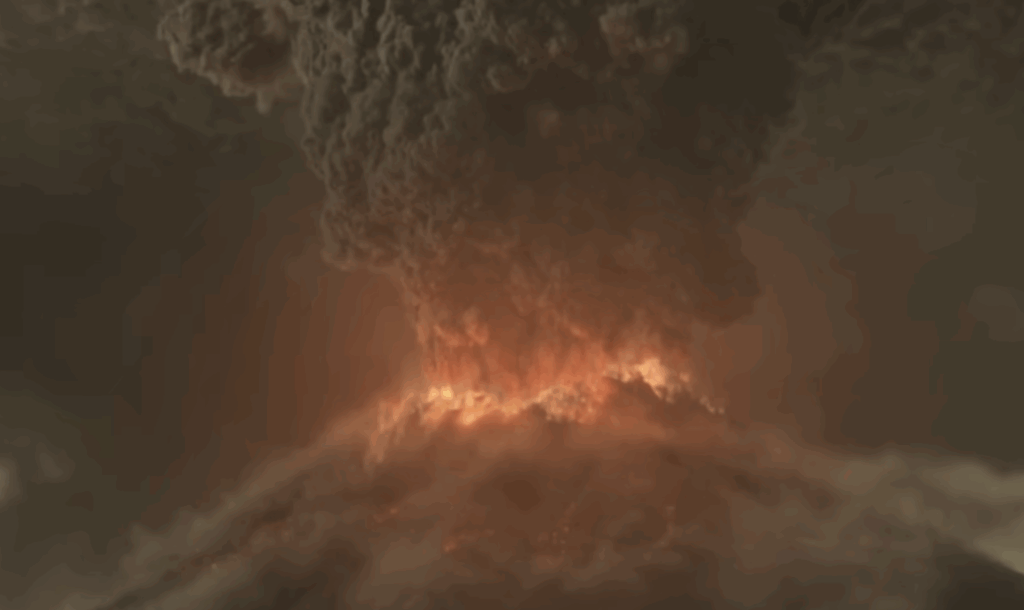
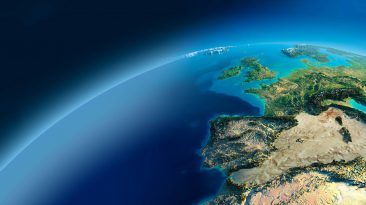
The effects would not stop at the American border. Atmospheric winds could transport smaller quantities of ash across the Atlantic, allowing parts of Europe and other distant regions to receive deposits. However, the most important worldwide consequence could come from what happens high above the surface.
Huge quantities of volcanic material and gases released into the atmosphere could reduce the amount of sunlight reaching Earth’s surface. With less solar energy arriving, temperatures could fall significantly. Some estimates for an extreme Yellowstone scenario suggest that global temperatures could decline by around 10 degrees, with unusual conditions potentially lasting for years.
Such cooling would place enormous pressure on agriculture. Shorter growing seasons, reduced sunlight, damaged crops, contaminated water supplies, and widespread transportation problems could combine into a major food crisis. The consequences would therefore continue long after the initial eruption had ended.
Surviving the first few days would not necessarily mean escaping the disaster. Communities could face dangerous air quality, infrastructure failures, food shortages, and prolonged cold conditions. Fortunately, there is no reason to believe that Yellowstone is preparing for such an event today.
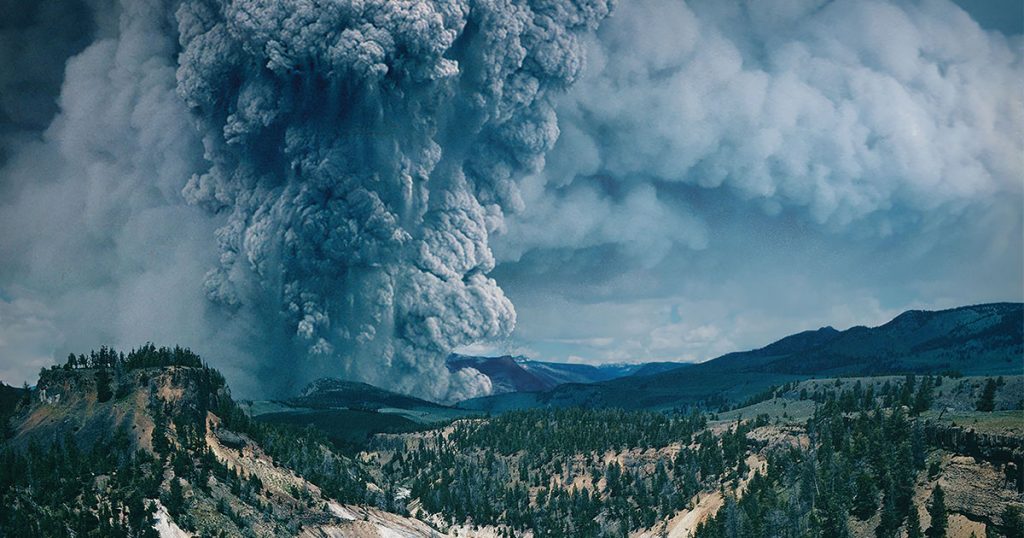
A supervolcanic eruption is also far from the most likely thing to happen at Yellowstone. A hydrothermal explosion is considerably more plausible. These events can occur when underground water is suddenly heated and expands, blasting steam, rocks, and other material into the surrounding area. Such an event could still be dangerous, but its consequences would be nowhere near those of a massive supereruption.
An ordinary lava eruption is another possibility, and Yellowstone has experienced many such events since its last enormous eruption roughly 600,000 years ago. Nearly 50 eruptions have occurred during that period without causing fatalities. So while Yellowstone remains a powerful volcanic system, the nightmare scenario of a civilization changing supereruption is extraordinarily unlikely.
That does not make Yellowstone harmless. Its volcanic system remains active, and smaller geological events can still create localized hazards. But the idea of Yellowstone suddenly destroying North America tomorrow is far removed from what scientists consider likely. For now, the most realistic response is not panic, but understanding that one of Earth’s most famous supervolcanoes is being continuously monitored and that its most catastrophic possibility remains an extremely improbable event.