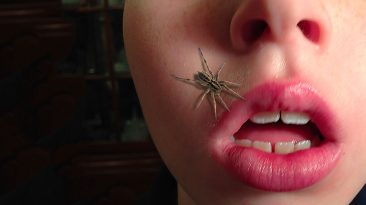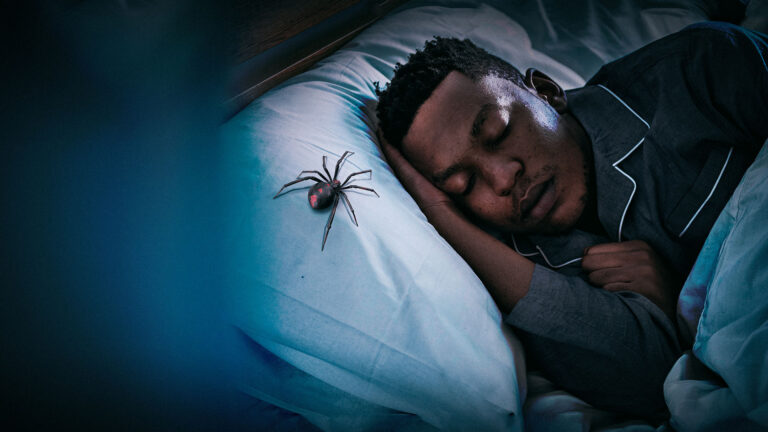
Have you ever felt that creepy sensation of bugs crawling on your skin in the middle of the night? Don’t worry, it’s probably all in your mind. But it could actually be spiders. If you happened to swallow one, should you be worried? Would a spider survive inside a human body? Could it lay its eggs in you?
Chances are, some annoying friend of yours has told you that humans swallow an average of eight spiders every year. Well, I hate to break it to you, but your friend’s wrong. This is actually a popular myth. The good news is that spiders generally avoid humans, and even if you accidentally swallowed one, there’s little reason to panic.
As creepy as this all sounds, there’s no need to worry. Unless you’re suffering from arachnophobia, or even worse, delusory parasitosis. Known commonly as Ekbom syndrome, this rare psychological condition causes the delusional fear of being infested by insects. Sufferers often feel itchiness, numbness, or that creepy, crawly prickling sensation under their skin.
But could a real spider actually survive inside you? Generally, spiders won’t target humans unless they feel threatened. And despite popular belief, there is no such thing as a poisonous spider. They’re not toxic to us simply because they contain venom. In fact, in some cultures, fried spiders are even considered a delicacy.
Okay, eight legged snacks aside, what if a venomous spider happened to make its way inside you? Could it kill you?
There are around 40,000 species of spiders, and only a small number can cause serious harm to humans. Take, for instance, the highly venomous Sydney funnel web spider, or Atrax robustus. They can grow up to 5 cm (2 inches) long, with fangs strong enough to bite through a fingernail. They’re also known to survive underwater for up to 30 hours.
As resilient as they are, thankfully, our stomachs are far more acidic than water. Even a venomous spider would have little chance of surviving that powerful digestive system. Venom can only affect you if it’s injected, so accidentally swallowing a venomous spider would not normally poison you. However, if it managed to bite you in your mouth or throat, the situation could be much more dangerous and require immediate medical attention.

So what if a spider decides to lay its eggs in your ear? This is highly unlikely, so you can take those earmuffs off. Spiders burrowing into humans is a popular urban legend, but in reality, they’re far more likely to avoid you.
Even if a spider somehow managed to lay eggs in your ear, the situation wouldn’t turn you into a walking spider nursery. You would need medical attention to remove them safely. And once baby spiders hatched, they would probably leave in search of food.
So, should you wear a bug net while you sleep? Well, there’s really no need. Spiders can sense danger through vibrations, and humans produce plenty of noise. This spidey sense would likely alert them if you’re snoring like a chainsaw or even peacefully breathing.
Even if you sleep with your mouth open, a spider would be unlikely to crawl inside. And if one somehow managed to enter your mouth, your coughing and swallowing reflexes would make it difficult for it to go any further.
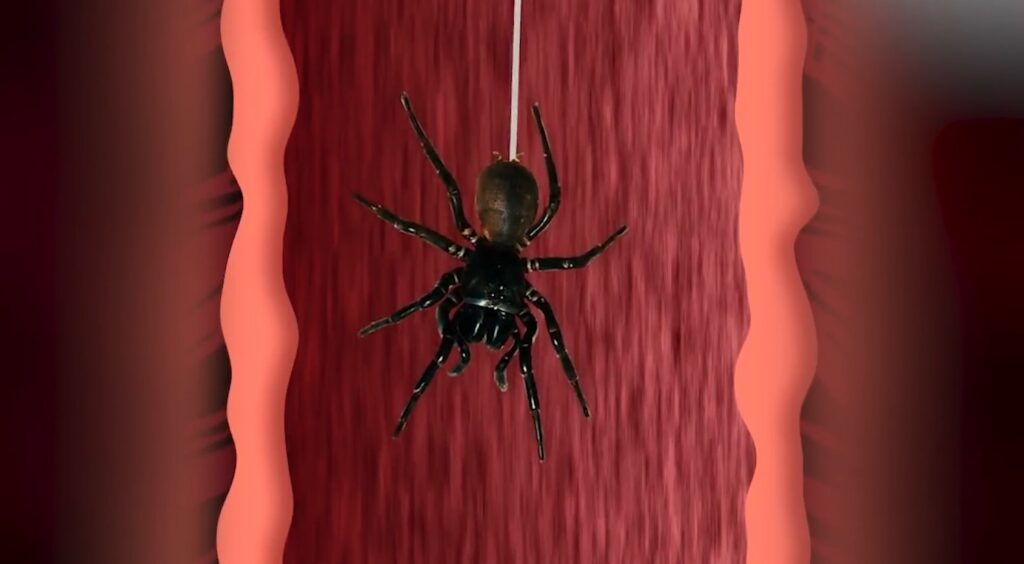
The good news is that spiders are extremely unlikely to survive inside your body. They’re far more likely to hang out in dark, secluded areas that aren’t part of you. With that said, it might be time to clean out that closet of yours. Better safe than sorry.
But can we just get rid of spiders for good? Believe it or not, they’re vital creatures in our ecosystem. So, what would life be like without them? I have an itsy bitsy feeling that’s a story for another WHAT IF.