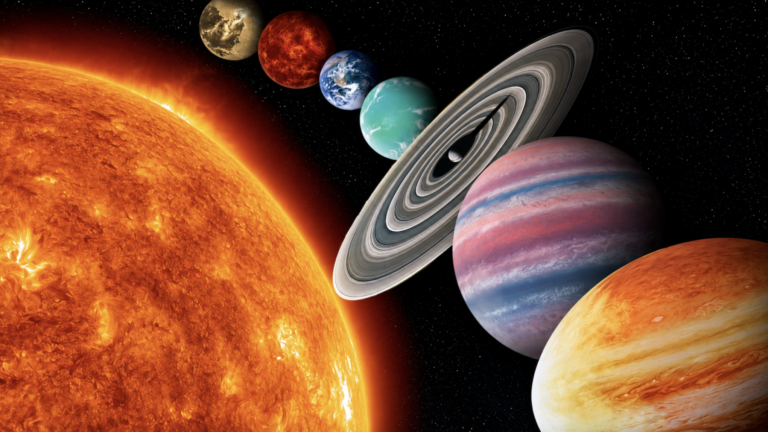
Our Solar System has remained remarkably stable for billions of years. Every planet follows a carefully balanced orbit, held together by the Sun’s gravity. But what if that balance suddenly changed? What if some of the most fascinating exoplanets ever discovered replaced the planets in our own Solar System?
At first, it might sound exciting. We could finally visit distant worlds without traveling hundreds or even thousands of light years. But these alien planets evolved around completely different stars, under very different conditions. Bringing them into our Solar System would create consequences that no one on Earth could ignore.
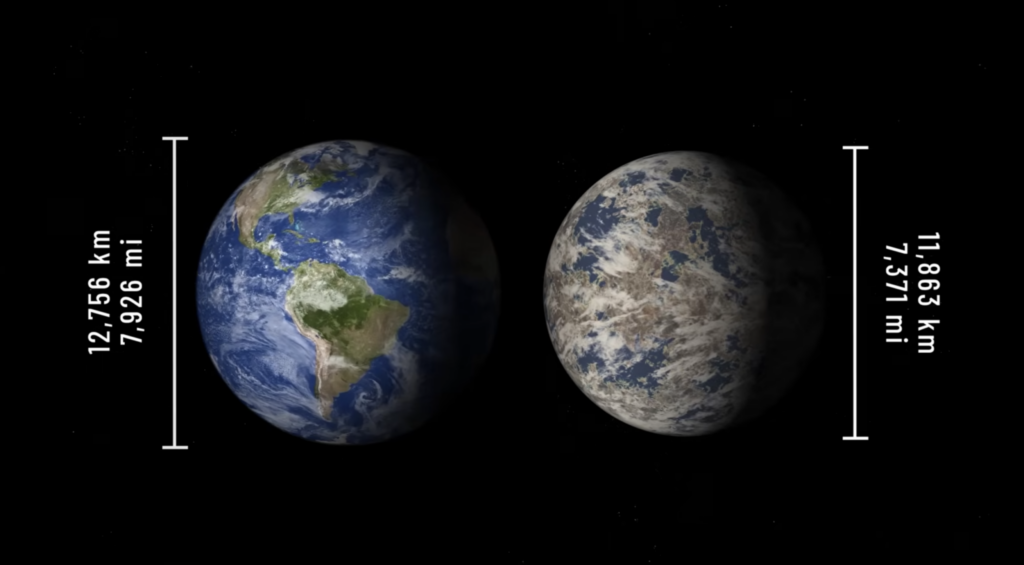
Imagine replacing Mercury with TRAPPIST-1 e, one of the most promising Earth-like worlds ever discovered. Around its own tiny red dwarf star, this rocky planet sits comfortably inside the habitable zone, where temperatures may allow liquid water to exist.
Near our much brighter Sun, however, everything changes.
Even in Mercury’s orbit, the intense sunlight would rapidly overheat the planet. Any oceans or lakes would eventually evaporate, and its atmosphere would become unstable. A world that once had the potential to support life would transform into a scorched wasteland.
Fortunately, Earth would not immediately suffer. Although TRAPPIST-1 e is larger than Mercury, its gravity would only cause minor disturbances to the inner Solar System over thousands of years.
Moving the planet farther away might seem like a better idea. If it occupied the Asteroid Belt instead, the opposite problem would appear.
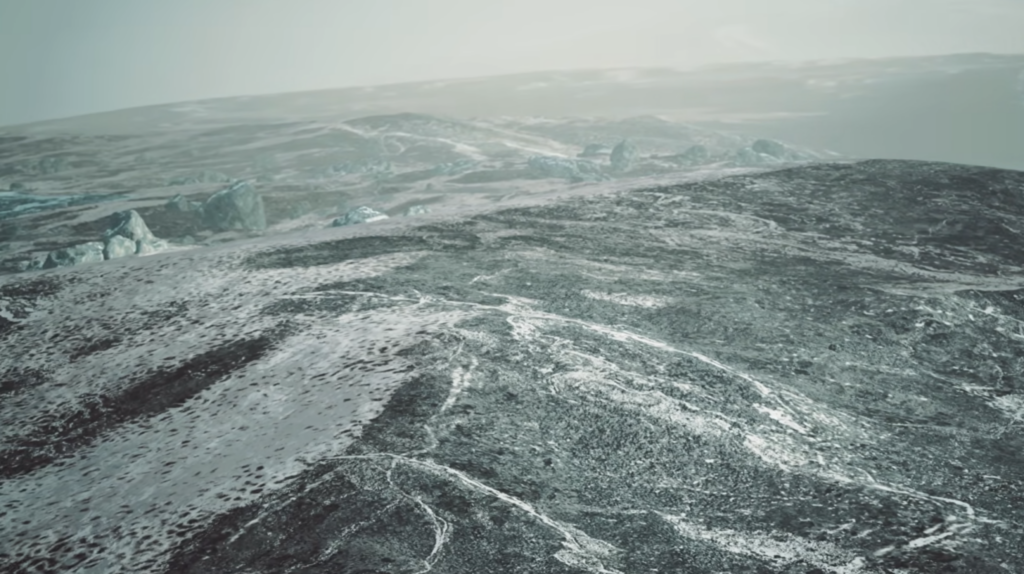
Receiving only a fraction of Earth’s sunlight, TRAPPIST-1 e would quickly freeze. Oceans would become solid ice, temperatures would plunge, and any chance for surface life would disappear. Yet this frozen world would create a much bigger threat for us. Its gravity would slowly pull countless asteroids from their stable paths, increasing the chances of future impacts on Earth.
Next comes Kepler-442 b, a massive rocky world often described as a “super Earth.” It is larger, heavier, and potentially even more habitable than our own planet under the right conditions.
Unfortunately, placing it inside our Solar System would destroy that potential almost immediately.
Closer to the Sun, its oceans would boil away. Instead of losing its atmosphere, the planet’s stronger gravity would trap it. Water vapor and greenhouse gases would build up until the surface became even hotter than Venus. Rather than becoming Earth’s twin, Kepler-442 b would evolve into one of the most hostile planets imaginable.
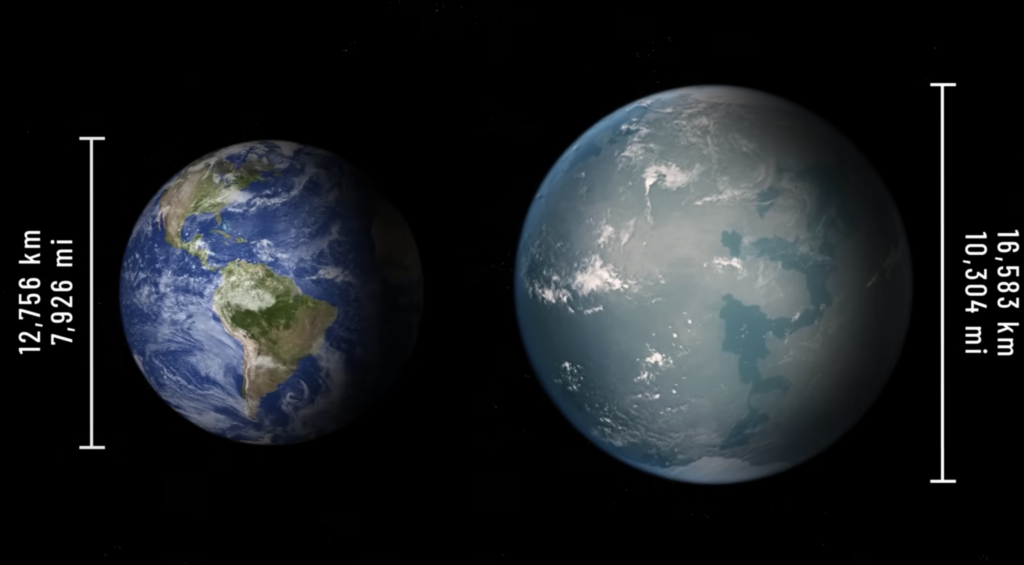
Its enormous mass would also begin reshaping the Solar System itself. Over millions of years, the orbits of Mercury, Venus, Earth, and Mars would slowly drift. Eventually, some planets could collide or even be thrown completely out of the Solar System.
The situation becomes even more dangerous if we replace one of the planets with OGLE-2005-BLG-390Lb, an extremely cold exoplanet believed to be several times more massive than Earth. This frozen giant would slowly warm as it absorbed sunlight, but it would remain an icy world for millions of years. The real problem would be its gravity.
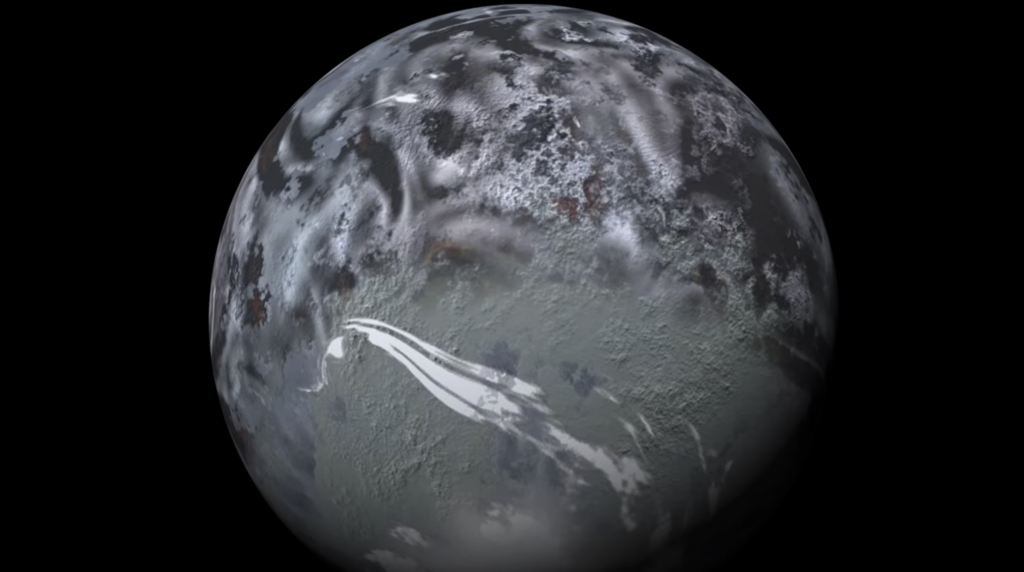
Stationed near the Asteroid Belt, it would gradually scatter millions of asteroids throughout the Solar System. Many of those space rocks would cross Earth’s orbit, dramatically increasing the risk of devastating impacts.
Over long periods, Mars and eventually Earth would experience increasingly unstable orbits as the entire inner Solar System became chaotic.
Then there is J1407b, one of the most spectacular exoplanets ever discovered. This enormous gas giant is famous for possessing a ring system hundreds of times larger than Saturn’s.
If it replaced one of our outer planets, the night sky would become breathtaking. Its giant rings would outshine almost everything else beyond Jupiter, creating one of the most incredible sights humanity had ever witnessed.
But beauty comes at a price.
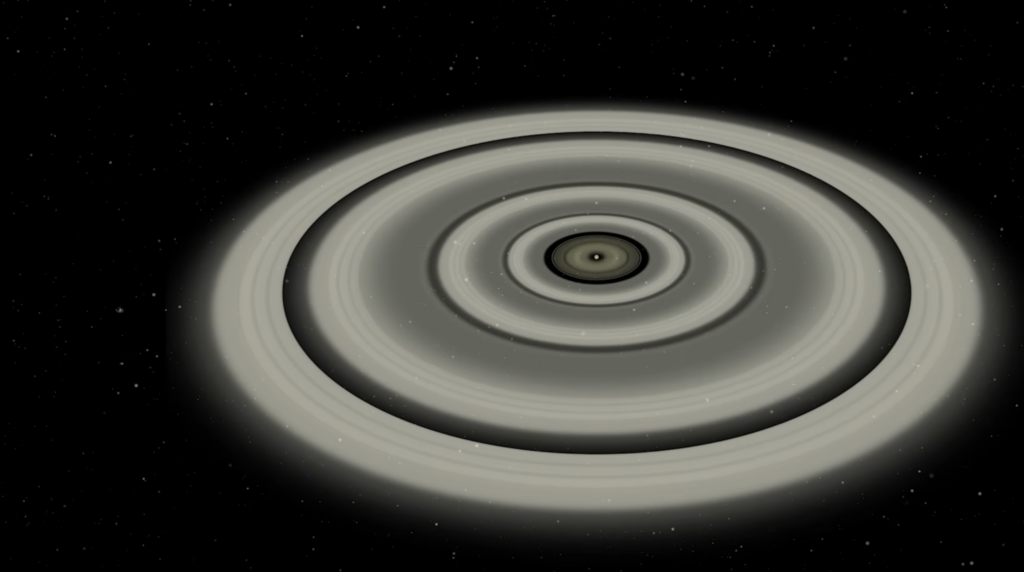
J1407b is far more massive than Saturn, and its gravity would gradually disrupt the orbits of nearby planets and moons. Its enormous rings could shed debris throughout the Solar System, while its gravitational pull might alter Jupiter’s orbit, upsetting the delicate balance that has protected Earth for billions of years.
Small changes would accumulate over millions of years until the entire Solar System became unstable.
Planetary orbits would shift. Asteroid impacts would become more common. Entire worlds could collide or be ejected into deep space.
While these dramatic events would unfold over immense stretches of time, they reveal just how finely tuned our Solar System truly is. Every planet sits where it does for a reason, and even replacing a single world with an alien one could eventually reshape the fate of every planet, including Earth.