Citronella, netting, deet. All the things we use to arm ourselves against a pesky foe, the mosquito. There are over 3000 species of these arthropods in the world. If you’re in North America, you can be bitten by 175 different types.
These blood-sucking pests carry diseases such as malaria and the West Nile virus, and cause an average of 2 million deaths around the world each year. Our attempts at curbing the population of mosquitoes has so far failed. One of the reasons this disease-carrying bug is so dangerous is because of its size.
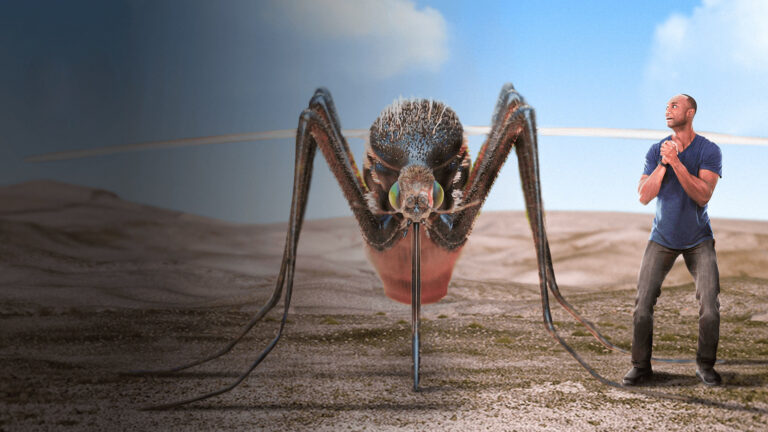
We usually don’t know when a mosquito is biting us, and even if we do, it’s too late. But what if mosquitoes were as large as a human? How dangerous would they be? And is it even possible for a mosquito to survive at that size?
That is What If and here’s what would happen if mosquitoes Were the Size of Humans.
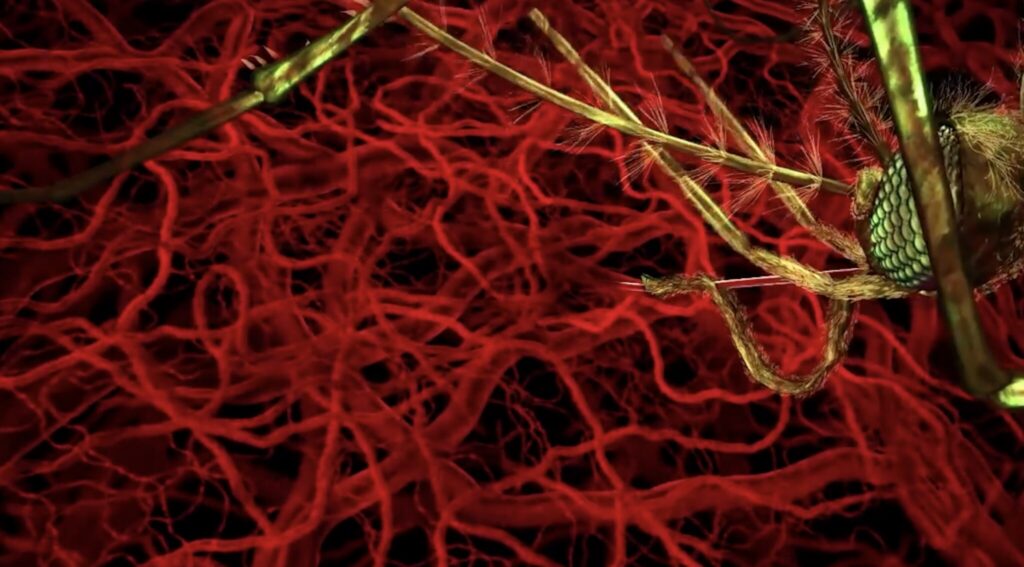
Like a vampire, mosquitoes are known for blood-sucking. But they don’t do it for nourishment. Like many other bugs, mosquitos need sugar from nectar to survive. So why do they need animal blood?
Female mosquitoes need a particular protein and lipid only found in animal blood to lay eggs. A regular mosquito weighs just 2.5mg, but they need a sizeable 1mg of blood to produce every 40 eggs. And, they can lay up to 300 eggs during their average lifespan of 2 to 6 weeks. This is why only female mosquitoes bite and draw blood.
So what would happen if they were the size of humans? For starters, transmitting diseases would be the last thing you’d worry about. If a female mosquito were 79kg (175lbs) and still required almost three times her body weight in blood over her life cycle, then she would need 237kg (525lbs) of animal blood to lay those 300 eggs. In other words, she would need to suck every last drop of blood from your body. Yikes.
At the very least, it could become difficult for female mosquitoes to get enough blood to lay her maximum amount of eggs, so the population might begin to decrease quickly. But we’d probably want to kill as many as possible. Maybe scientists would develop some sort of pesticide that only harmed mosquitos and not humans. Or maybe they’d become another big game target to hunt down. It’s also possible that predators would begin to eat mosquito eggs and larvae, further curbing the population.
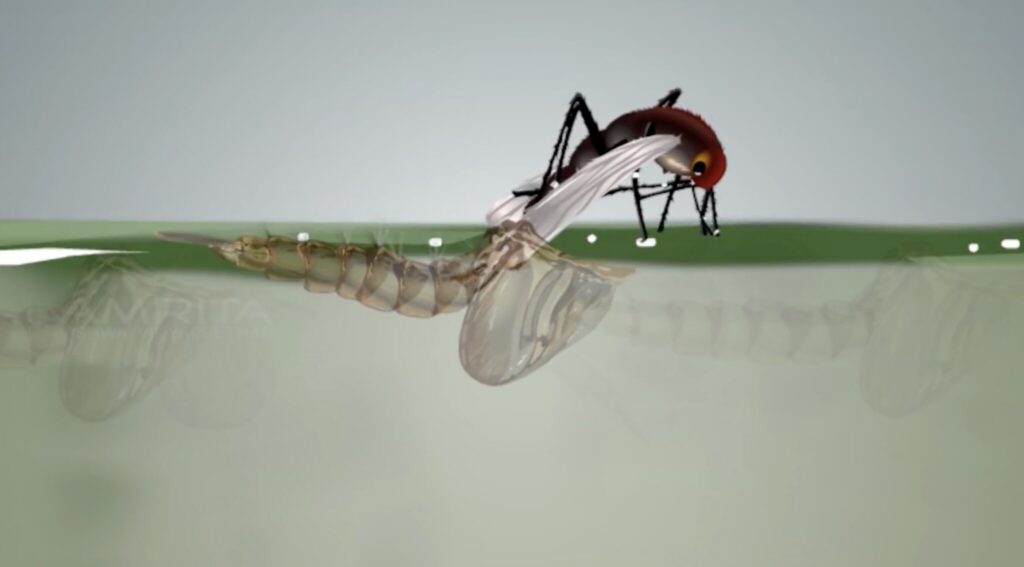
A mosquito has an exoskeleton, meaning it has to molt as it grows. This period of transition would be a vulnerable time and could make killing them much easier. Human-sized mosquitoes would be bad news, and not just because they could easily kill us. They would likely target cattle, horses, and large wild mammals, creating chaos in both the meat industry and nature.
But would a mosquito even be able to survive at 79kg (175lbs) in our current atmosphere? Probably not. Arthropods breathe through openings called spiracles that connect to a branching network of trachea. This network of tubes diffuse oxygen throughout their body. Because of this system, the amount of oxygen in the air limits their growth.
During the Carboniferous period, the oxygen in Earth’s atmosphere was almost 35%. At this time, arthropods were huge! But today, the oxygen in our atmosphere is only 21%. That’s not enough for a human-sized mosquito. Even if it was, mosquitos would need to develop a much stronger exoskeleton to support all that extra weight. And because they’d need more nectar to sustain themselves, many would likely starve.
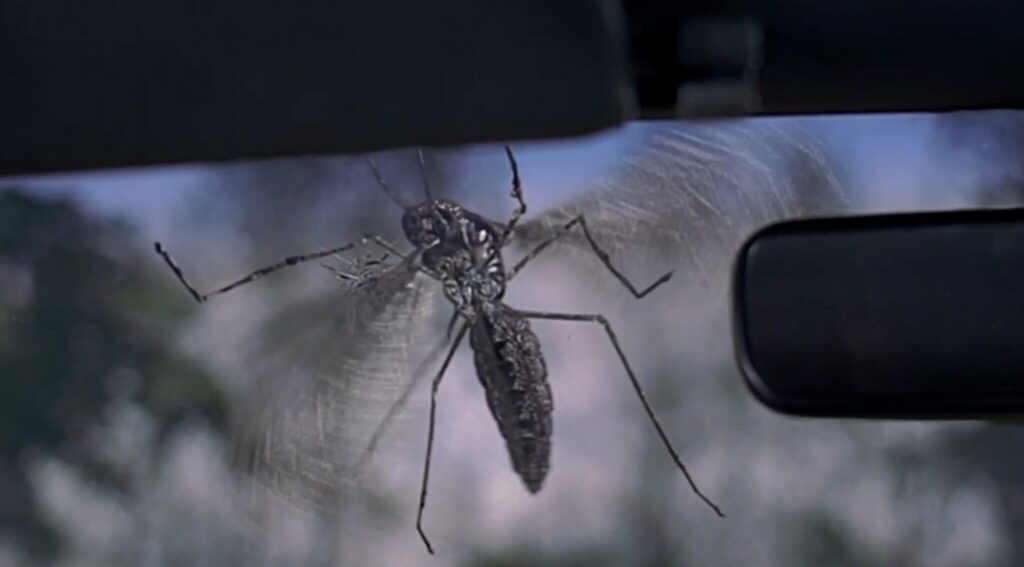
We might not see human-sized mosquitoes any time soon, but we could see a rise in giant mosquitoes called ‘Gallinippers’. These mosquitoes are 20 times larger than their cousins and are native to North America. They are so large, they are able to bite through clothing!
Since mosquitoes are cold-blooded, they need temperatures over 26 degrees C (80 degrees F). With global temperatures on the rise, Gallinippers could easily expand their range and population. Another possibility is the growth of mosquitoes would spur the growth of its natural predators.
Just imagine giant spiders roaming the earth, but that’s a story for another What If.