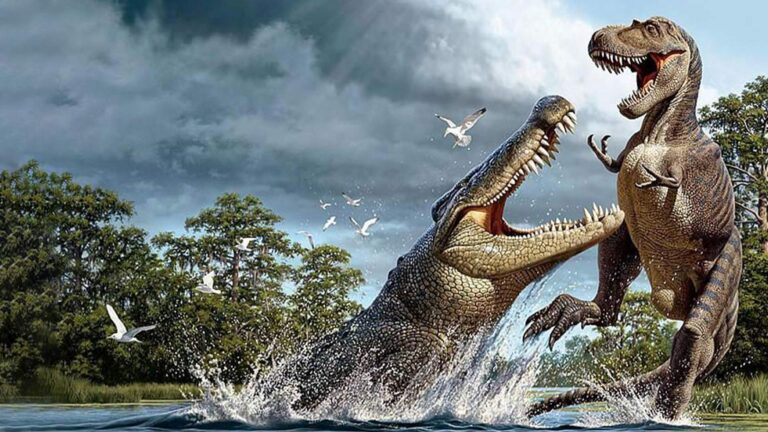
When people imagine the age of dinosaurs, they usually picture massive predators like Tyrannosaurus rex ruling the prehistoric world. But hidden beneath the murky waters of ancient swamps was another monster that may have terrified even dinosaurs themselves.
Its name was Deinosuchus, meaning “terrible crocodile,” and it was one of the largest crocodilian predators ever to exist.
Living around 80 to 73 million years ago during the Late Cretaceous Period, Deinosuchus dominated rivers, marshes, and coastal wetlands across what is now North America. Fossils suggest this giant reptile could grow up to 10 meters long and weigh nearly 5 tons, roughly the size of a city bus.
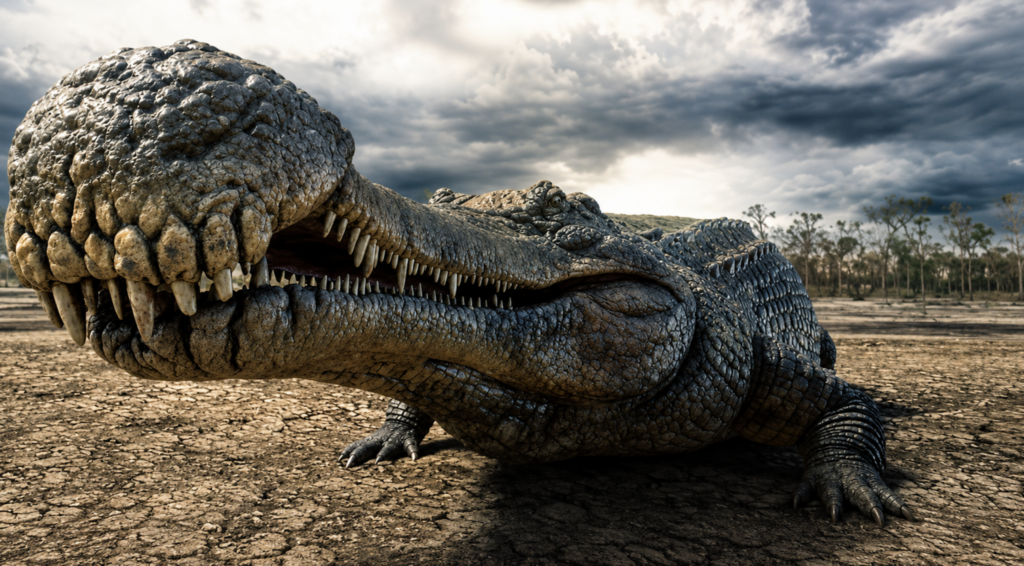
Unlike modern crocodiles, which already inspire fear around the world, Deinosuchus was on an entirely different level.
Its jaws were lined with massive banana shaped teeth designed for crushing. Paleontologists studying fossilized teeth discovered many were broken and damaged, suggesting the giant predator bit directly into bone. Some dinosaur fossils even show bite marks believed to have come from Deinosuchus attacks.
Scientists still debate whether the terror crocodile actively hunted dinosaurs or mostly scavenged dead animals. But either way, wandering too close to the water’s edge during the Cretaceous would have been an enormous risk.
Like modern crocodiles, Deinosuchus was likely an ambush predator. It probably waited silently beneath the surface before exploding upward with terrifying speed, dragging prey into the water. Any dinosaur stopping for a drink may have suddenly found itself locked in the jaws of one of Earth’s deadliest reptiles.
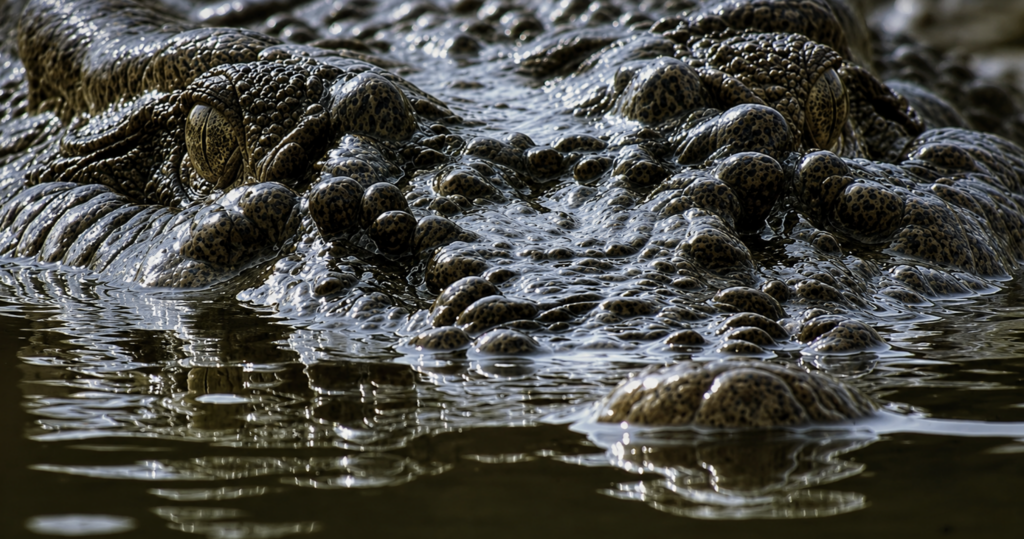
And yes, this prehistoric giant may have been capable of eating bones.
Modern crocodiles possess an extraordinary digestive system. A specialized valve in their heart increases blood flow to the stomach, helping them produce incredibly strong stomach acid. This allows them to dissolve bones, hooves, and even shells with surprising efficiency. Deinosuchus likely had similar abilities, meaning very little of its prey would have gone to waste.
Crocodiles are also ectotherms, meaning they rely on outside heat to regulate their body temperature. Because of this, they do not need to eat constantly like mammals do. A giant predator like Deinosuchus may have been able to survive on relatively infrequent but enormous meals.
If a creature this massive still existed today, it would almost certainly become one of the planet’s most feared predators. Modern crocodile attacks already kill hundreds of people every year worldwide, especially in parts of Africa and Asia.
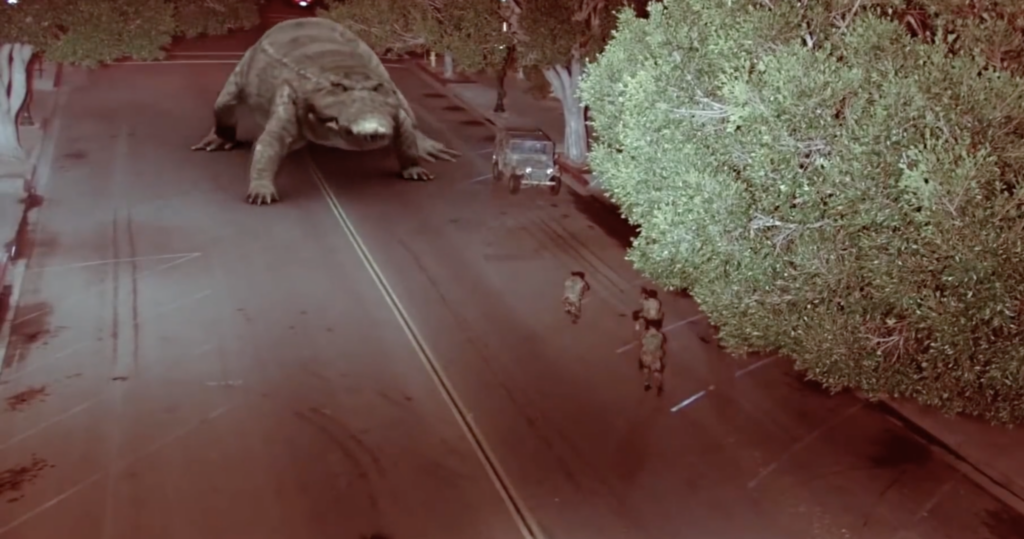
Humans have developed a deep instinctive fear of reptiles over thousands of years, a phobia known as herpetophobia, partly because crocodilian predators have threatened our ancestors for millions of years.
A living Deinosuchus would probably avoid cities and remain in swamps, rivers, and wetlands. But anyone fishing, boating, or swimming in those areas would face serious danger. With jaws capable of crushing bone and a body larger than most vehicles, the terror crocodile would easily dominate freshwater ecosystems.
Ironically, humans might still threaten it more than it threatened us.
Large reptiles today are often hunted for their skin and meat. Crocodile leather is used to make luxury products such as handbags, belts, and shoes, while crocodile meat is consumed in several regions around the world.
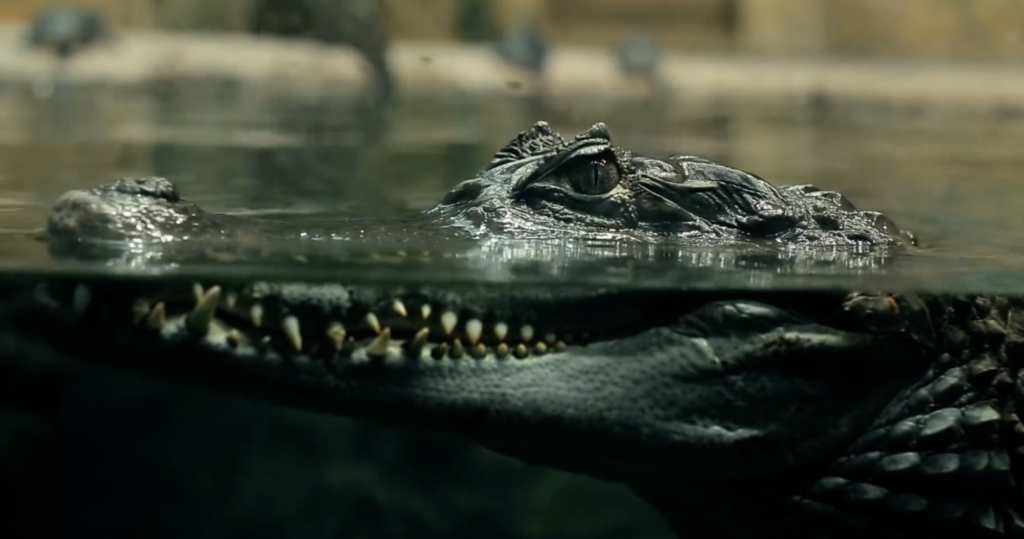
A creature as massive and rare as Deinosuchus would likely attract trophy hunters as well.
Still, modern conservation programs have helped protect several endangered crocodile species from extinction. Without those efforts, many of today’s crocodilians might already be gone.
Although Deinosuchus vanished millions of years ago, its fossils reveal a terrifying truth about prehistoric Earth. Dinosaurs were not always the top predators in every environment. In the dark waters of the Cretaceous swamps, even giant dinosaurs had reason to fear what lurked beneath the surface.