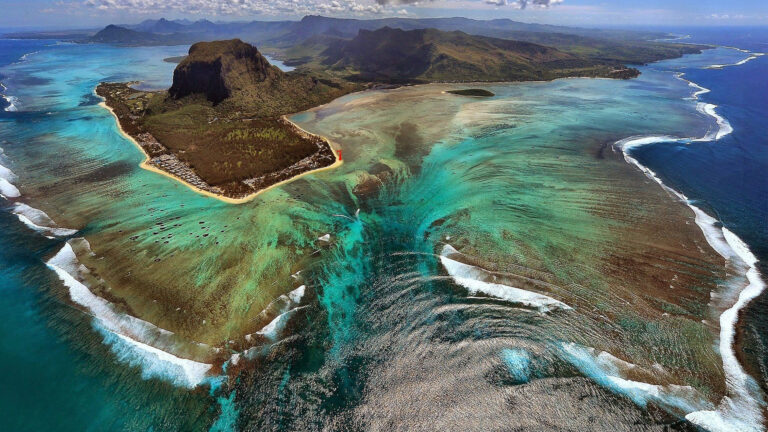
What makes ocean water murky? Well, a number of things, from floating sand and phytoplankton to all sorts of living organisms that aren’t just fish. But imagine if none of this were blocking your view. What would you see beneath the surface?
You’d be quickly reminded of how much garbage we put into the ocean. Around 1.4 billion tonnes of trash enter the ocean every year. In crystal clear water, you’d be able to see it easier than ever.
Not only that, but think of all the old shipwrecks you’d discover. Hope you brought your scuba gear, because buried treasure would be much easier to find. And what about all the ships still afloat? There are over 100,000 ships on the oceans at any given time. Standing on the beach and looking at them, they’d appear to be floating in midair.
And how many fish could you see? Well, not as many as you might think.
According to research from a center in Lowestoft, England, the ocean contains about 5 billion tonnes of fish. That’s enough to fill Loch Ness in Scotland. But that’s only a tiny percentage of Earth’s water, nearly nothing compared to the vast oceans.
You’d certainly see more fish than you’re used to today. But you’d also be surprised by the enormous emptiness of the ocean and just how much nothing you’d see.
People have been mapping the ocean floor for decades, and thanks to this, we mostly picture it as a bumpy, sometimes mountainous surface. But if the water were transparent, you’d quickly realize that much of the ocean floor is relatively smooth.
What kind of things would you find at the bottom of the Mariana Trench? You probably wouldn’t see a Kraken, but you might spot thousands of previously undiscovered species. According to UNESCO, roughly 150 new fish species are discovered in the ocean every year. With transparent water, researchers could find them much sooner.
But there’s a catch. Crystal clear water would suggest a lack of phytoplankton, one of the main things responsible for giving the ocean its blue or green appearance. Without these tiny organisms, fish could be in serious trouble. Phytoplankton are one of the biggest food sources in the ocean. Fish depend on them, and without them, entire food chains could collapse.
And how would all that extra sunlight entering the ocean affect marine life?
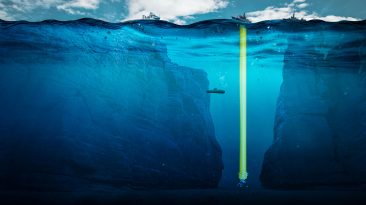
Around 90% of ocean habitats are influenced by sunlight. This habitable area is known as the photic zone, where photosynthesis can occur. In the ocean today, sunlight generally reaches less than 150 meters below the surface.
But if the oceans were completely transparent, theoretically, sunlight could travel much deeper, potentially reaching depths of over 3,500 meters. This could allow photosynthetic organisms and other marine life to exist in places that are currently too dark.
That’s assuming they could survive. More sunlight reaching the ocean floor would also mean more heat being absorbed by underwater sediments. Water temperatures could rise, reducing the amount of dissolved oxygen available to marine life.
Fish need oxygen just as much as we do. They take in water and extract dissolved oxygen to fuel their cells. With less oxygen in the water, vast numbers of fish could die.
So, our super clear ocean might look more beautiful and exciting than the one we have today, but the consequences could be devastating for marine ecosystems. Maybe we should just be happy with the murky water we have. After all, there’s already so much beneath the surface that we haven’t discovered.