The idea of a hollow Earth has fascinated people for centuries. Some have imagined a giant empty world beneath our feet, while others even suggested that entire civilizations could exist inside the planet. It is an intriguing concept, but what do scientists actually say about the theory that Earth is hollow?
Modern science gives a very different picture of our planet. Although no one has ever traveled to Earth’s core, researchers have learned a great deal by studying earthquakes, seismic waves, and Earth’s magnetic field. These observations reveal that our planet is made up of a solid inner core, a liquid outer core, a thick mantle, and a relatively thin crust. There is simply no evidence of a massive empty space inside.
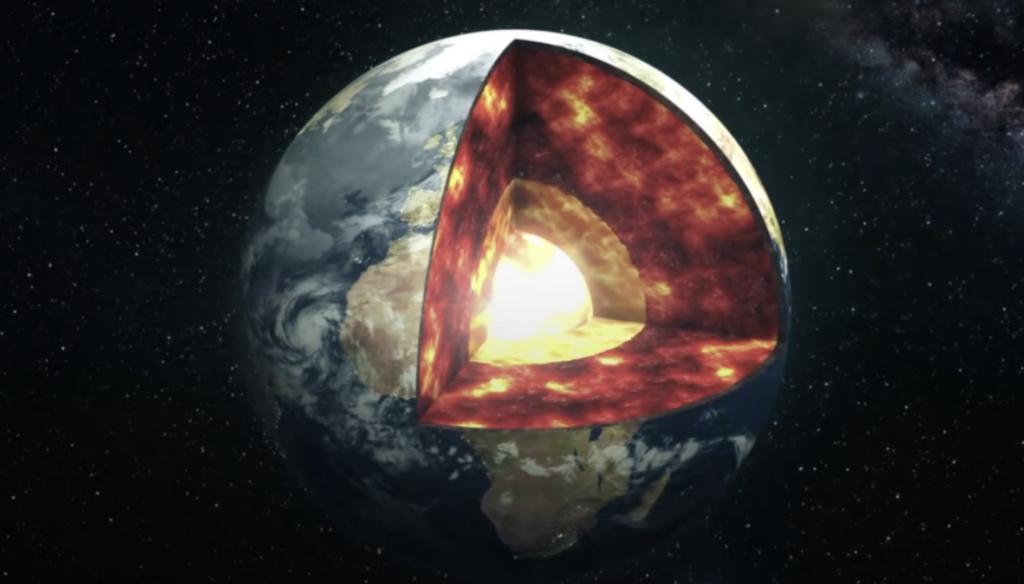
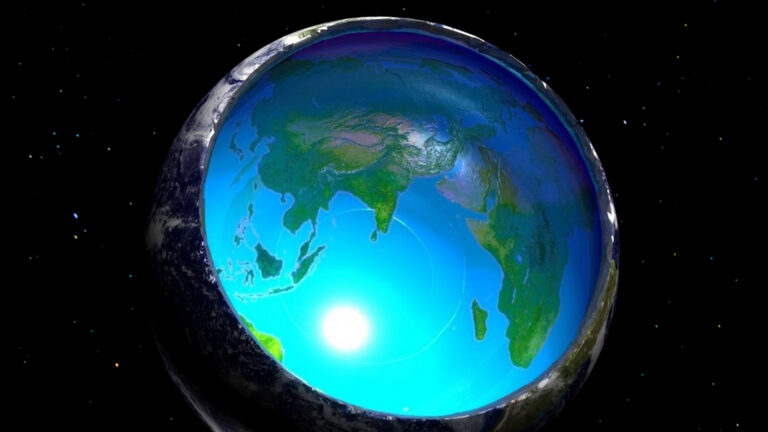
In the past, however, scientists explored many unusual ideas before today’s understanding of geology emerged. Some even proposed that Earth was an inverted sphere with the entire Universe contained inside it. The hollow Earth hypothesis was another attempt to explain the unknown, but modern physics has shown why such a planet could not exist.
The biggest obstacle is gravity. If Earth were an empty shell, gravity would pull the crust inward from every direction. Without something incredibly strong supporting it, the planet would collapse into a much smaller, solid sphere. According to current physics, a naturally hollow Earth is impossible.
Even if we imagined a magical force keeping the shell intact, life would still face enormous challenges. Earth’s magnetic field is produced by the movement of molten iron inside the outer core. Without that core, there would be no magnetic shield to protect the planet from harmful solar radiation. Over time, the atmosphere would gradually be stripped away, leaving the surface exposed to the harsh conditions of space.
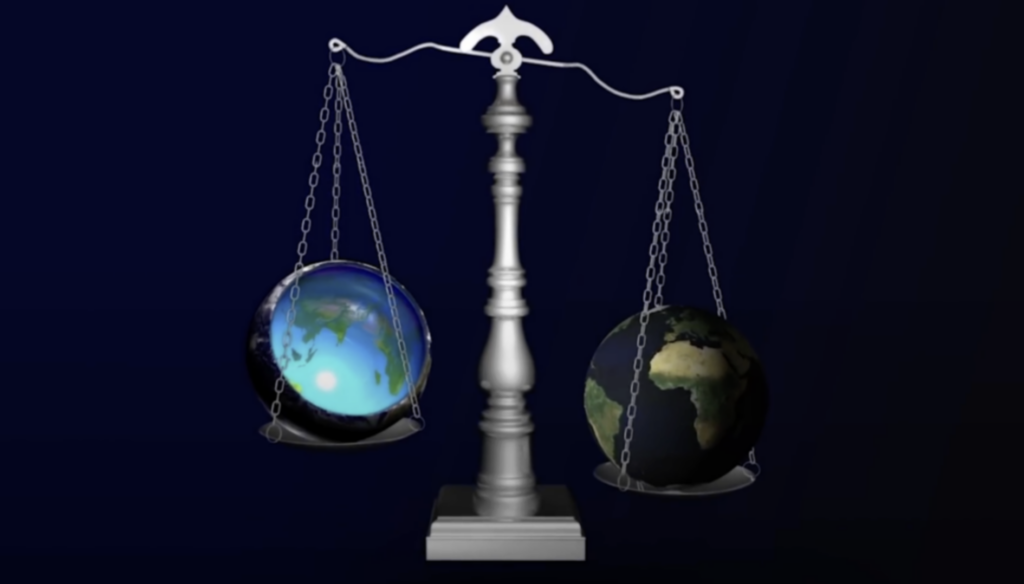
A hollow Earth would also contain only a tiny fraction of our planet’s current mass. Since nearly all of Earth’s material is found in the mantle and core, removing them would reduce the planet’s mass dramatically. Gravity at the surface would become far weaker, making it difficult for Earth to hold onto both its atmosphere and anything standing on it.
Suppose, for the sake of argument, that the hollow planet somehow kept the same mass and surface gravity as Earth. Even then, the inside would behave very differently. After drilling through the crust and entering the empty interior, you would experience almost no gravitational pull. The gravity from every part of the surrounding shell would balance out, leaving you floating weightlessly in complete darkness.
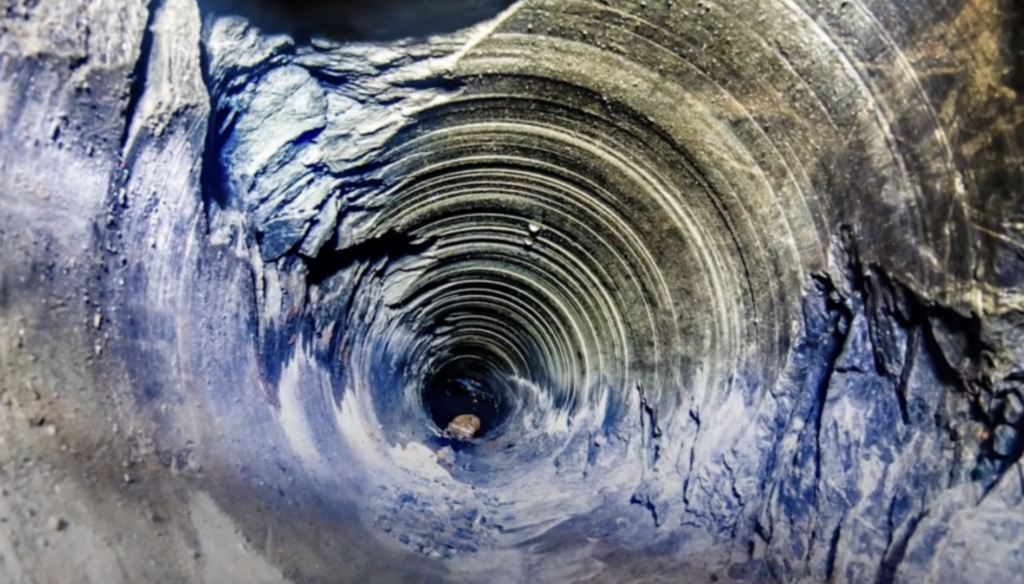
Without air, light, or pressure, surviving inside such a planet would require a fully sealed spacesuit. Otherwise, the conditions would be nearly identical to the vacuum of space. It would not be a hidden world filled with life, but an empty, silent void.
While the hollow Earth remains a popular idea in fiction and conspiracy theories, scientific evidence strongly supports a planet with a dense interior rather than an empty one. As fascinating as the theory may be, everything researchers have discovered points to a solid world beneath our feet, not a hollow shell.