When you travel to an abandoned place, it’s important to remember that people left these towns for a reason. It could be due to dangerous human activities, especially mining, which has polluted towns and made them unfit to live in. So now that you’ve arrived at an abandoned place, how can you tell if it’s dangerous?
How can one ghost town put you in a coma? Why should you be worried about soft ground? How can your leftover food come back to haunt you?
There are many regions with abandoned places, but today we’re visiting the top five most dangerous ones.
Number 5: Hashima Island, Japan
Hashima Island is off the coast of Nagasaki. It once had about 5,000 people, many of whom worked in the mines. In 1880, the Mitsubishi corporation bought the island as a potential place for coal mining. In the 1890s, many coal mines opened on Hashima. They closed in the 1970s. And without them, the people lost their jobs and their way to earn a living.
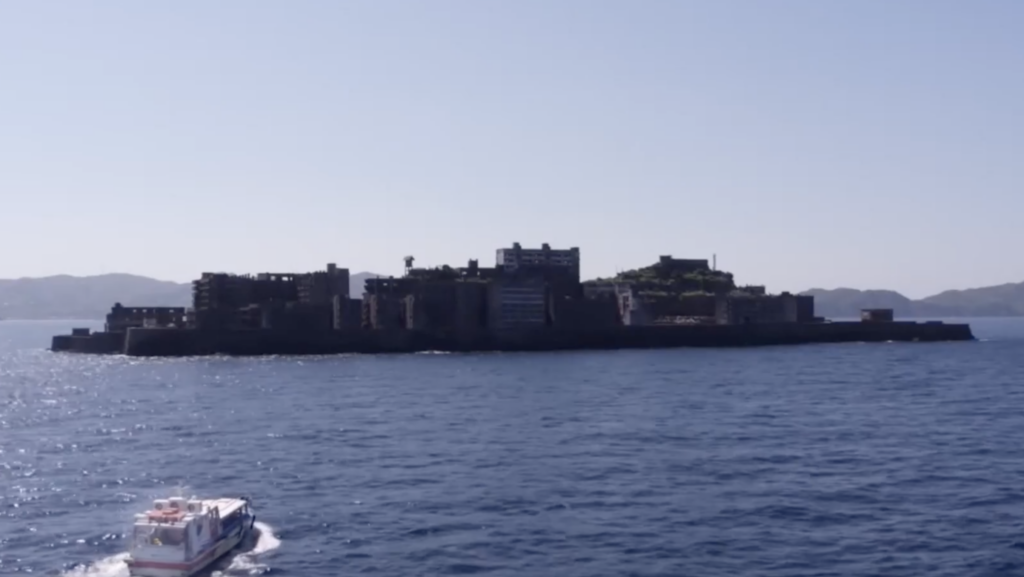
So all of them moved away. The island itself looks dystopian. Tourists often see “giant twisted girders, crumbling
brick structures, and shrubbery”. Now, nature is reasserting itself on Hashima. Some of the most eye-catching sites on the island are the Stairway to Hell and Black 65.
Number 4: Centralia, Pennsylvania
The town of Centralia is dangerous because it suffers from subsidence. Subsidence means the ground is sinking due to underground material moving. This is caused by taking too much of something out of the ground, like oil, natural gas, or minerals. We do it by pumping, fracking or mining. In 1990, only 63 people lived in Centralia. In 2012, only 10 people lived there.
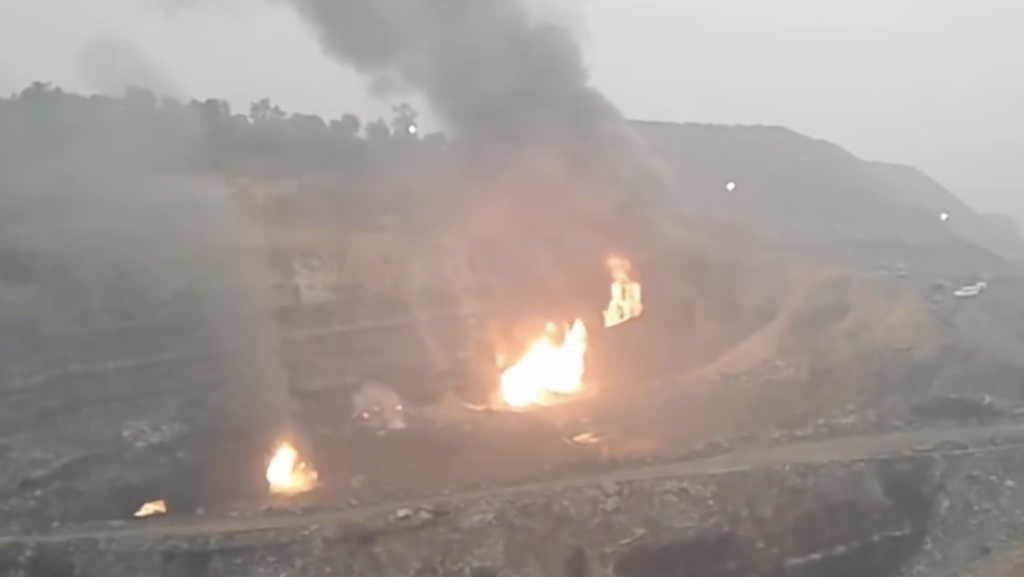
Always use the roads and paths. And keep away from areas with venting steam or gas. Be alert and aware of how the ground feels. If it feels soft or unstable, get away from there. Otherwise, the ground may collapse. On Valentine’s Day in 1981, a 12-year-old boy named Todd Domboski fell into a steaming hole in Centralia.
Todd managed to grab onto an exposed tree root and kept screaming. Finally, someone heard him and pulled him out. If he had been stuck for a few more minutes, he could’ve died from asphyxiation.
Number 3: Dallol, Ethiopia
Dallol is in the Danakil Depression, in a region called Afar. It is one of the hardest places to live. Its daily temperatures average higher than 34 °C (93 °F), and it regularly tops 50 °C (122 °F). Dallol is 125 m (410 ft) below sea level and receives very little rain throughout the year, so it’s basically a desert. And Danakil is atop three tectonic plates that keep shifting. It has multiple rock formations, springs and geysers.
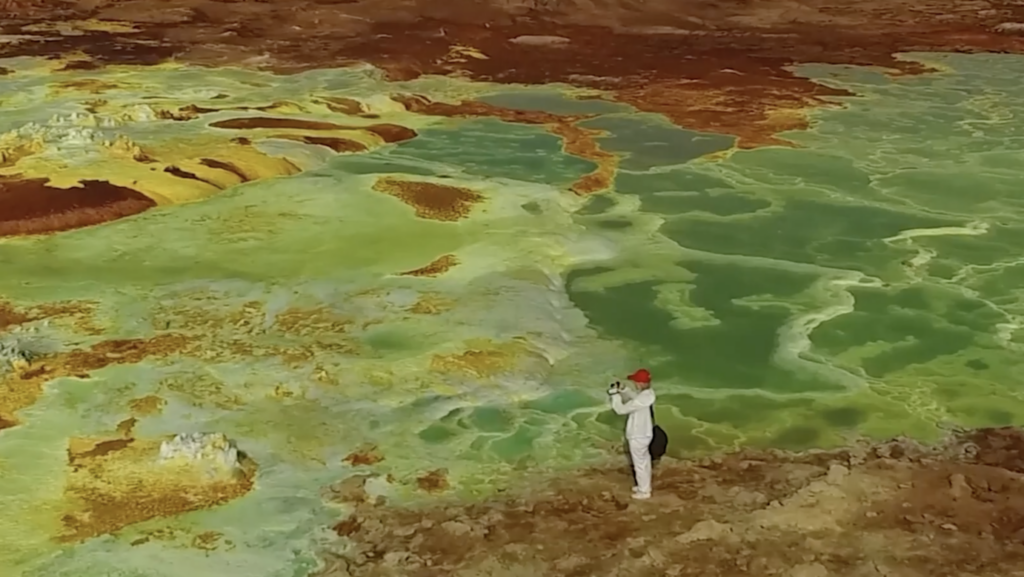
Danakil is not abandoned as the Afar people still live there. But you will need a guide to help you negotiate with the Afar people so you can pass any roadblocks. Prepare for the excessive heat by bringing an ample water supply, and wear sunblock and a hat.
Number 2: Geamana, Romania
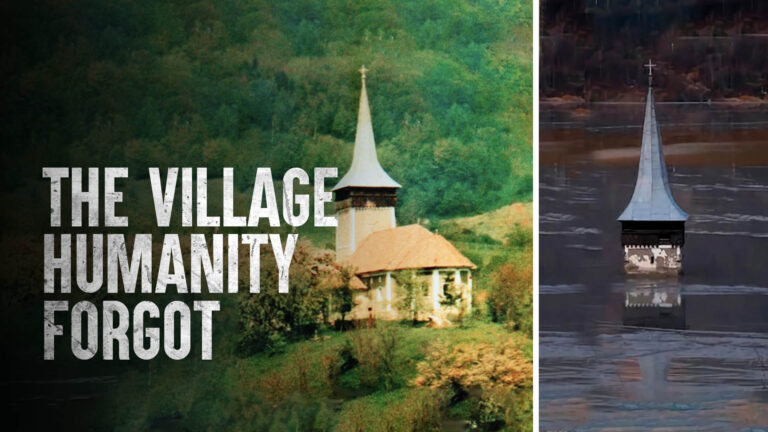
Geamana is an abandoned mining village. The mine released about 11,000 tons of copper at its peak, and a significant amount of toxic waste. Now, of the initial 1,000 inhabitants, only about 20 people remain. The mine builders created an artificial lake that kept growing and almost submerged the village. The lake is highly acidic and contains cyanide, so this is not the place to stop for a drink.
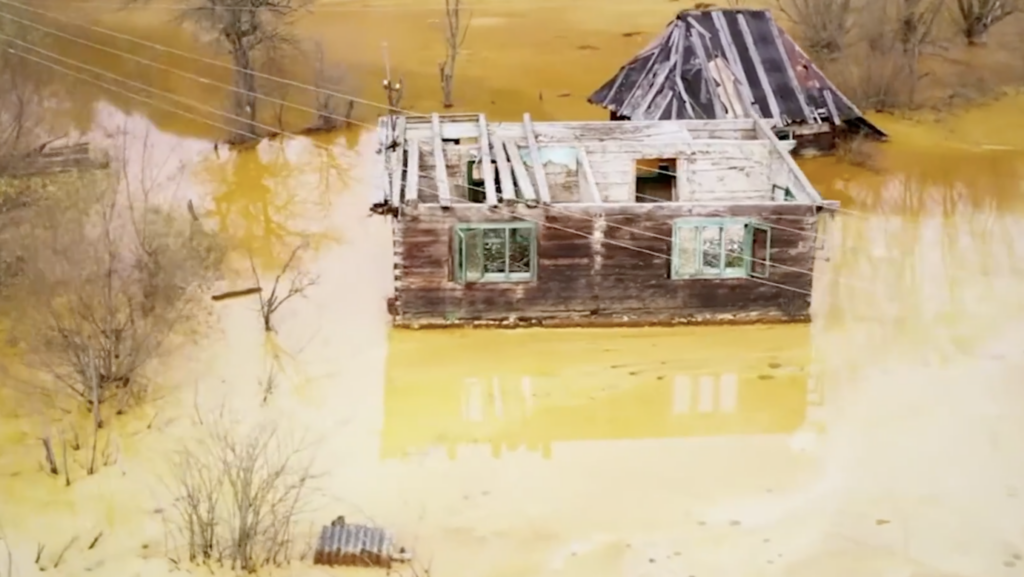
If you fall into it or get exposed to cyanide, you must get treatment right away. The cyanide will make your body unable to use oxygen. You will slowly start feeling dizzy, exhausted, and short of breath. You may also start vomiting or even fall into a coma. You will need to immediately call for help, or get to a hospital or emergency service. That’s a problem, as the closest hospital is about a one hour and 45-minute drive.
Number 1: Snake Island, Brazil
Also called Ilha Queimada Grande, this island is about 90 miles off the coast of Sao Paulo. Its green forests and rocky shoreline almost look like an exotic destination for an awesome surfing and beach vacation. But in reality, it’s home to the most dangerous snakes in the world.
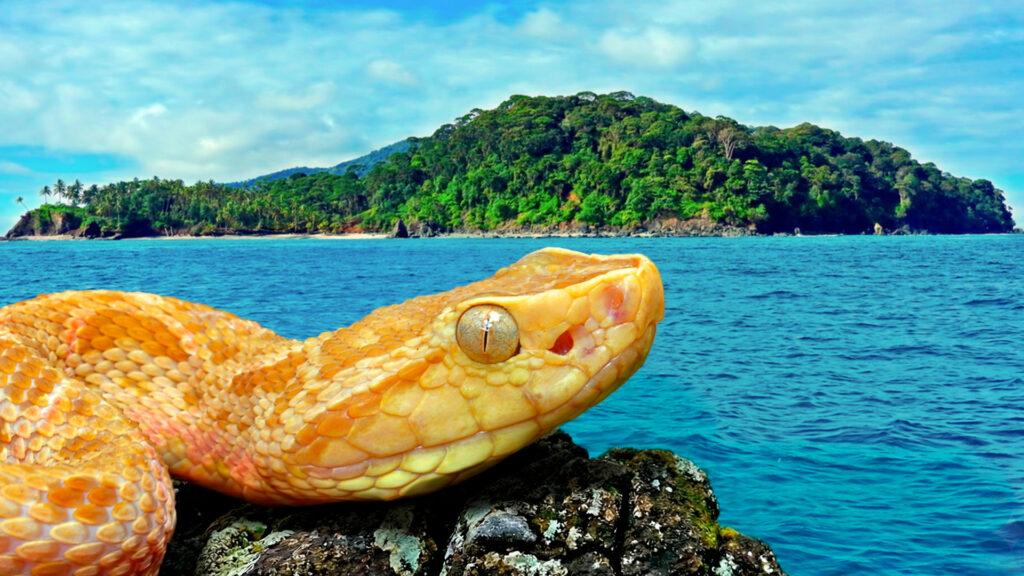
The island is about 45 hectares (110 acres) in size, which is smaller than 0.6 km2 (0.25 mi2).
The snakes that live here are golden lanceheads. They are golden, and their heads are lance-shaped, hence their name. Although lanceheads are common in mainland Brazil, the golden lanceheads on Snake Island are about five times more venomous.
Their venom could be worse than the black mamba’s. According to one molecular biologist, death from a Snake Island lancehead is extremely painful, and “You’re going to die screaming”. They are the ground and hang from trees, so the island is closed off to the public. There are about 2,000-4,000 lanceheads on Snake Island. That means there are 1-5 snakes per 0.1 m2 (1 ft2).