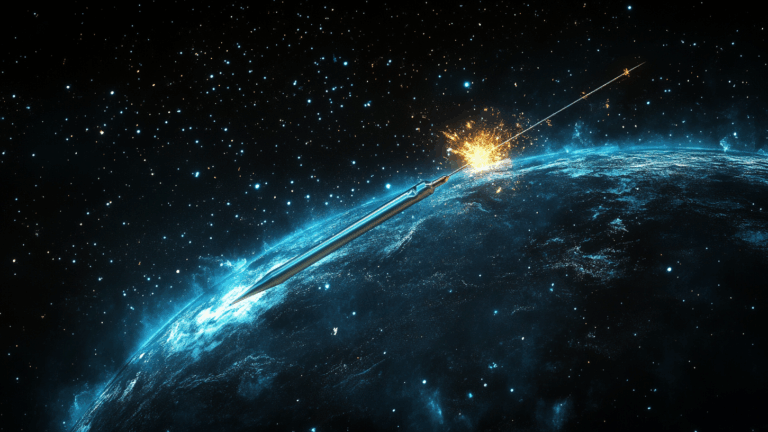
Picture a sewing needle. Small enough to lose in the carpet, light enough that you barely feel it resting in your hand, and completely harmless in every ordinary sense.
Now accelerate it to nearly the speed of light and aim it at Earth. The impact would release more than 100 times the energy of a nuclear bomb, delivered by an object weighing less than a paperclip.
That is the strange truth about velocity. Mass barely matters once something is moving fast enough, and at these speeds even the smallest object becomes a weapon capable of erasing a city.
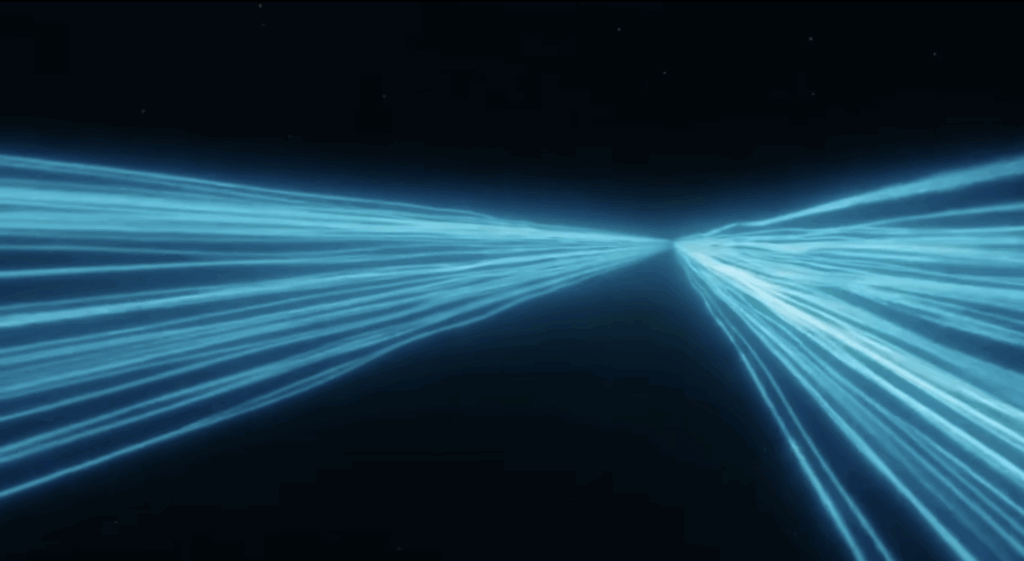
Understanding the Speed of Light
In empty space, light travels at roughly 300,000 kilometers per second, fast enough to circle Earth 7.5 times in a single second.
The Moon sits 386,400 kilometers away, a trip that takes spacecraft about three days. At light speed it takes 1.3 seconds. For comparison, the fastest object humans have ever built, NASA’s Parker Solar Probe, moves at 635,000 kilometers per hour, and that is nowhere close.
Why It Is Practically Impossible
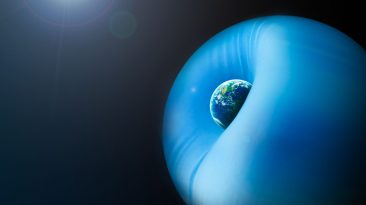
Einstein’s Theory of Relativity explains the obstacle. As an object approaches light speed its mass increases and time slows down, so every additional bit of acceleration demands more energy than the last.
Reaching light speed exactly would require infinite energy, which puts it permanently beyond reach.
So imagine an advanced alien civilization solves the problem well enough to launch a needle at 99.9 percent of light speed.
The Devastation on Impact
The needle is microscopic next to Earth, but its speed loads it with enormous kinetic energy.
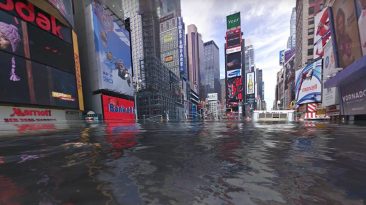
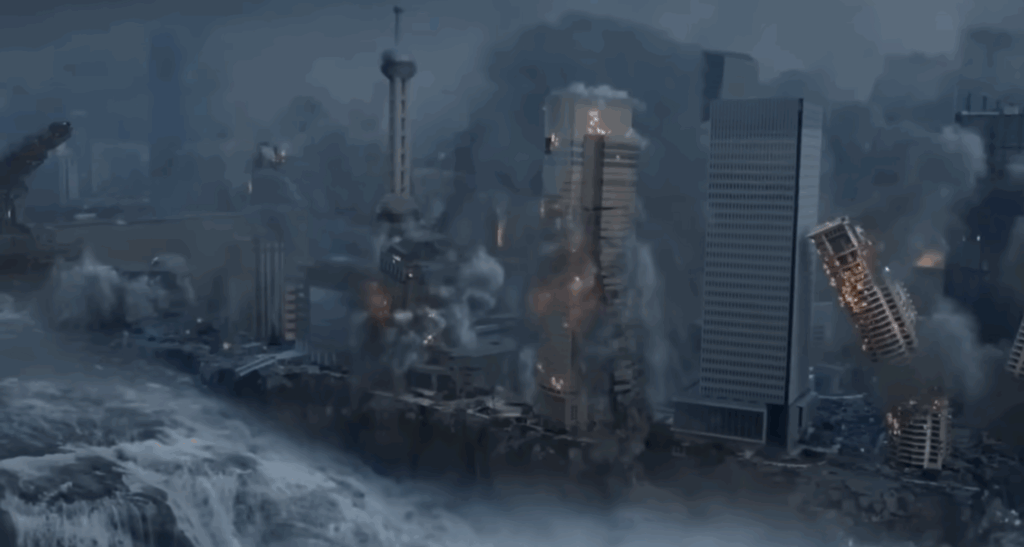
Say it strikes land, somewhere like Central Park in New York City. Friction on entry might ignite it like a meteor and burn it up entirely. If it survives the descent, the explosion exceeds 100 nuclear bombs.
Trees, grass, and anyone nearby would be incinerated instantly. Buildings would collapse, fires would spread, and a shockwave equivalent to a 7.3 magnitude earthquake would roll outward far enough to shake neighboring states like New Jersey.
The damage would stay regional, though. People on the far side of the planet would likely never feel it.
What If It Hit the Ocean
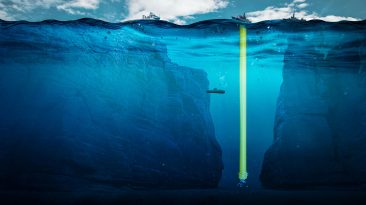
Water changes the picture. The kinetic energy would displace an enormous volume, creating a splash scientists estimate as comparable to a one megaton nuclear explosion.
The 1946 Baker underwater nuclear test threw up water plumes over 2 kilometers high, which gives some sense of the scale. A global tsunami is unlikely, since those require massive geological shifts rather than one concentrated explosion.
And for anyone standing directly in the path, the result is instant. The energy released would leave no time for pain.
The Scenario That Ends Everything
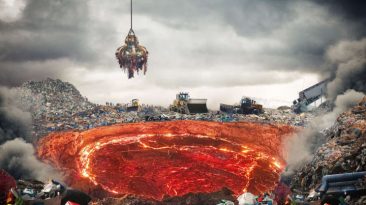
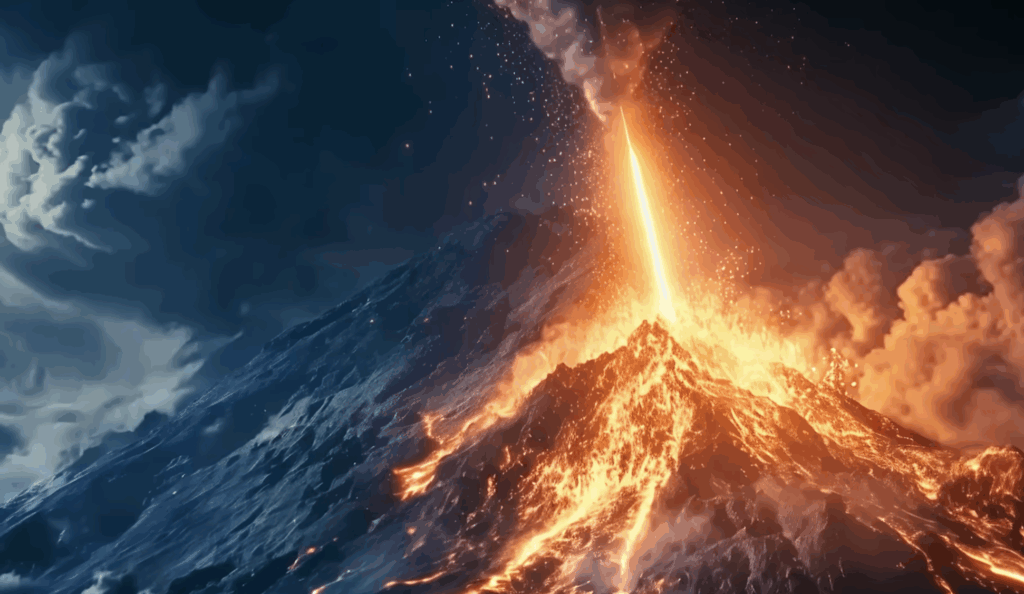
The genuinely catastrophic version involves the needle hitting an active volcano.
The impact could disrupt underground magma chambers and trigger eruptions on a scale that has caused extinction events before. The Toba eruption 74,000 years ago nearly finished humanity, leaving only a few thousand survivors worldwide.
Volcanic ash could hang in the atmosphere for a decade or more, blocking sunlight and dropping the planet into a nuclear winter. Crops would fail, ecosystems would collapse, and most species including ours would face extinction. Some people might hold on in places like Australia or New Zealand where food production could continue under weak sunlight, but feeding 8 billion would be impossible.
Why You Do Not Need to Worry
The odds here are effectively zero. We cannot generate infinite energy, and nothing suggests any civilization anywhere has worked out how to push objects to near light speed.
Which makes this one of the rare disasters we can enjoy thinking about, safe in the knowledge that the universe itself is keeping the needle out of anyone’s hands.