When most people think about encountering a snake, they imagine one slithering through grass, rocks, or a dark corner on the ground. But some of the most dangerous snakes are hiding above you, moving silently through the branches where you might never notice them.
One of them is the boomslang, a venomous tree snake found across parts of sub Saharan Africa. Its name comes from Afrikaans and literally means “tree snake,” which is fitting because these reptiles spend much of their lives moving through trees and vegetation.
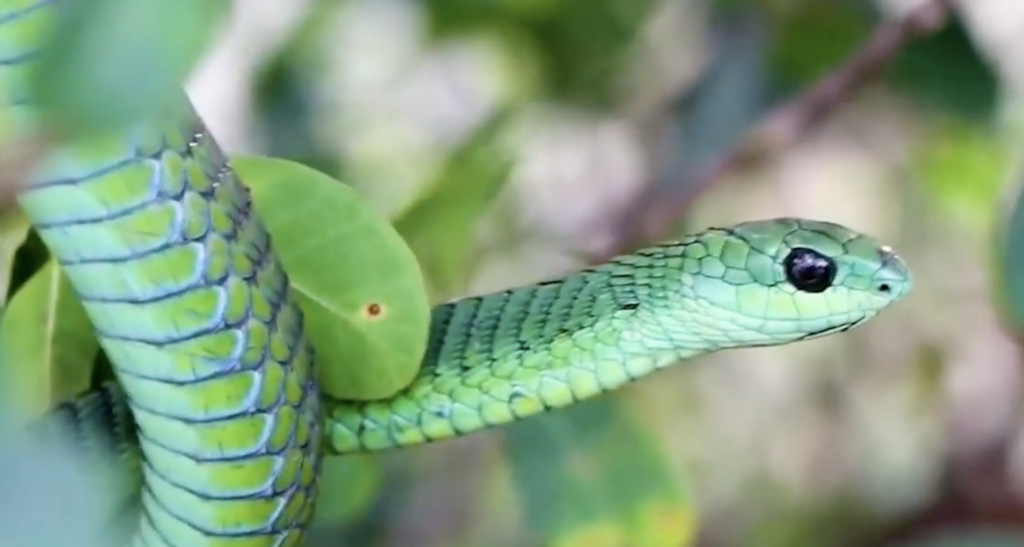
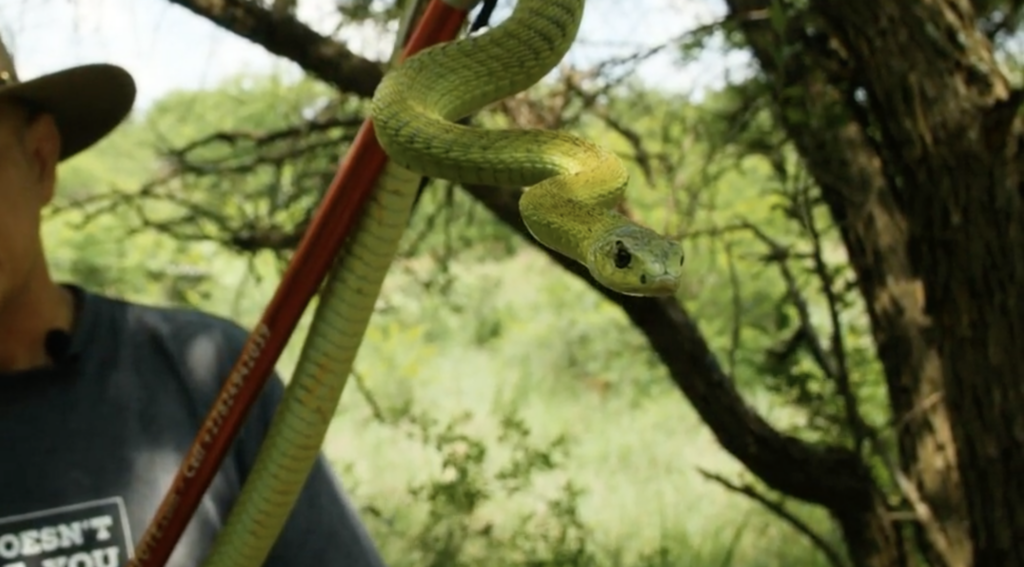
At first glance, the boomslang might not look particularly threatening. It has a relatively small head, enormous eyes, and striking colors that can range from bright green to darker shades, helping it blend into the surrounding leaves and branches.
That camouflage is one of its greatest advantages. A bird, frog, or lizard moving through the vegetation might mistake the snake for part of a branch until it is far too late.
Despite its deadly reputation, boomslangs are generally shy and avoid confrontation with humans. They are not naturally aggressive snakes that actively search for people, but they can defend themselves if they feel threatened or trapped.
Their unusual teeth make the situation even more dangerous. Unlike many venomous snakes whose fangs sit toward the front of the mouth, a boomslang has relatively long fangs positioned toward the rear.
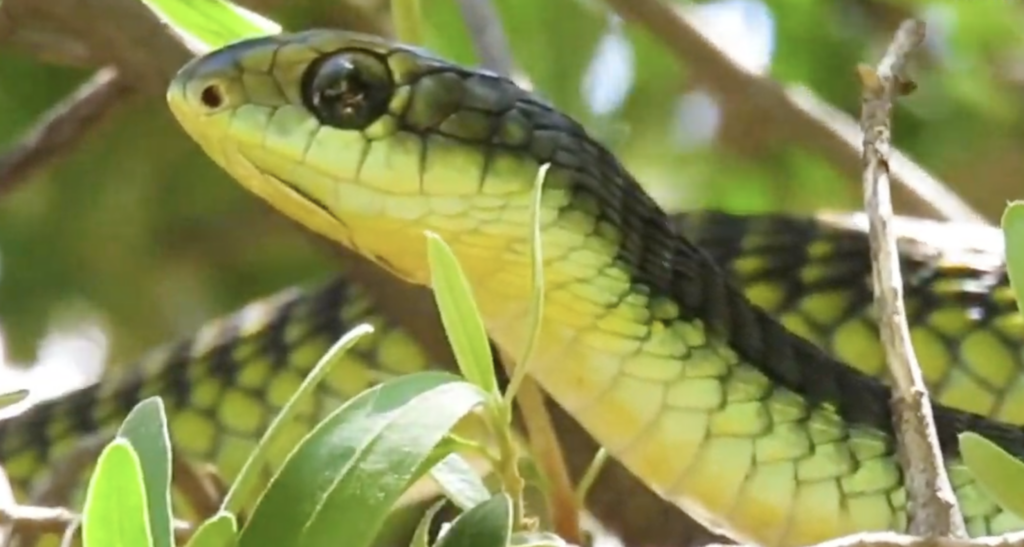
That might sound like a disadvantage, but the snake can open its mouth remarkably wide. This allows its rear fangs to reach potential targets much more effectively than you might expect.
And then there is the venom.
Boomslang venom is primarily hemotoxic, meaning it interferes with the body’s ability to clot blood. In a serious envenomation, the victim can suffer severe internal and external bleeding as the venom disrupts the normal mechanisms that prevent blood loss.
One of the most frightening aspects is that the effects may not appear immediately. Unlike some snake bites that produce rapid and dramatic symptoms, boomslang envenomation can develop gradually, which may cause someone to underestimate the seriousness of the bite.
A famous example involved American herpetologist Karl Patterson Schmidt in 1957. While working with a young boomslang at the Chicago Zoological Park, Schmidt was bitten and initially believed the injury would not be fatal.
Instead, he carefully documented the symptoms he experienced as his condition deteriorated. His notes described increasingly severe bleeding and other symptoms before he died approximately a day after the bite.
Schmidt’s death demonstrated just how dangerous boomslang venom can be, even though the snake itself is not normally interested in attacking humans.
The danger does not disappear when the snake is young either. Baby boomslangs are venomous from birth, and they are capable of delivering venom despite their much smaller size.
Fortunately, boomslang bites are relatively uncommon because these snakes generally prefer to escape rather than confront people. Their natural habitat and secretive behavior mean that most humans will never encounter one.
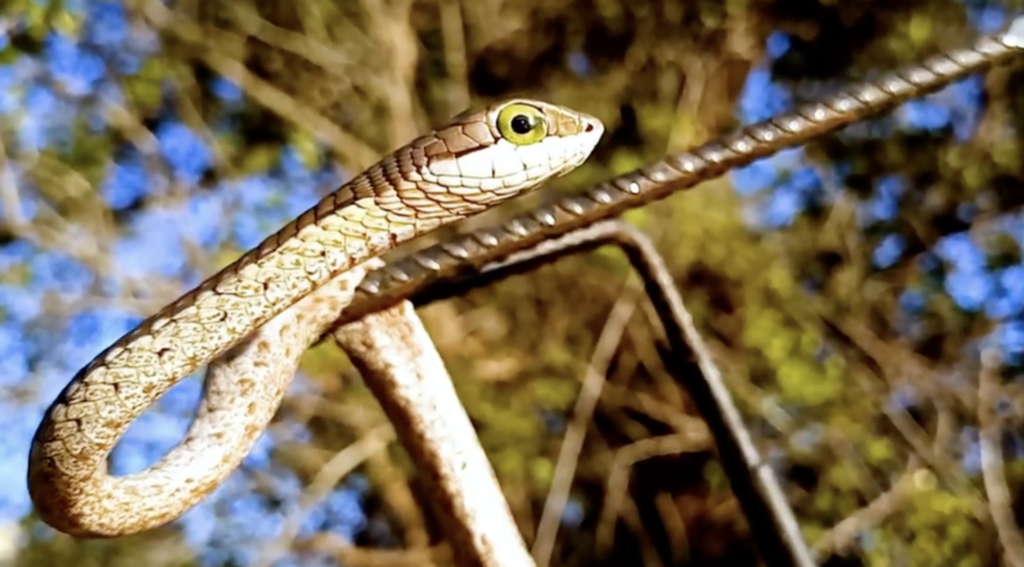
If you do happen to spot one, however, getting closer to admire its unusual appearance is a terrible idea. A snake that looks almost harmless because of its huge eyes and colorful body can still deliver a medically serious bite.
The boomslang is a perfect example of why appearances can be misleading in the animal kingdom. Its slender body, beautiful coloring, and enormous eyes might make it look fascinating rather than frightening, but that camouflage hides one of Africa’s more dangerous venomous snakes.
So if you are walking through an area where boomslangs are found, remember to watch the branches as well as the ground. The snake you need to back away from might not be at your feet.
It could be watching you from above.