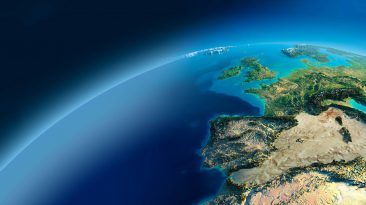
Earth never stops moving. Right now, as you read this, the planet beneath your feet is spinning at incredible speed. At the equator, you are traveling through space at roughly 1,670 km/h (1,037 mph), even though it feels like you are standing perfectly still. Every 24 hours, Earth completes one full rotation, creating the cycle of day and night that shapes life across the globe.
But what if Earth started spinning faster?
Not just a little faster. What if the planet accelerated far beyond its current speed? What would happen to our days, our oceans, and our atmosphere? Could humanity survive? And what if Earth somehow rotated at the speed of light?
The answers become more terrifying the faster the planet spins.
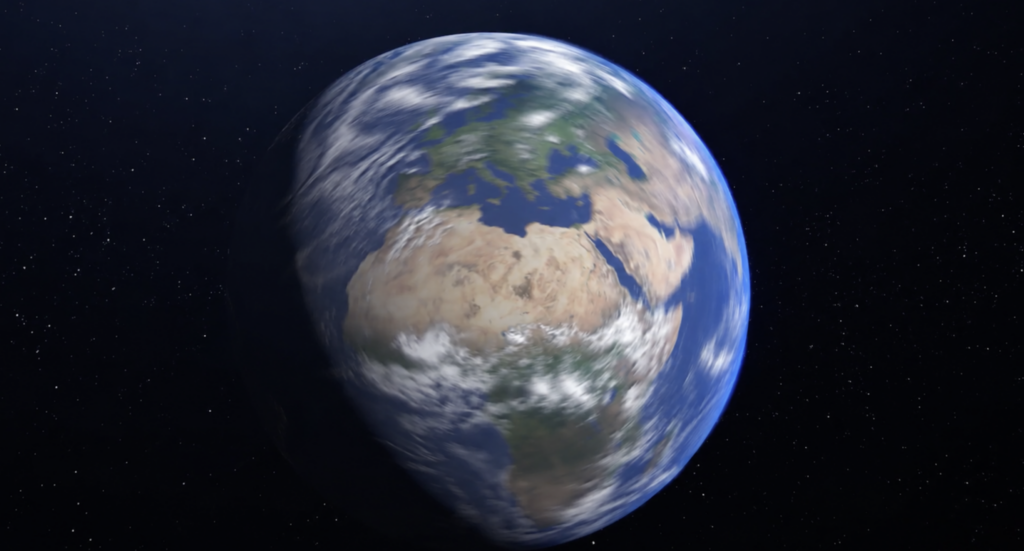
Earth currently rotates once every 23 hours, 56 minutes, and 4 seconds. That speed is not equal everywhere. Near the poles, rotational movement is minimal. But near the equator, the surface moves the fastest because it has the farthest distance to travel during each rotation.
This steady spin is one of the main reasons life can exist here at all. It controls the length of our days, regulates temperatures, influences weather systems, and even affects ocean currents. Without Earth’s rotation, the planet would become an entirely different world.
The alternation between sunlight and darkness prevents one side of Earth from overheating while the other freezes. Winds, storms, and jet streams are also shaped by this movement through a phenomenon called the Coriolis effect. Even the oceans depend on Earth’s spin to maintain stable circulation patterns.
So changing the rotation speed would change almost everything about life on the planet.
At first, the effects might seem surprisingly harmless.
Imagine Earth spinning just 1 mph faster than it does today. That tiny increase would shorten the day by about 90 seconds. Most people probably would not even notice. Clocks could easily adapt, and daily life would continue normally.
But the oceans would already begin responding.
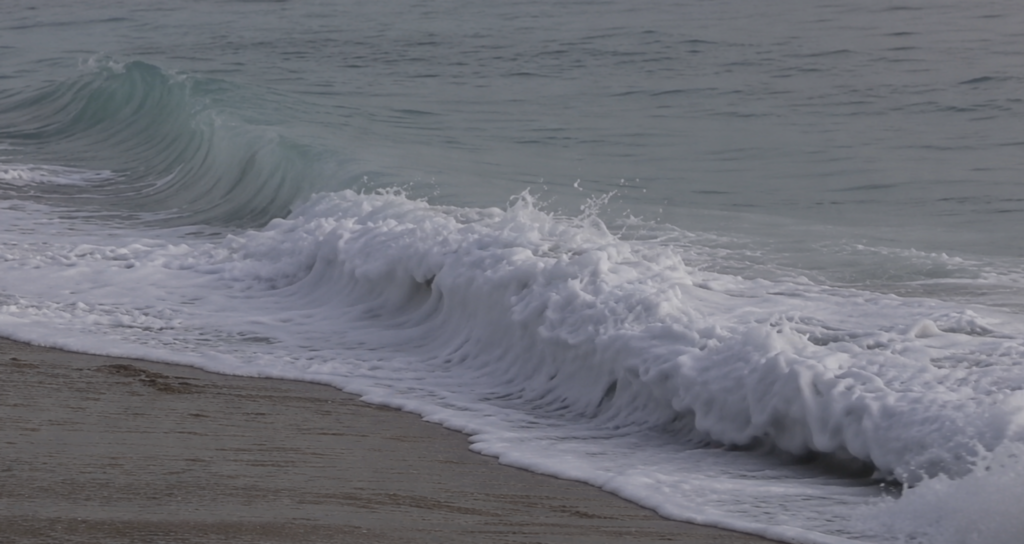
Earth’s rotation creates centrifugal force, which pushes outward against gravity. That force is strongest around the equator. As the planet spins faster, water would slowly migrate away from the poles and gather around equatorial regions.
Sea levels near the equator would rise by several centimeters. Coastal flooding would increase slightly, and scientists would quickly detect changes in ocean circulation. Even a small adjustment in Earth’s spin would begin reshaping the planet.
Now increase the speed dramatically.
If Earth rotated 100 mph faster, a full day would last only around 22 hours.
Human biology would struggle to adapt. Our circadian rhythms evolved around a 24 hour cycle. Losing two hours from every day would confuse sleep schedules, hormone production, digestion, and mental performance. Many people would feel permanently jet lagged.
The calendar would also need to change. Since Earth would still orbit the Sun at the same speed, we would experience more days per year than we do now.
But human exhaustion would be the least of our problems.
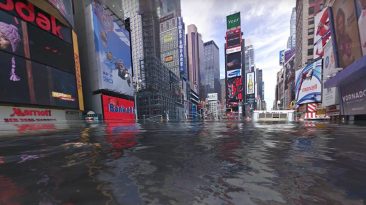
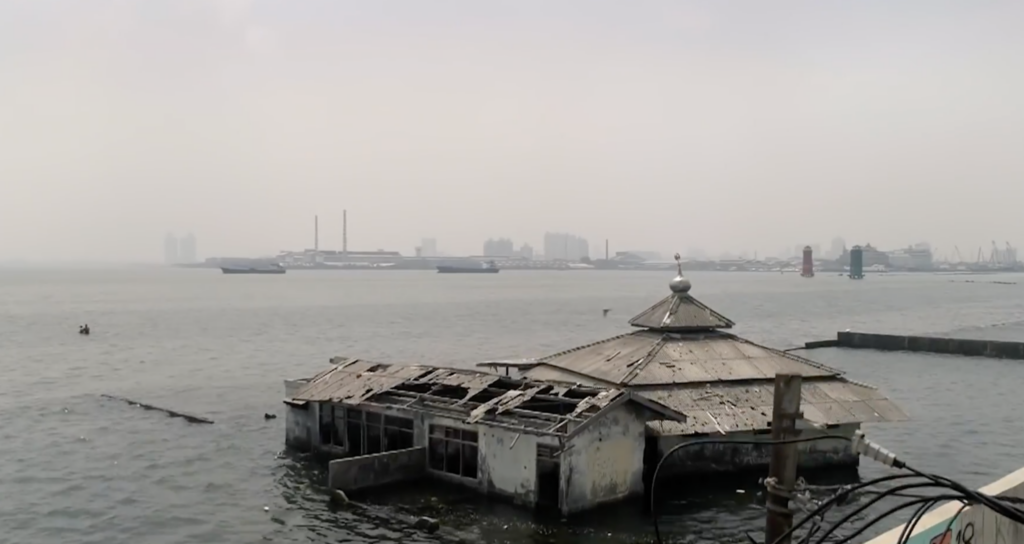
At this speed, centrifugal force would significantly affect sea levels. Oceans around the equator could rise by up to 20 meters, or about 65 feet. Some of the world’s largest cities would partially disappear beneath the water.
Low lying regions in countries like Bangladesh would be devastated. Major coastal cities such as New York, Shanghai, Mumbai, Venice, and Miami would face catastrophic flooding. Entire island nations could vanish completely.
Hundreds of millions of people would become climate refugees almost overnight.
And the faster Earth spins, the worse things become.
Double Earth’s current rotational speed, and the consequences grow apocalyptic.
A day would last only 12 hours. The Sun would rise and set twice as fast, giving plants and animals far less time to adapt to daylight cycles. Agriculture would collapse in many regions because crops depend on predictable sunlight exposure.
The oceans would surge toward the equator with tremendous force. Water levels there would rise so dramatically that only the tallest mountain ranges would remain above sea level. The Andes, Himalayas, and a few isolated peaks might survive as chains of islands in a massive global ocean.
Meanwhile, regions closer to the poles would actually lose water as it drained away toward the middle of the planet.
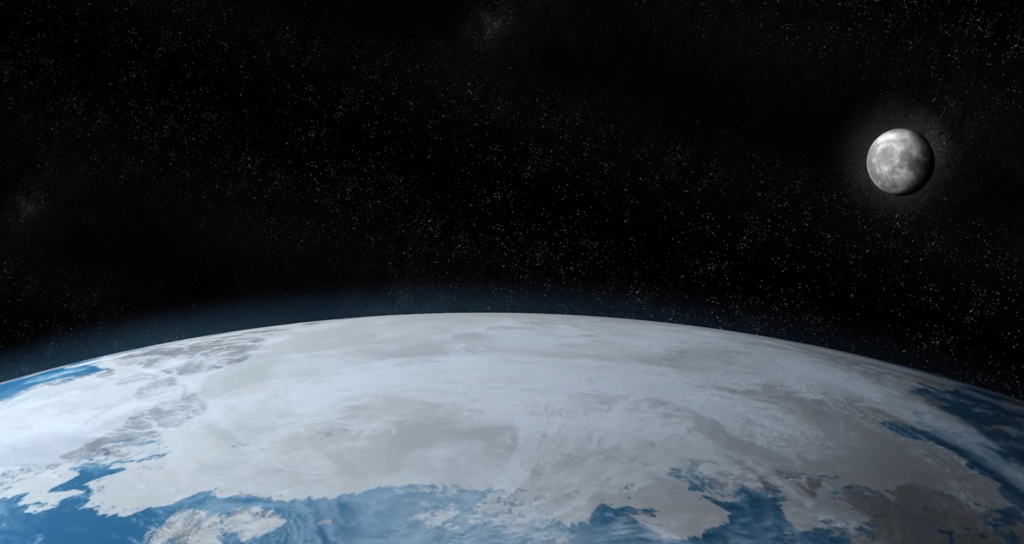
Earth itself would begin changing shape.
Today, Earth is not a perfect sphere. Its rotation already causes a slight bulge around the equator. Faster spinning would exaggerate this effect. The equator would expand outward while the poles flattened further.
The atmosphere would become increasingly unstable.
Powerful winds would sweep across the planet at unimaginable speeds. Storm systems would intensify far beyond modern hurricanes. Near the equator, warm moist air would rise constantly, creating endless clouds, torrential rainfall, and dense fog.
Some regions could become nearly uninhabitable due to nonstop superstorms.
Modern technology would also fail.
Many satellites orbit Earth while synchronized with the planet’s rotation. Faster spinning would throw those systems out of alignment. GPS navigation, communications networks, weather forecasting, and military systems could collapse.
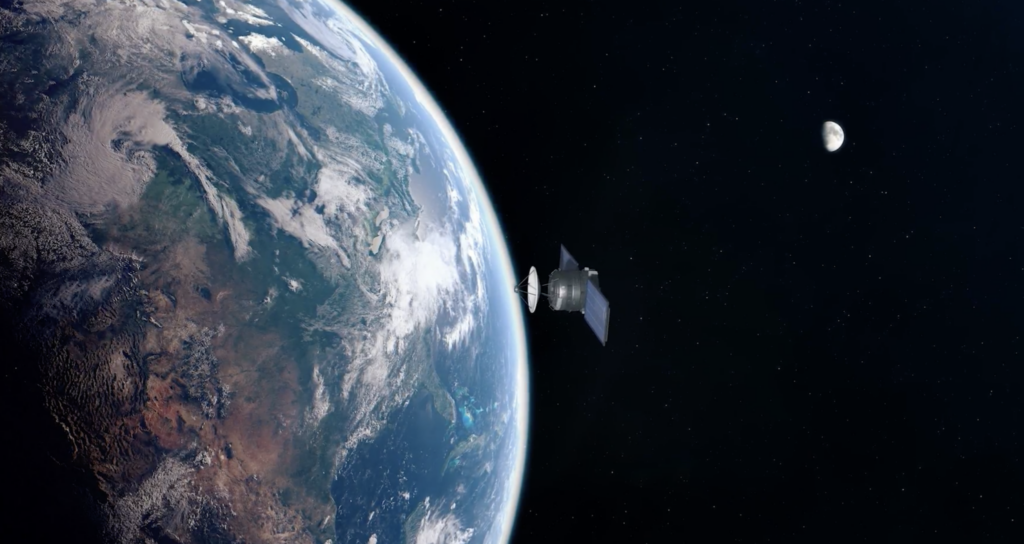
Entire economies would grind to a halt.
But Earth still would not be spinning fast enough to launch people into space.
That happens later.
As rotational velocity continues increasing, centrifugal force would eventually rival the pull of gravity itself. At the equator, you would begin feeling lighter because Earth’s spin would partially counteract gravity.
Jumping would become easier. Sports records would shatter overnight. Aircraft would require less fuel to stay airborne.
Then eventually, gravity would lose.
At around 28,000 km/h, or roughly 17,500 mph, the outward force near the equator would equal Earth’s gravitational pull. Objects and people would no longer remain anchored to the surface.
You could literally float off the planet.
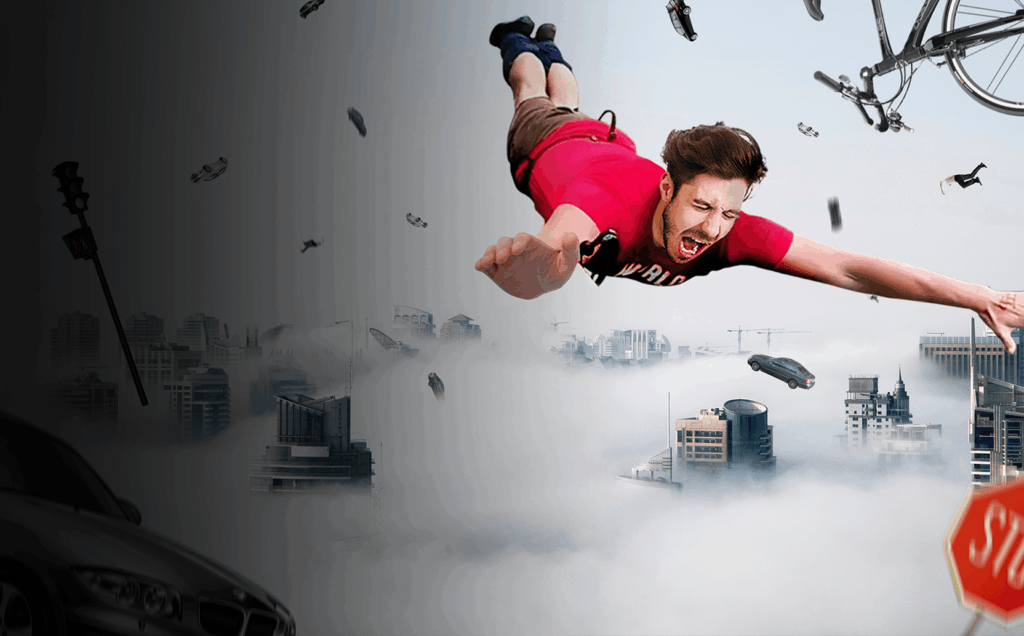
Buildings, vehicles, oceans, and entire sections of the atmosphere would begin drifting into space. Earth would no longer be capable of holding itself together properly.
The effects on weather would become surreal.
Rain might not fall downward anymore. Water droplets could be pulled upward into the atmosphere by intense rotational forces. Massive rings of moisture and debris could form around the equator, somewhat like the rings of Saturn.
Earth would start looking less like a planet and more like a cosmic disaster. Push the speed even higher, and the crust itself would begin breaking apart.
At roughly 24,000 mph, the planet’s equatorial bulge would grow extreme. Tectonic plates would shift violently under the strain. Earthquakes stronger than anything in recorded history would rip across the surface.
Volcanoes would erupt worldwide.
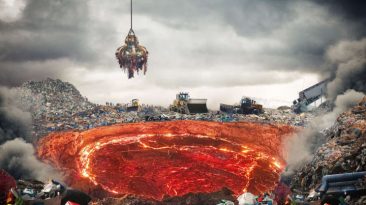
The crust near the equator could crack open as the planet stretched outward. Entire continents might fracture and collapse into the oceans. Lava flows would spread across vast regions while ash clouds blocked sunlight.
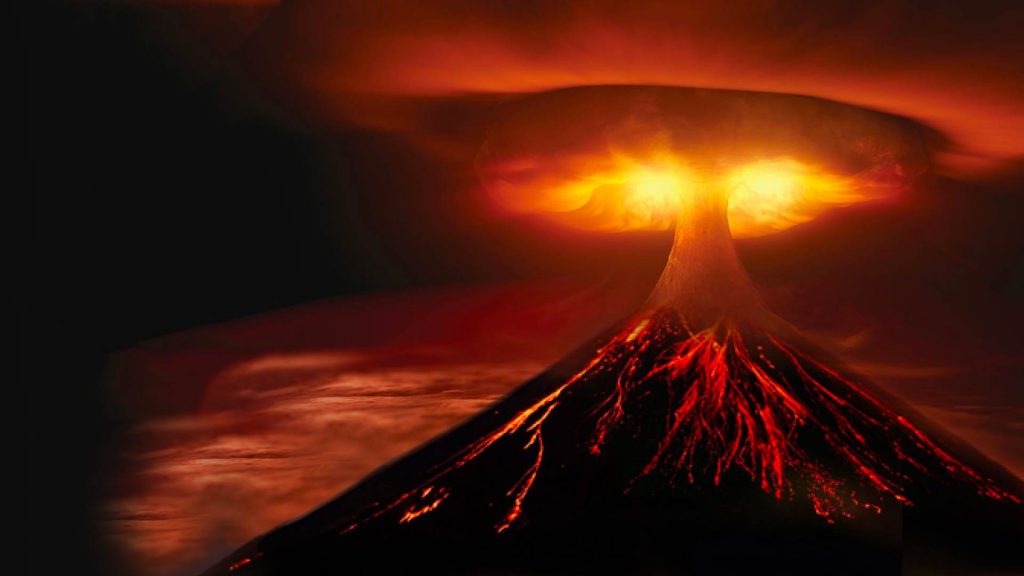
At this stage, almost no complex life could survive.
The atmosphere would likely become toxic due to volcanic gases. Oceans would boil in some areas while freezing in others. The magnetic field could destabilize, exposing the surface to dangerous cosmic radiation.
Earth would become a dying world. But somehow, the situation can still get even more extreme.
Imagine Earth spinning at the speed of light.
Light travels at nearly 300,000 kilometers per second, or about 186,000 miles per second. That is roughly 670,000 times faster than Earth’s current rotational velocity.
According to modern physics, this scenario is impossible. Objects with mass cannot actually reach the speed of light because it would require infinite energy. But if we ignore that limitation for a moment, the results become utterly bizarre.
The shape of the planet would no longer resemble a sphere.
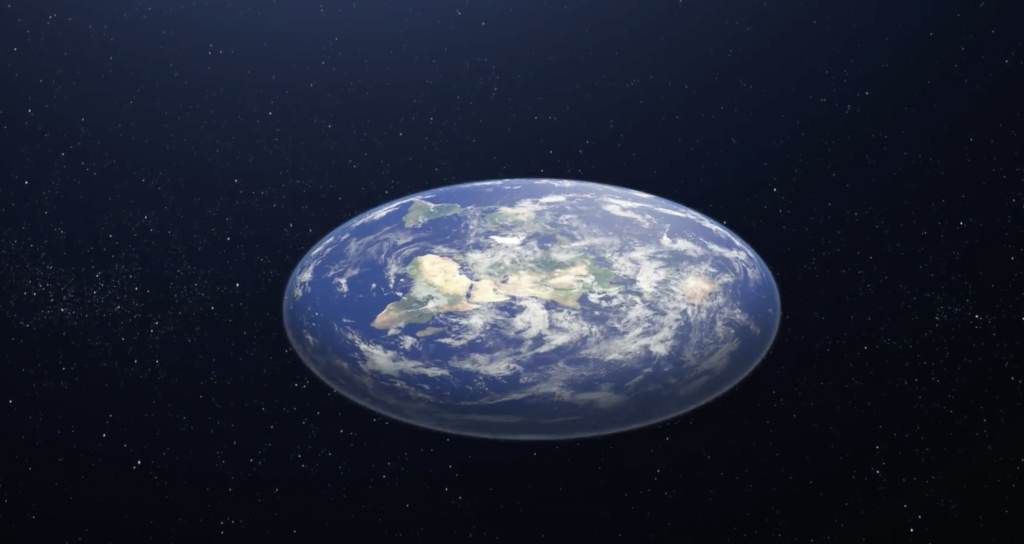
The immense rotational forces would flatten Earth into a thin disk. The equator would stretch outward while the poles compressed inward. Every structure, ocean, mountain, and living organism would be distorted by the motion.
You would not look human anymore.
Everything around you would be stretched and compressed by relativistic effects predicted by Einstein’s theory of special relativity.
Time itself would begin behaving strangely.
As an object approaches the speed of light, time slows down relative to outside observers. This phenomenon is known as time dilation.
At near light speed, time on Earth would slow dramatically compared to the rest of the universe. To an outside observer, the planet might appear frozen in motion.
For people on Earth, however, reality would become incomprehensible. Space and time would distort so severely that normal physics could no longer describe what was happening.
Then comes the most terrifying possibility of all.
As an object gains speed, its relativistic mass increases. Near the speed of light, the energy involved becomes enormous. If Earth somehow contained that much energy, the planet could collapse under its own gravity. In theory, it might form a black hole.
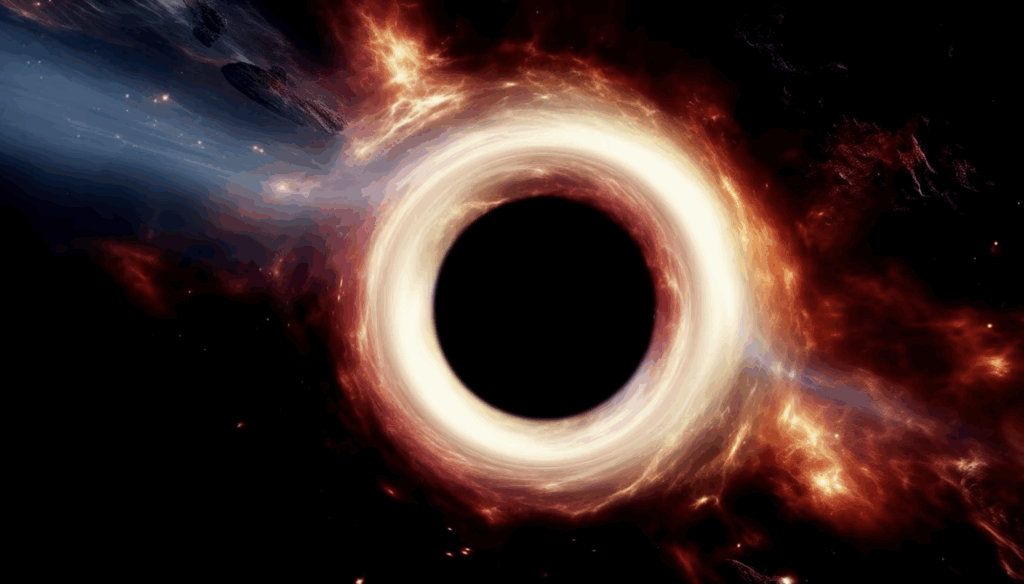 A black hole forms when mass becomes compressed into an incredibly small space, creating gravity so strong that not even light can escape. If Earth reached this state, the entire planet and everything on it would vanish behind an event horizon.
No oceans. No continents. No atmosphere. No humanity.
Fortunately, none of this is likely to happen.
Earth’s rotation actually slows down over time, not speeds up. Billions of years ago, days on Earth were much shorter than they are today. Fossil evidence suggests that during the age of the dinosaurs, a day lasted around 23 hours. Earlier in Earth’s history, days may have been only six hours long.
The Moon is largely responsible for slowing the planet’s spin through tidal interactions. Every century, Earth’s day length increases by roughly 1.8 milliseconds.
That means the future Earth will spin more slowly, not faster.
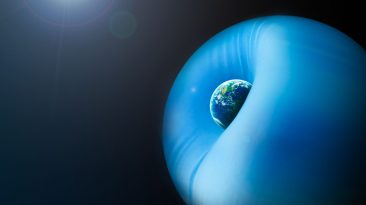
Still, imagining a rapidly spinning Earth reveals how fragile our world truly is. The exact speed of our planet’s rotation controls tides, climate, gravity, weather, and even the biological rhythms inside our bodies.
Change that speed too much, and the stable world we depend on disappears.
The planet beneath your feet may feel solid and permanent, but in reality, Earth exists in a delicate cosmic balance. And if that balance were pushed to the extreme, our peaceful blue world could transform into one of the most hostile places in the universe.