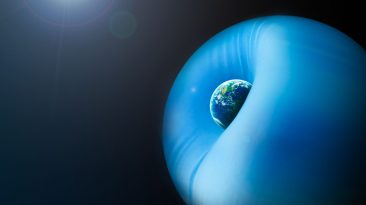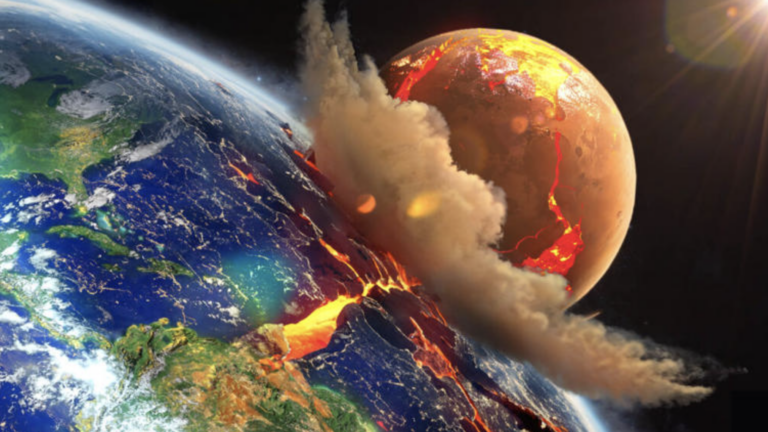
For billions of years, Mars has remained one of Earth’s closest planetary neighbors, quietly orbiting the Sun hundreds of millions of kilometers away. But imagine that something changed its path. A passing rogue planet, a massive gravitational disturbance, or an incredibly unlikely cosmic event sends the Red Planet directly toward Earth.
The collision would not happen overnight. Long before Mars reached us, its enormous gravity would begin tearing our planet apart. Oceans would rise, continents would crack, and the sky itself would become unrecognizable. By the time the two worlds finally collided, nothing on Earth would remain the same.
Here are the six stages of what would happen if Mars were heading straight for Earth.
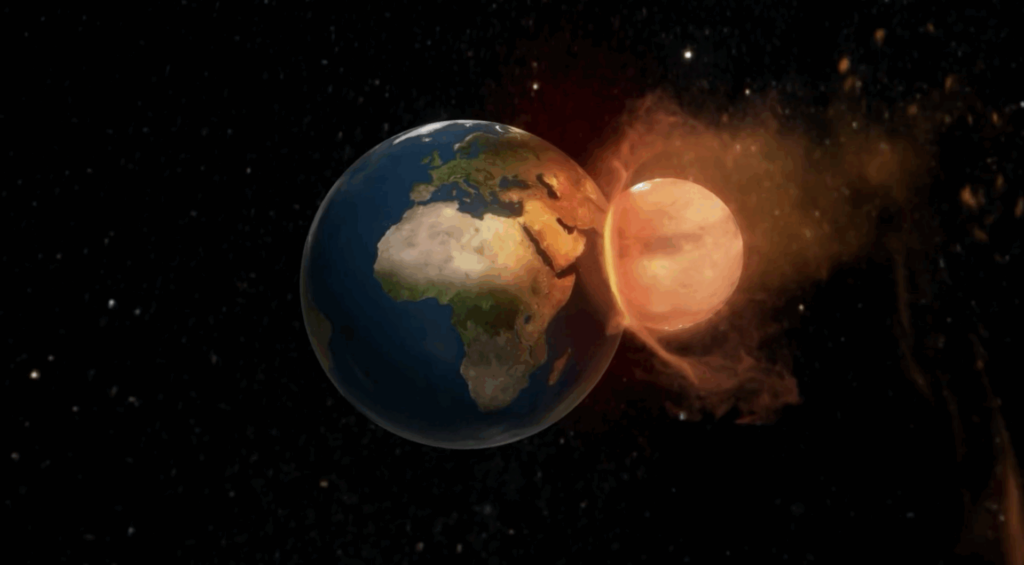
1. Two Weeks Before Impact: Earth Gets a Second Moon
Roughly two weeks before the collision, Mars would already dominate the night sky. No longer a tiny red dot, it would appear larger every evening until it looked almost like a second Moon.
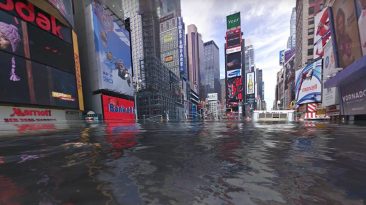
Although still millions of kilometers away, its gravity would already be affecting Earth. Ocean tides would become dramatically stronger as enormous volumes of water shifted toward the approaching planet. Coastlines around the world would begin flooding daily, while ports, beaches, and entire islands disappeared beneath rising seas.
Scientists would also detect unusual stress building deep beneath Earth’s crust. Small earthquakes would begin occurring in places that had never experienced them before, serving as the first warning that something unimaginable was approaching.
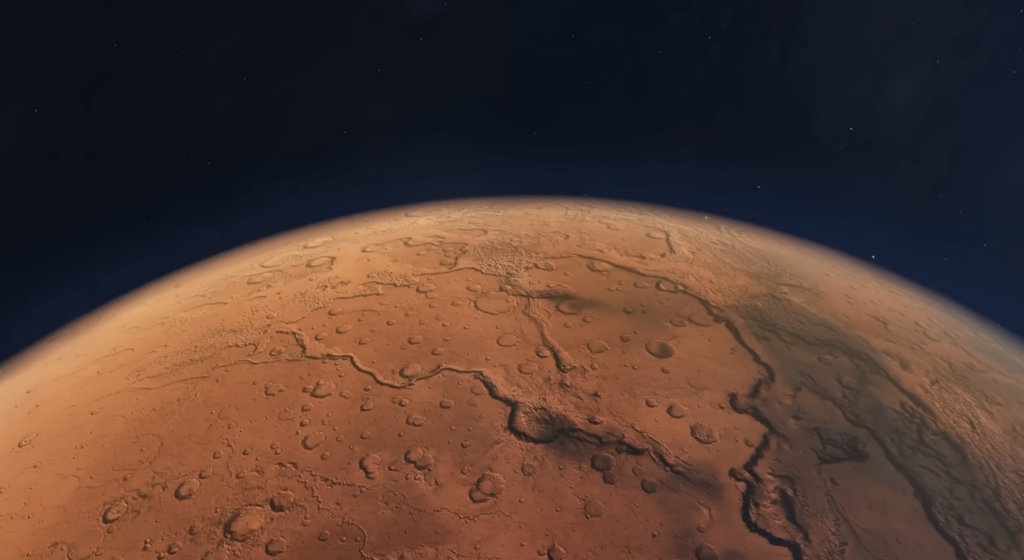
2. Three Days Before Impact: The Planet Begins Falling Apart
As Mars closed the gap to less than one million kilometers, Earth’s geology would begin to fail.
The gravitational tug between the two planets would trigger gigantic tides reaching dozens of meters high, sending walls of water crashing across coastal cities. Entire regions would disappear beneath the ocean as evacuation efforts collapsed into chaos.
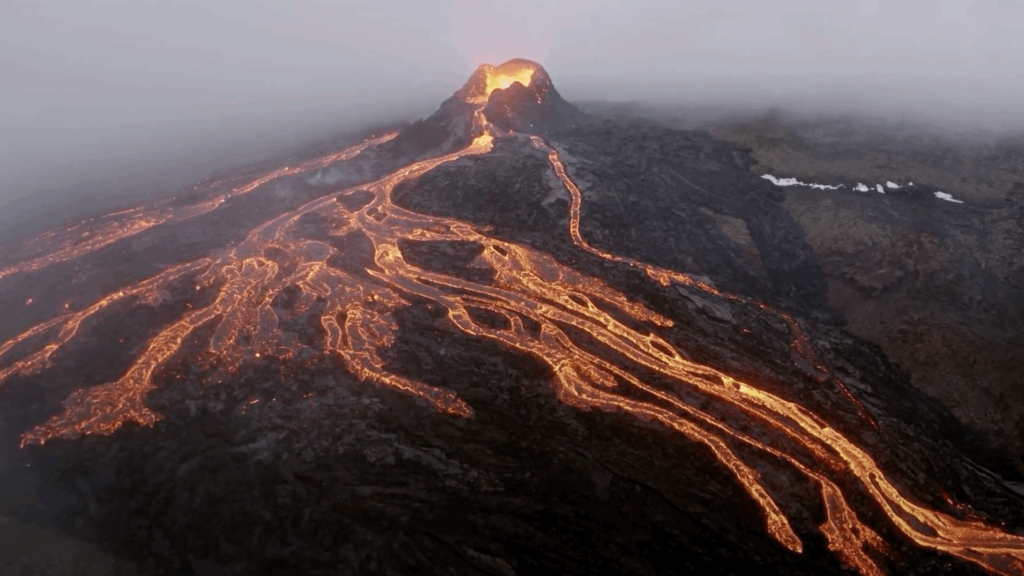
Meanwhile, tectonic plates would shift under enormous pressure. Earthquakes unlike anything in recorded history would shake every continent, while volcanoes erupted simultaneously across the globe. Thick ash clouds would block sunlight, aircraft would be grounded, and power grids would fail one after another.
Civilization would begin collapsing days before the planets ever touched.
3. Hours Before Impact: Mars Starts Breaking Apart
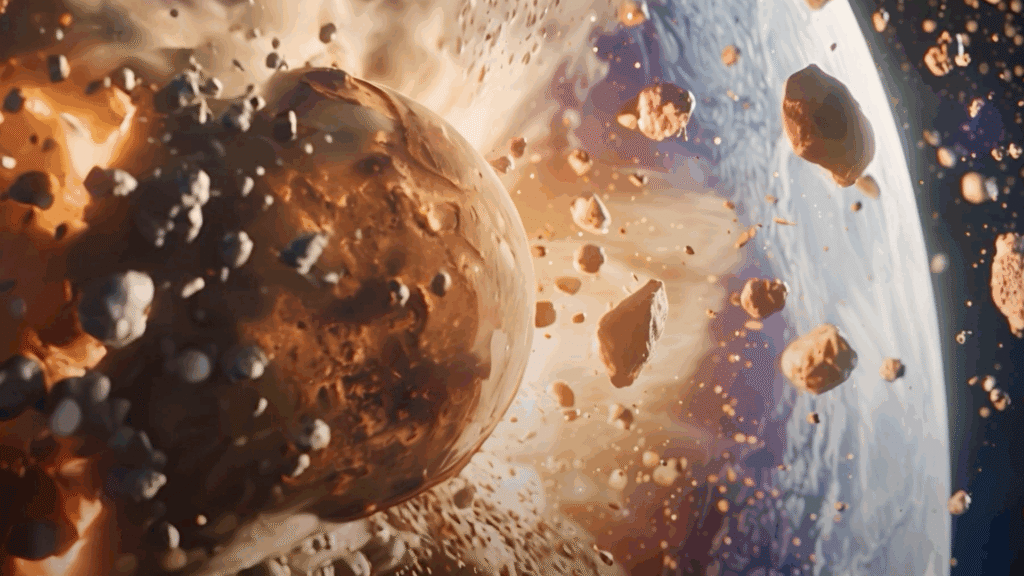
As the two planets approached within only a few thousand kilometers, Earth’s gravity would begin ripping Mars apart.
Huge fractures would spread across the Martian surface as mountains collapsed and enormous chunks of rock broke away into space. Some of these fragments would become giant meteors, striking Earth before the main collision even arrived.
The atmosphere would glow from countless incoming impacts. Fireballs would streak across the sky while massive explosions flattened entire regions. At the same time, Earth’s crust would continue stretching under the growing gravitational forces, opening enormous cracks across the landscape.
4. Seconds Before Collision: The Red Sky
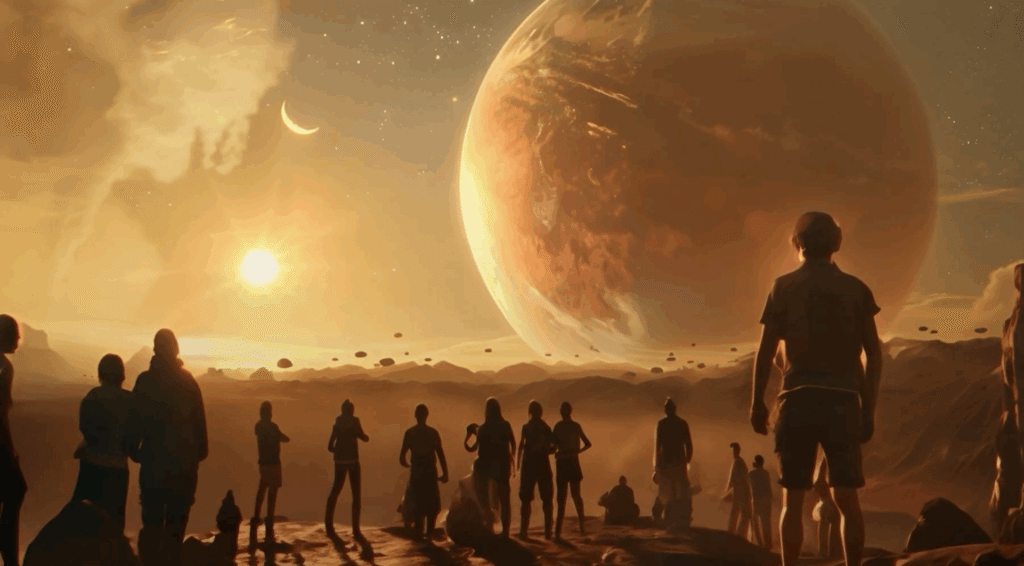
In the final moments, Mars would fill almost the entire sky.
Its surface features would be visible without a telescope, hanging overhead like a giant crimson wall. The gravitational pull would temporarily reduce your weight, while the atmosphere itself became unstable.
Powerful shock waves would race around the globe before the planets even touched. Hurricane-force winds would flatten forests, buildings would collapse from relentless earthquakes, and enormous sections of Earth’s crust would sink or rise by several meters within seconds.
There would be nowhere left to escape.
5. Impact: Two Worlds Become One
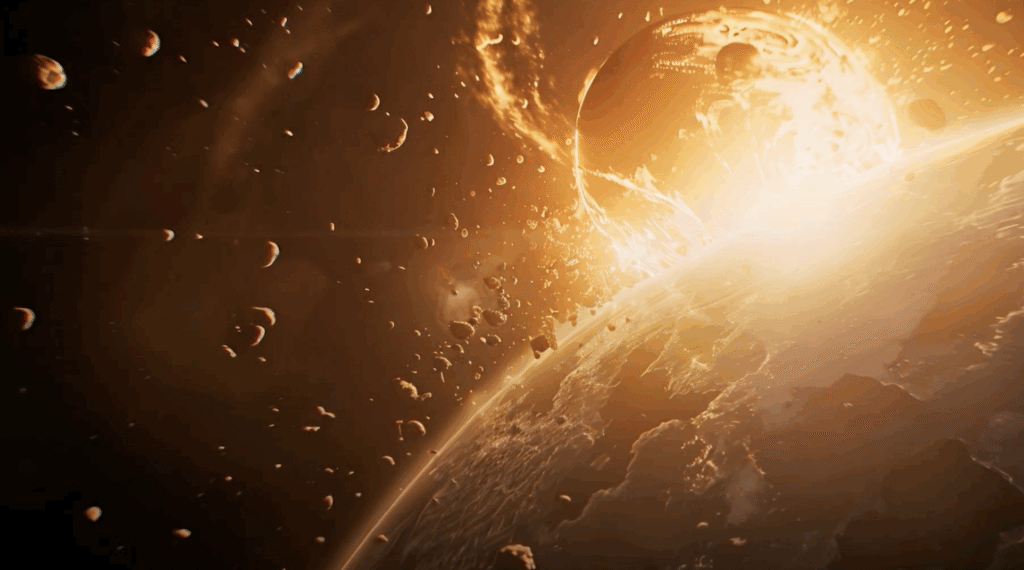
When Mars finally struck Earth, it would arrive at roughly 72,000 kilometers per hour.
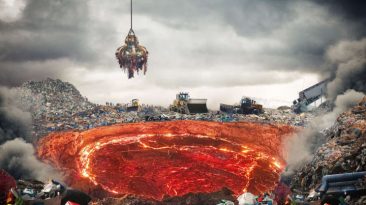
The collision would unleash more energy than humanity could truly comprehend. Both planets’ crusts would instantly melt into oceans of magma as enormous quantities of rock, iron, and vaporized material blasted into space.
Mountains would disappear in fractions of a second. The oceans would flash into steam, and the atmosphere itself would be blasted away. Debris from both planets would spread throughout the Solar System, while some fragments smashed into the Moon or escaped into deep space.
Every form of life on Earth would vanish almost instantly.
6. Millions of Years Later: A Different Planet Emerges
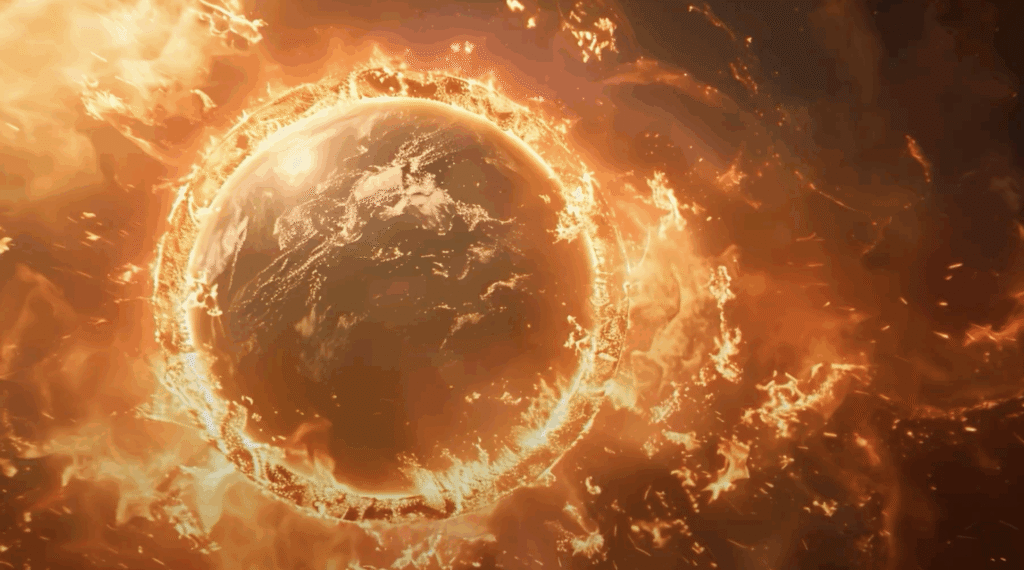
When the violence finally ended, Earth would no longer exist as we know it.
Instead, a larger planet made from the combined remains of Earth and Mars would continue orbiting the Sun. Its surface would remain molten for thousands of years before slowly cooling into a new crust.
Eventually, gases released from volcanic activity could begin forming another atmosphere. Comets and asteroids might deliver fresh water over millions of years, creating new oceans on this reborn world.
Whether life would ever return is impossible to know. Any future organisms would evolve on a planet unlike anything humans ever called home. Continents, oceans, and even the planet’s interior would be completely different.
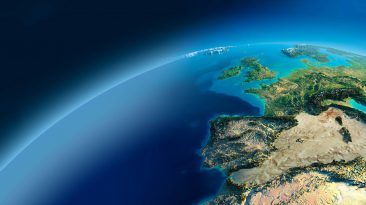
The familiar blue world would be gone forever, replaced by a strange new planet born from one of the most violent collisions imaginable.