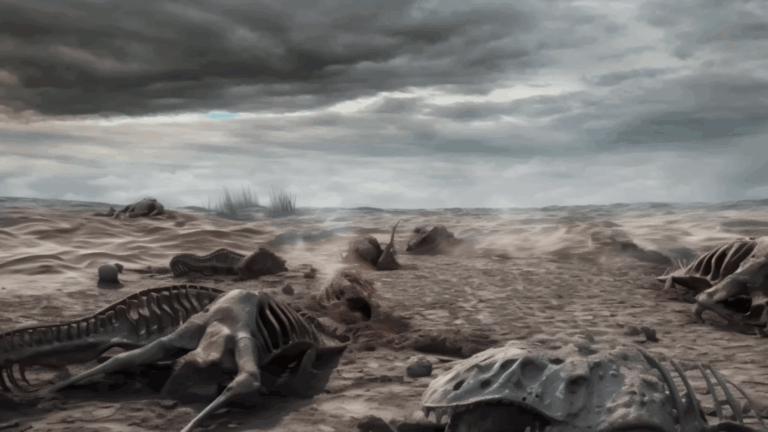
About 66 million years ago, Earth was struck by one of the most powerful events in its history. A massive asteroid, roughly the size of a mountain, was racing through space on a direct collision course with our planet. When it arrived, it didn’t just change life on Earth. It reset it completely.
The impact object was around 10 kilometers wide and was moving at extreme speeds as it entered the atmosphere. In just moments, it hit the region that is now part of Mexico’s Yucatán Peninsula. The explosion released energy on a scale far beyond anything seen in modern times.
But the extinction of the dinosaurs was not instant. The aftermath unfolded over days, months, and even years, as Earth transformed into a world of fire, darkness, and collapse.
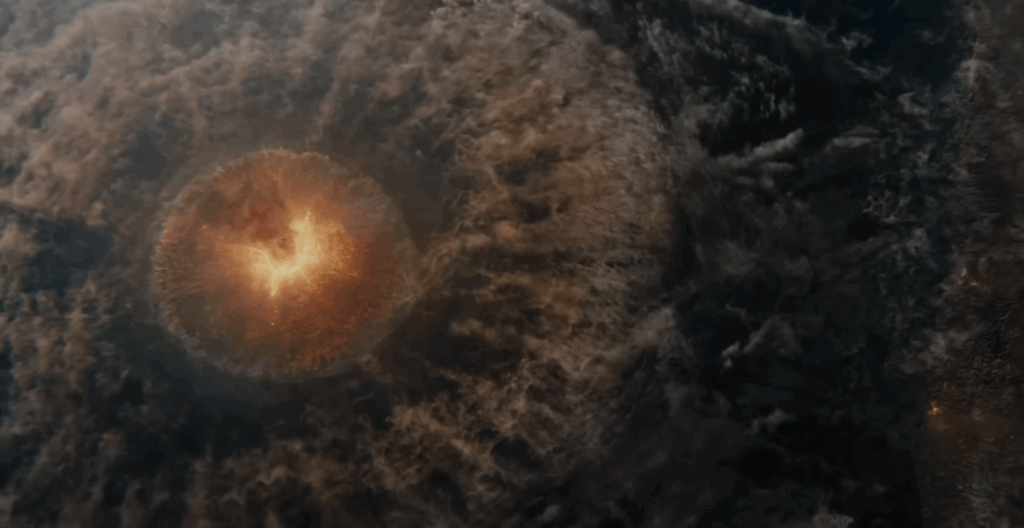
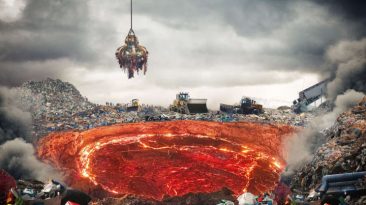
In the immediate aftermath, shockwaves radiated across the planet. Forests ignited, and fires spread across vast regions, consuming everything in their path. The heat alone was enough to reshape entire ecosystems within hours.
Then came the global disruption. Debris and dust were thrown high into the atmosphere, blocking sunlight from reaching the surface. This created a long period of darkness, where temperatures dropped and photosynthesis nearly stopped completely.
Without sunlight, plants began to die off. This collapse at the base of the food chain triggered widespread starvation among herbivores and the predators that depended on them. At the same time, massive tsunamis rolled across coastlines, reshaping continents and destroying coastal ecosystems.
Even the oceans were not spared. Acidic rain and chemical changes in the atmosphere altered ocean chemistry, making survival extremely difficult for marine life. Entire species vanished before they had any chance to adapt.
Altogether, these combined effects wiped out around 75 percent of all life on Earth. Among the casualties were the dinosaurs, including some of the most dominant predators the planet had ever seen. The world that remained was silent, cold, and stripped of much of its former life.
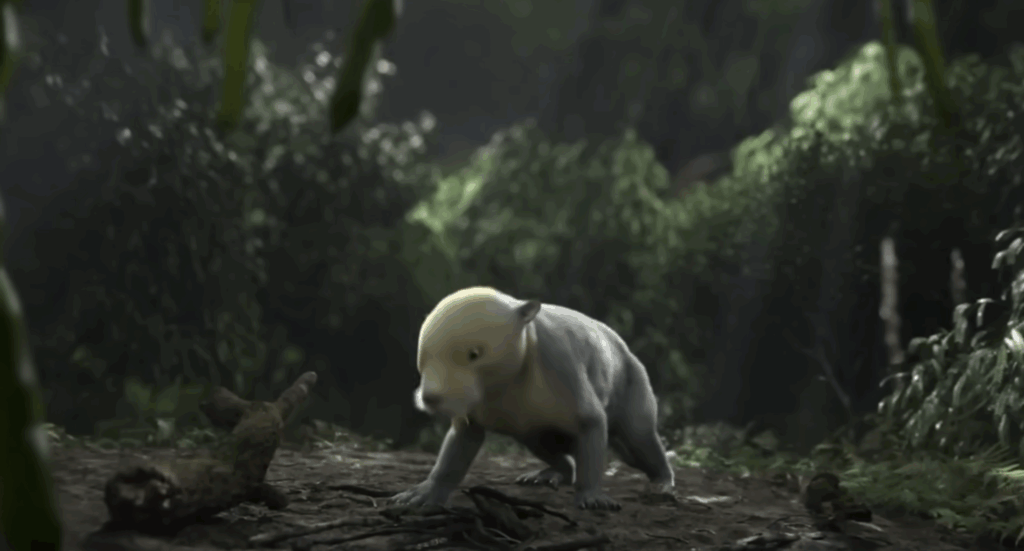
In the early aftermath, Earth was still unstable. For thousands of years, conditions remained harsh, with limited sunlight and low food availability. But slowly, life began to return.
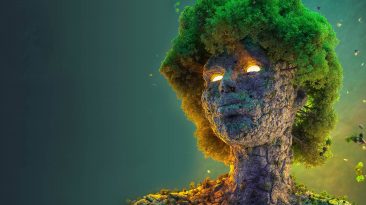
One of the first major signs of recovery came from simple plant life. Ferns were among the earliest species to spread across the devastated landscapes, thriving in the nutrient rich soil left behind by the extinction event.
Small surviving mammals also began to expand. These early creatures were tiny compared to dinosaurs, but they adapted quickly to the new world. Over time, they would become the foundation for most modern mammal species.
As hundreds of thousands of years passed, ecosystems gradually rebuilt themselves. Forests returned, oceans stabilized, and biodiversity slowly increased across the planet.
After about 10 million years, Earth had fully entered a new biological era. The Age of Mammals had begun. With dinosaurs gone, mammals diversified rapidly, filling ecological roles left behind by extinct species.
Birds and flowering plants also flourished, reshaping landscapes and ecosystems in ways that were completely different from the prehistoric world before the impact.
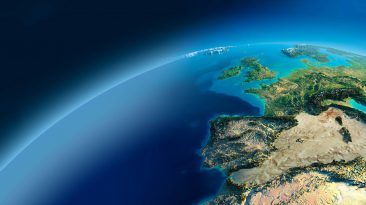
Although Earth recovered, it never returned to its old state. Instead, it became a completely new planet in terms of life and evolution. In the millions of years that followed, it would host its own giants, from massive land mammals to ancient ocean predators, proving that life always finds a way to rebuild and evolve after even the most catastrophic events.