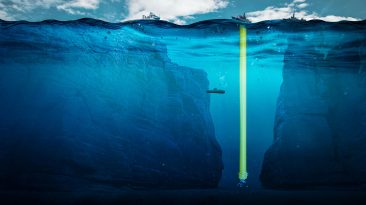
Hidden deep within southern Siberia lies one of the most mysterious places on Earth. At first glance, Lake Baikal looks like an ordinary freshwater lake surrounded by breathtaking mountains and forests. But beneath its crystal clear surface is a world that has puzzled scientists, explorers, and conspiracy theorists for decades.
Could something unknown really be living in its depths? And if so, why would it choose this remote corner of our planet?
Lake Baikal, located near Russia’s border with Mongolia, is unlike any other lake on Earth. It is the world’s oldest lake, estimated to be around 25 million years old, and the deepest, reaching more than 1,640 meters (5,380 feet). It also contains about 20 percent of all the unfrozen freshwater on the planet.
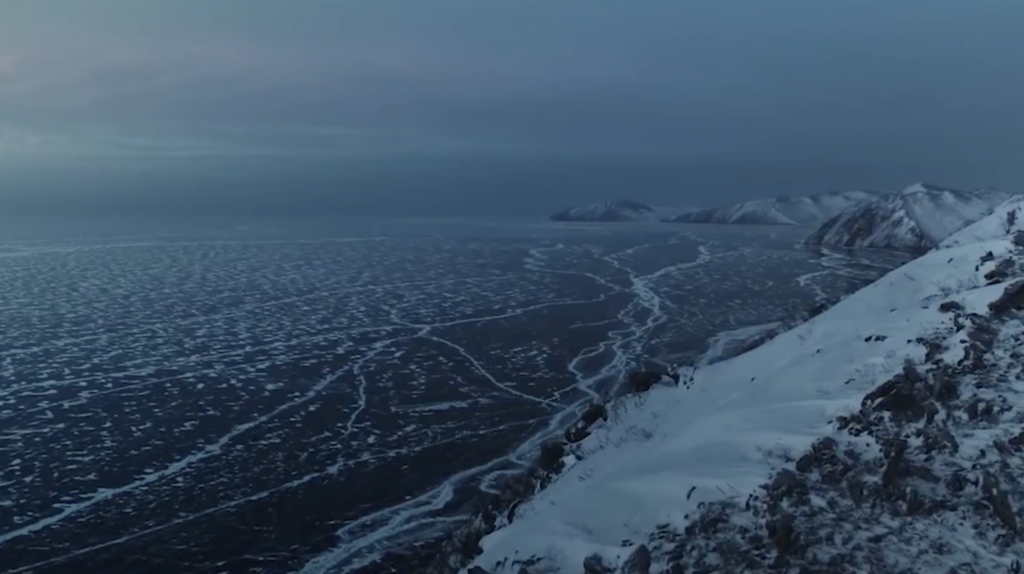
The lake is home to more than 3,700 known species of plants and animals, and roughly 80 percent of them exist nowhere else on Earth. From microscopic organisms to the famous Baikal seal, the ecosystem is filled with life found in no other place. Scientists continue discovering new species, proving that much of the lake remains unexplored.
One of Baikal’s most unusual characteristics is that oxygen reaches even its deepest waters, allowing life to survive at depths where many other lakes cannot support it. Researchers are still studying the unique geological processes that make this possible, as well as the hydrothermal activity found beneath the lake floor.
These remarkable features have inspired countless legends.

Among the most famous stories is an account from the early 1980s involving a group of military divers. According to the legend, the divers encountered enormous humanoid figures nearly three meters tall while exploring beneath the surface. The mysterious beings reportedly wore transparent helmet like coverings but no visible breathing equipment.
The story claims that when the divers attempted to approach them, an unknown force pushed the team rapidly toward the surface. Such a sudden ascent can cause severe decompression sickness, also known as the bends, which occurs when dissolved gases form dangerous bubbles inside the body. According to the tale, several divers lost their lives while others suffered serious injuries.
No publicly available evidence has ever confirmed that the encounter actually happened, and many researchers consider it nothing more than an urban legend. Still, it remains one of Lake Baikal’s most enduring mysteries.
The strange stories did not end there.
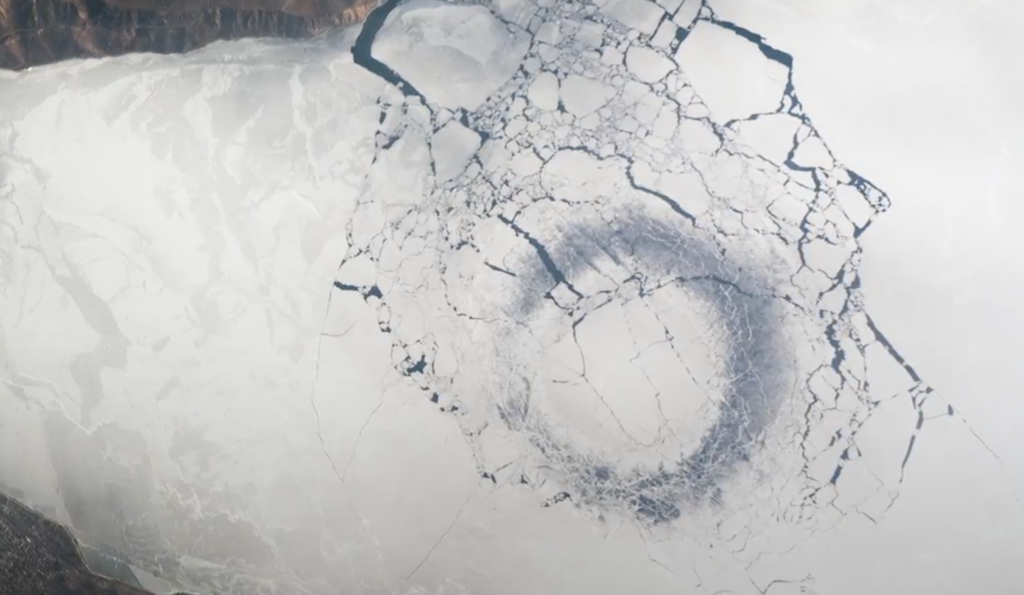
In 2009, satellite images revealed two enormous dark rings appearing in the lake’s winter ice. Each measured several kilometers across, sparking widespread curiosity. Scientists later suggested that the formations were likely created by warm methane rich water rising from below the surface, thinning the ice from underneath.
While this explanation fits many of the observations, the rare appearance of these circles continues to fascinate researchers.
For those who enjoy speculation, the unusual rings have inspired far more extraordinary ideas. Some believe they could mark the locations of hidden underwater structures or even secret entrances used by advanced civilizations. Others imagine that an extraterrestrial base could exist deep beneath the lake, protected by the immense pressure and darkness where few humans have ever ventured.
If an advanced civilization did choose to establish a hidden outpost on Earth, Lake Baikal would certainly offer advantages. Its incredible depth, remote location, and largely unexplored underwater landscape would provide an ideal place to remain unnoticed. Such visitors could theoretically observe Earth’s environment while avoiding direct contact with humanity.

Of course, there is no scientific evidence supporting these ideas. Reports of unidentified flying objects near the lake remain anecdotal, and every extraordinary claim requires equally extraordinary proof.
Even without alien theories, Lake Baikal is mysterious enough to capture the imagination. Its ancient geological history, unique wildlife, unexplored depths, and unusual natural phenomena continue to attract scientists from around the world. Every expedition reveals new information while raising even more questions.
Perhaps the greatest mystery is not whether extraterrestrials are hiding beneath its waters, but how much of this extraordinary lake still remains undiscovered. With so much of its depths yet to be explored, Lake Baikal reminds us that even on our own planet, there are places that continue to challenge our understanding of the natural world.