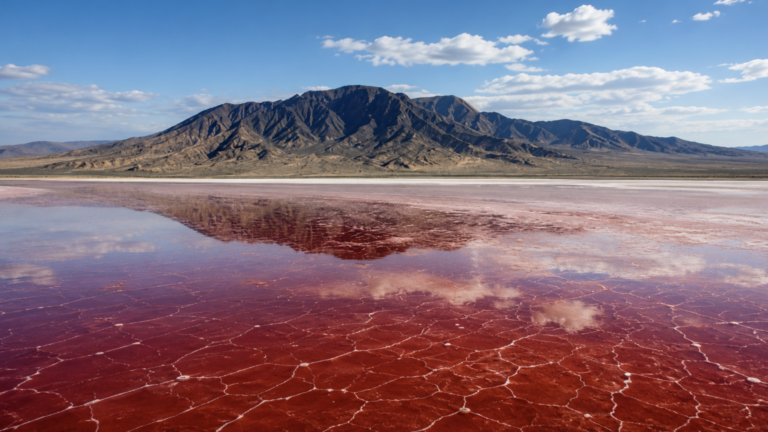
Before anyone even thinks about jumping in, it helps to understand what Lake Natron actually is. Located in northern Tanzania, this lake has no normal outlet to rivers or oceans. Instead, water flows in, evaporates, and leaves behind concentrated minerals. Over time, this creates one of the most chemically extreme lakes on Earth.
The water is highly alkaline, with a pH that can reach around 10.5, similar in strength to substances like ammonia. This extreme chemistry is what gives the lake its unusual reddish and pink tones. It also explains why most animals avoid it entirely.
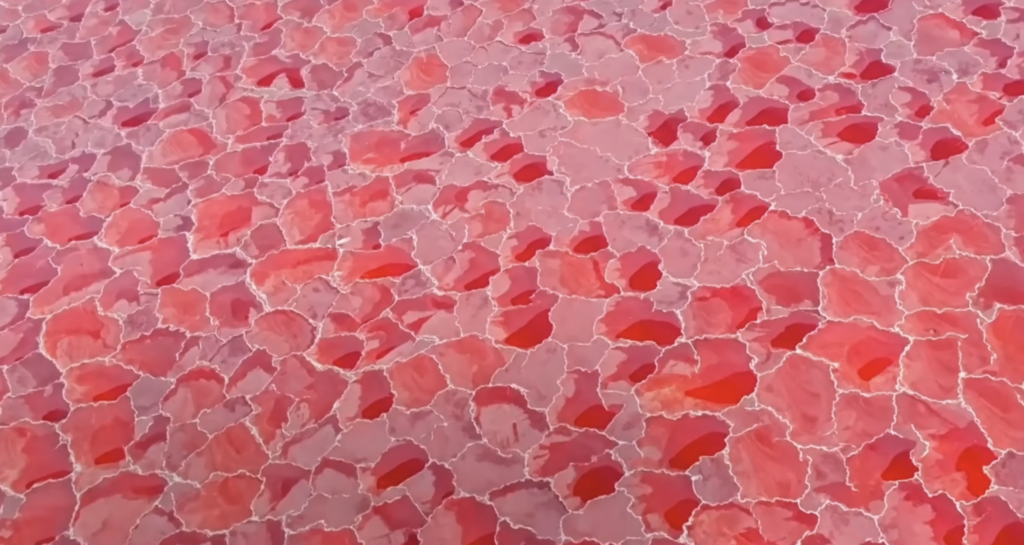
Any birds that come into contact with the water under the wrong conditions can suffer a shocking fate. In rare cases, they become coated in minerals that harden over time, creating eerie, statue like remains along the shoreline. It is one of the most unusual natural preservation processes on the planet.
But not everything avoids Lake Natron. One species has actually turned this deadly environment into a safe breeding ground. Lesser flamingos gather here in large numbers, taking advantage of conditions that are too harsh for most predators to survive.
So if flamingos can live here, does that mean humans could too?
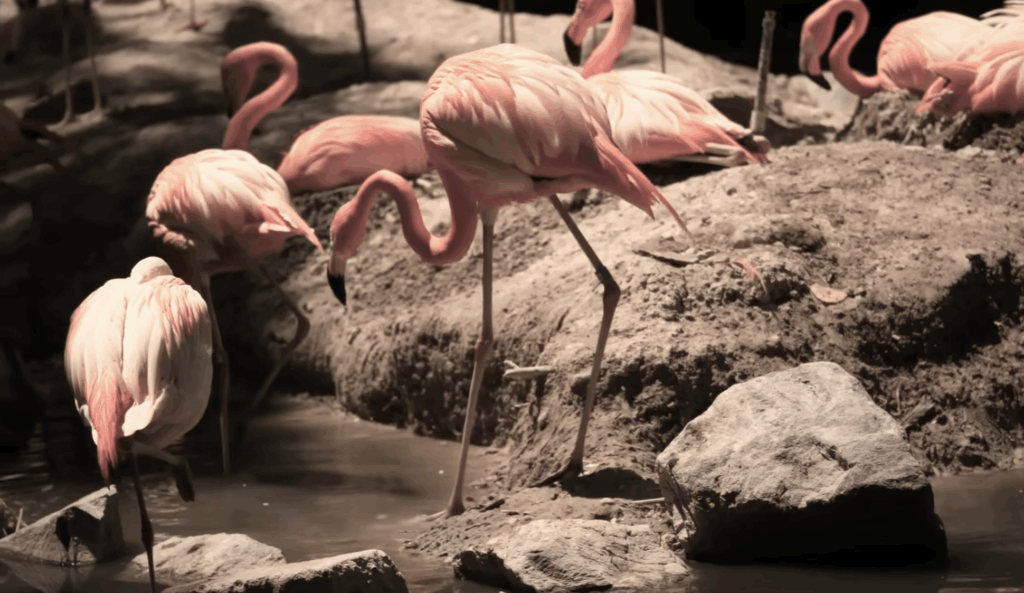
The answer is more complicated than it seems. Flamingos have evolved specific adaptations that allow them to handle extreme salinity. Their skin and legs are resistant to damage, and they can tolerate water conditions that would harm most other animals. They also rely on nearby freshwater sources and have biological systems that help them manage salt intake. On top of that, they feed on microorganisms that thrive in the lake’s extreme chemistry.
Because of this, Lake Natron becomes a natural sanctuary for breeding, where predators are largely kept away by the harsh environment.
But for humans, entering the water would be a completely different experience. Depending on the season, temperatures can rise to around 60 degrees Celsius, hot enough to cause severe burns in a very short time. The shallow shoreline can also be sharp and crusted with salt deposits, making movement painful and dangerous.
You would not turn into stone instantly, but prolonged exposure would be extremely damaging. If a body remained in the water long enough under the right conditions, the high alkalinity could slow decomposition and lead to natural preservation, similar to a mummification process.
This same chemistry is what discourages scavengers and bacteria, meaning remains can stay intact for long periods. However, this is not a survival environment in any normal sense. Even brief exposure could cause serious irritation to skin, eyes, and open wounds.

There have also been real world incidents near the lake. In 2007, a helicopter carrying wildlife photographers crashed into the region. Several people were injured, including fractures and serious trauma. Despite the harsh surroundings, rescue was possible, and survivors were eventually brought to safety with help from local communities.
Lake Natron remains one of the most extreme environments on Earth. While it may appear calm and even beautiful from a distance, its waters are chemically intense and physically dangerous. For humans, it is not a place to swim. For flamingos, however, it is one of the safest breeding grounds they have.
It is a reminder that some of the most hostile places on Earth can still become vital refuges for life that has learned to adapt.