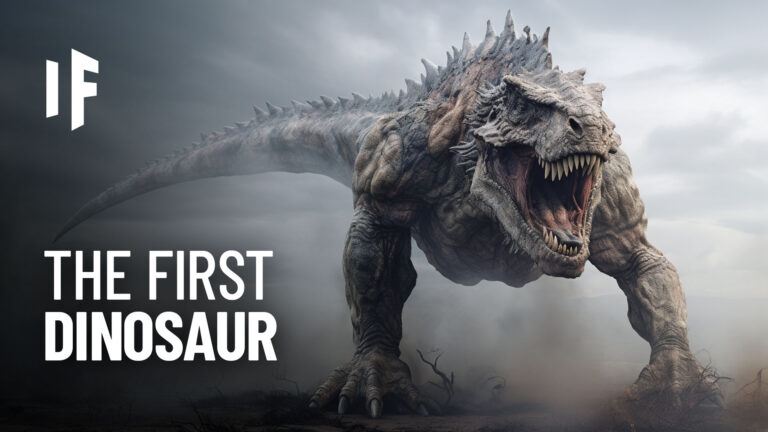
If you could travel back roughly 250 million years, you would not see the Earth you know today. Instead, you would arrive at the very beginning of the dinosaur story. The world would feel unfamiliar, harsh, and constantly changing, with ecosystems still recovering from massive extinction events that reshaped life on the planet.
Most scientists believe dinosaurs evolved from a group of reptiles called archosaurs. These animals appeared during the late Permian period and were among the dominant vertebrates of their time. Although they may not look exactly like the dinosaurs we imagine, archosaurs were the evolutionary foundation for both dinosaurs and modern crocodiles.
One of the key evolutionary changes in early dinosaurs was the development of bipedal movement. Many early species began walking on two legs, which freed their front limbs for other tasks such as hunting, grasping, and defense. This simple shift in posture would become one of the defining traits of dinosaur evolution.
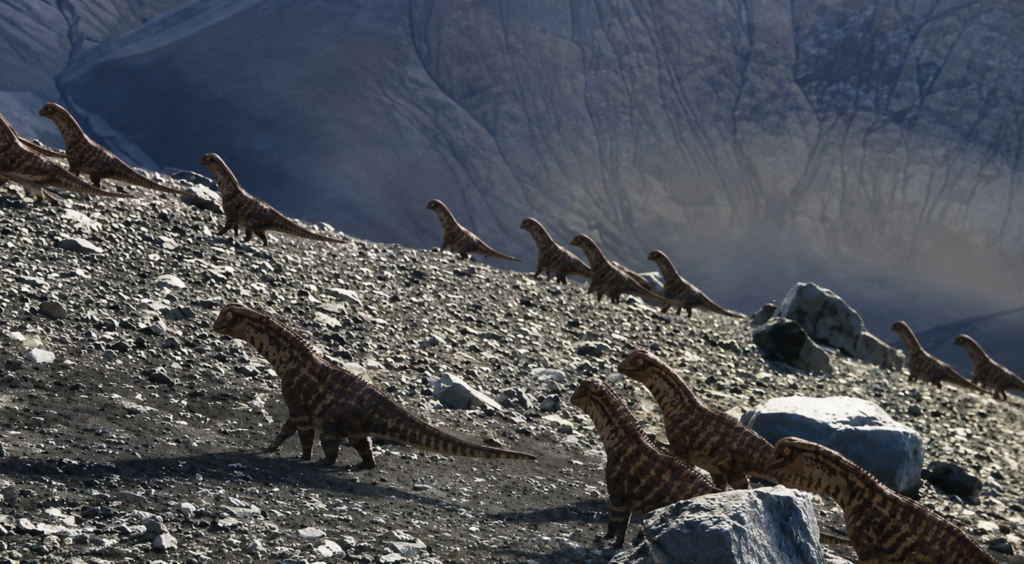
To understand how this incredible group evolved, we need to go back to the beginning and explore their rise through three major geological periods.
TRIASSIC PERIOD
Entering the Triassic world, dinosaurs are still in their early stages. They are small, relatively rare, and not yet the dominant life forms on Earth. The landscape is shaped by the supercontinent Pangea, a massive landmass that has not yet fully broken apart. The climate is hot and dry, with large desert regions and no polar ice caps. Vegetation is sparse in many areas, but gradually evolving in complexity, influencing how early dinosaurs survive and adapt.
One of the earliest known dinosaurs is Eoraptor. This small, lightweight creature was about the size of a modern dog, standing less than a meter tall and weighing only around 10 kilograms. It was fast and agile, likely feeding on small animals and plants. At this stage, dinosaurs are still experimenting with different survival strategies.
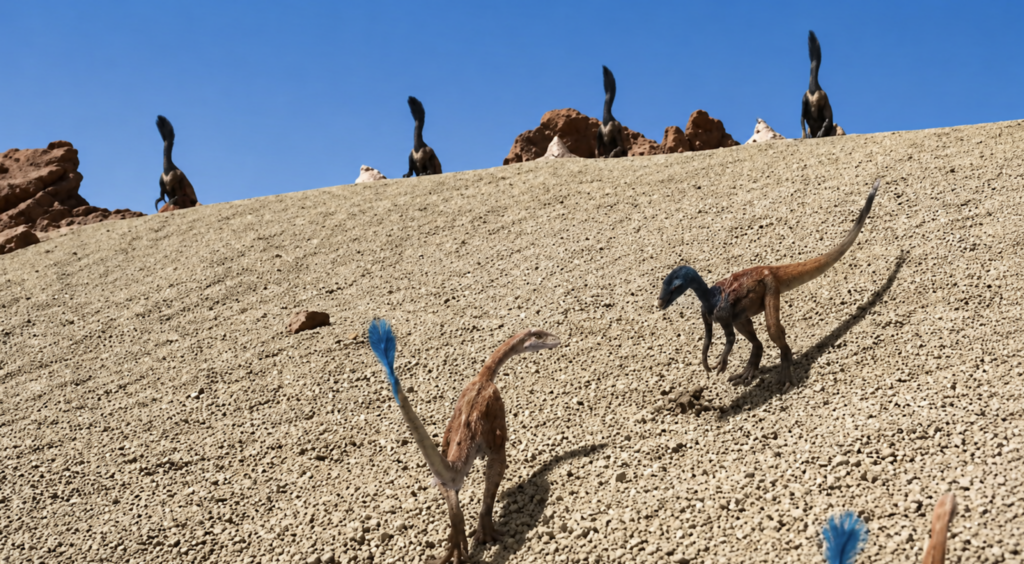
Another early predator, Coelophysis, shows how quickly evolution was progressing. Slightly larger and more streamlined, it was a fast hunter capable of chasing down small prey. Meanwhile, Herrerasaurus represented a more advanced carnivorous form, with stronger limbs and a heavier build, showing early signs of what dinosaur predators would become.
Not all Triassic dinosaurs were small. Plateosaurus, one of the earliest large herbivores, could reach several meters in length and weigh thousands of kilograms. This marked an important moment in dinosaur evolution, proving that gigantism was already beginning to emerge.
Despite this diversity, dinosaurs were not yet the dominant species. They shared the world with many other reptiles and early animals competing for survival. That balance would soon be disrupted by a major extinction event at the end of the Triassic period. Massive volcanic eruptions, shifting climates, and possible asteroid impacts caused widespread ecological collapse. Many species disappeared, but dinosaurs survived, positioning them for global dominance.
JURASSIC PERIOD
With the start of the Jurassic period, dinosaurs entered a new age of expansion. With much of their competition gone, they rapidly diversified and spread across the planet. Forests expanded, climates stabilized, and ecosystems became more supportive of large life forms.
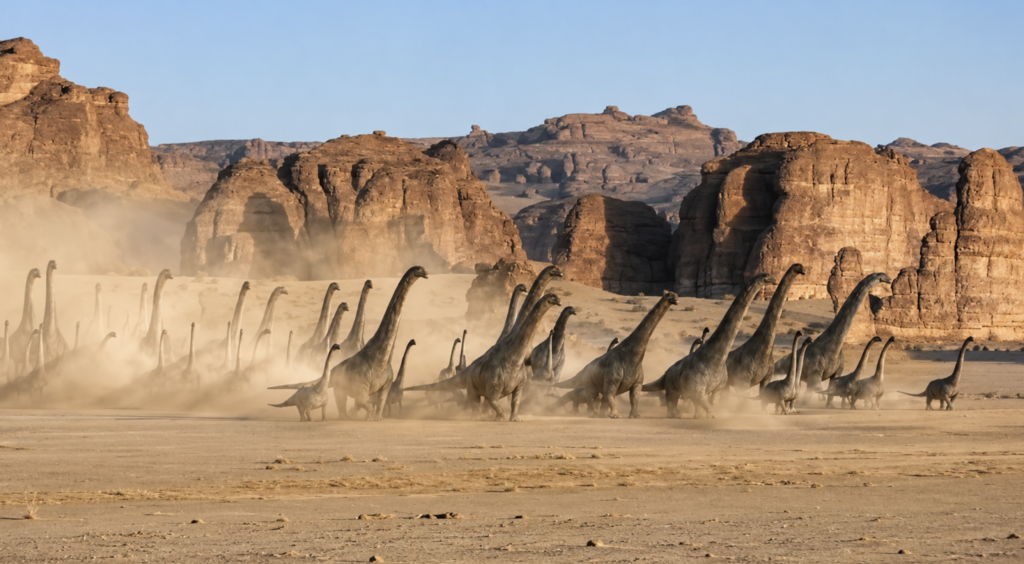
This is the era where dinosaurs truly begin to dominate Earth.
Massive herbivores like Brachiosaurus and Stegosaurus roamed the landscapes, while powerful predators such as Allosaurus hunted them. These creatures represent some of the most iconic dinosaurs ever discovered, and they showcase just how large and specialized dinosaurs had become.
However, not all dinosaurs were giants. The Jurassic period also saw the rise of smaller, feathered species belonging to a group called theropods. One of the most important examples is Archaeopteryx. This animal displayed a mix of reptilian and bird like features, including feathers, wings, teeth, and a long bony tail. It represents a critical evolutionary link between dinosaurs and modern birds.
Over time, these feathered species would continue evolving, eventually giving rise to the birds we see today. What once began as small adaptations for insulation or display would later play a key role in flight.
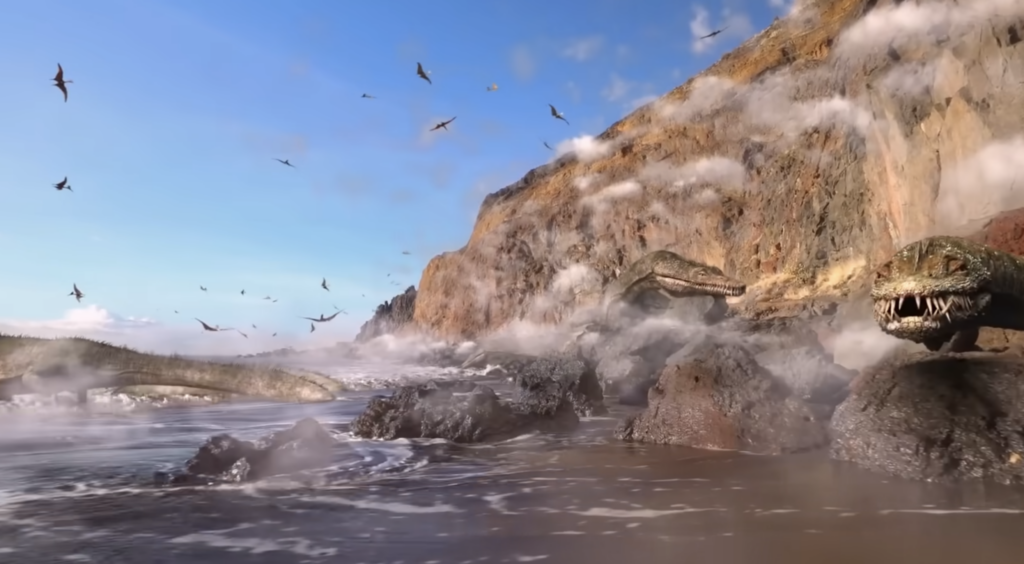
By the end of the Jurassic, another extinction event reshaped life once again, although less severe than the one before. Volcanic activity, shifting sea levels, and climate changes led to the disappearance of some species, clearing the path for the next great age of dinosaurs.
CRETACEOUS PERIOD
The Cretaceous period represents the final and most famous chapter of dinosaur evolution. By now, continents are continuing to drift apart as Pangea fully breaks up, creating the modern layout of Earth. Dinosaurs have adapted to a wide range of environments across the globe.
This is also when some of the most well known dinosaurs appear.
Among them is Tyrannosaurus rex, one of the largest and most powerful land predators ever to exist. Measuring up to 12 meters in length and weighing several tons, T rex was a dominant hunter equipped with massive jaws and teeth capable of crushing bone. It hunted large herbivores such as Edmontosaurus and Triceratops and likely used a combination of strength, speed, and keen senses to track prey.
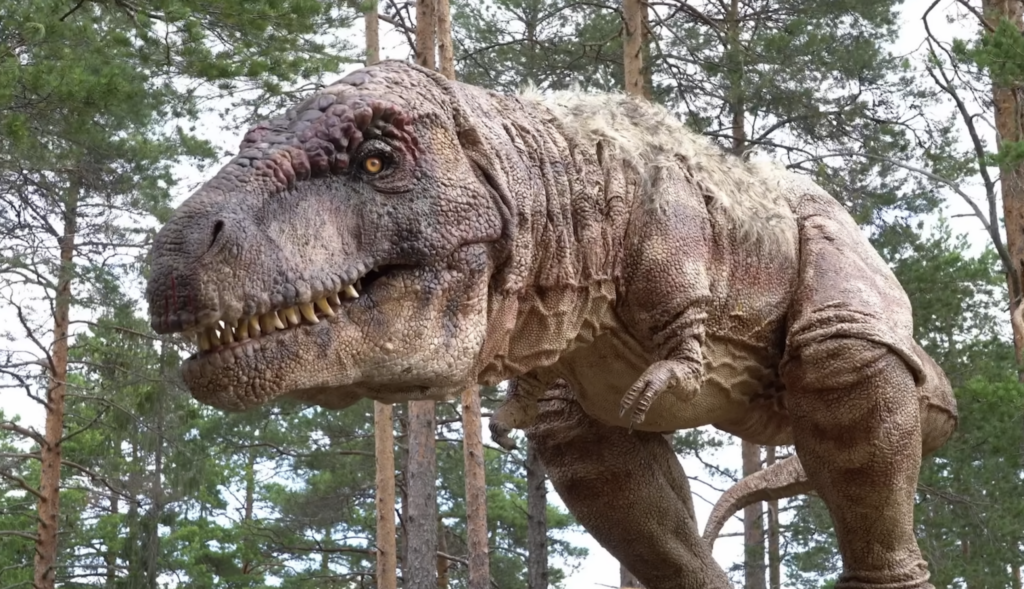
At the same time, feathered dinosaurs became even more diverse. Velociraptor, often misrepresented in popular media, was actually covered in feathers, which likely helped with insulation and display rather than flight. Even smaller species like Microraptor show early forms of flight adaptations, giving scientists important clues about how birds evolved.
Dinosaurs continued to spread and adapt across isolated continents, evolving into highly specialized species suited for different environments. But this long era of dominance was nearing its end.
THE CATACLYSMIC EVENT
Around 66 million years ago, a massive asteroid collided with Earth near what is now the Yucatán Peninsula. The impact created a crater over 150 kilometers wide and triggered global consequences.
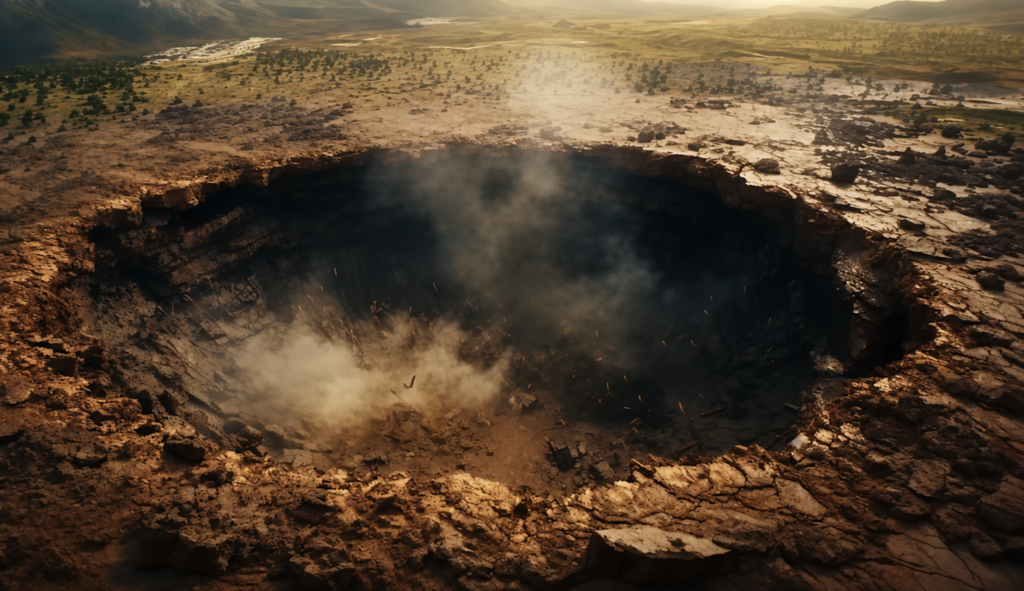
The explosion sent enormous amounts of debris into the atmosphere, blocking sunlight and causing global temperatures to drop sharply. Plant life collapsed, ecosystems broke down, and food chains were destroyed. Without sunlight, photosynthesis stopped, and survival became nearly impossible for most species.
This event led to the extinction of roughly 75 percent of all life on Earth, including all non avian dinosaurs.
However, not all dinosaurs vanished. A small group of feathered theropods survived and eventually evolved into modern birds, which still carry their legacy today.