You are probably familiar with the fictional Japanese monster Godzilla, a towering reptilian creature known for destroying cities and terrifying entire populations. But what if there was a real life version of Godzilla already living on Earth, just in a much smaller and far less destructive form? Meet the marine iguana, a strange and fascinating reptile that looks like it stepped straight out of a monster movie, yet survives peacefully along the coasts of the Galápagos Islands.
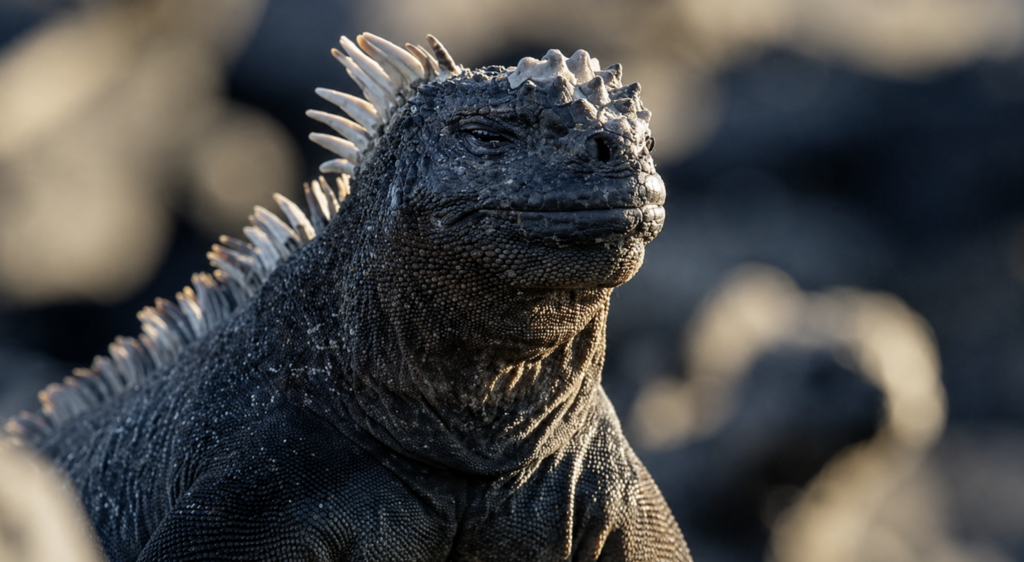
At first glance, the comparison almost feels unfair. Godzilla is a city crushing titan, while the marine iguana is a small coastal lizard. Still, the resemblance is hard to ignore. With its spiky back, flattened face, and rough textured skin, the marine iguana carries an appearance that feels surprisingly prehistoric.
But unlike its cinematic counterpart, it does not breathe fire or level cities. Instead, it survives by mastering one of the harshest coastal environments on Earth.
Marine iguanas are found only in one place on the planet, the volcanic shores of the Galápagos Islands off the coast of Ecuador. They typically live between five and twelve years and can grow up to around 1.5 meters in length. However, much of that length comes from their long, muscular tail, which helps them swim through strong ocean currents. Despite their size, they are relatively lightweight, usually weighing only a few kilograms.
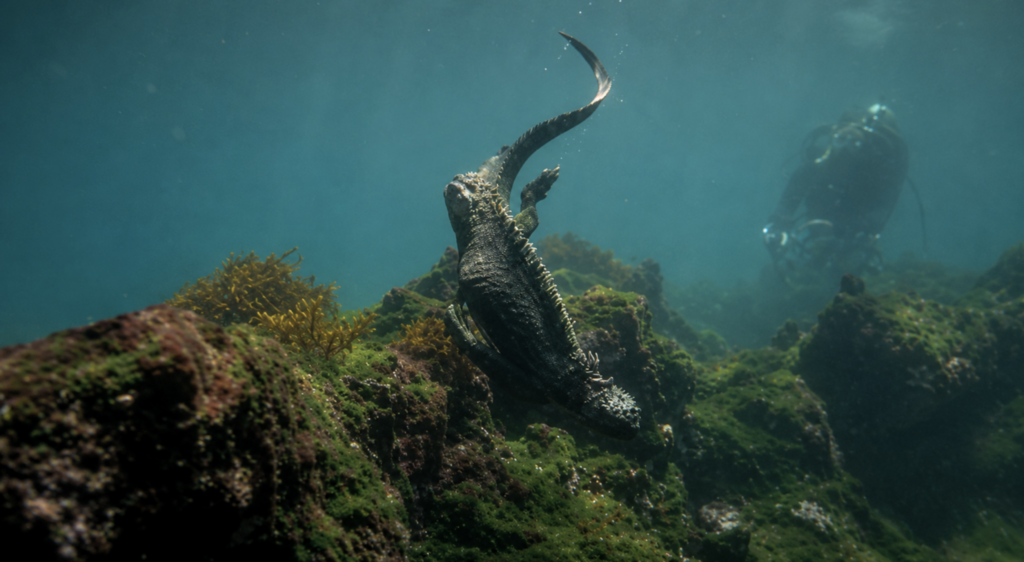
What makes them truly unique is their lifestyle. Marine iguanas are one of the only lizard species in the world that feeds in the ocean. They dive into cold Pacific waters to feed on algae that grow on rocks beneath the surface. Their bodies are specially adapted for this unusual behavior, with flattened tails for swimming and strong claws for gripping slippery surfaces. They can stay underwater for several minutes at a time, and in some cases even longer when needed.
Feeding underwater is not easy, especially in the cold waters of the Pacific. To survive, marine iguanas must carefully regulate their body temperature. Like all reptiles, they are ectothermic, meaning they rely on external heat sources to warm their bodies. Before entering the ocean, they spend long periods basking on sun warmed rocks until their body temperature reaches around 36 degrees Celsius. Without this preparation, they would lose too much heat and become too sluggish to swim effectively.
While swimming, they often lose a significant amount of body heat, sometimes dropping by as much as 10 degrees Celsius. To help with this, their skin darkens when they are cold, allowing them to absorb heat from the sun more efficiently once they return to land. From a distance, groups of basking iguanas often look like dark stones scattered across volcanic beaches, quietly recharging in the sunlight like living solar panels.
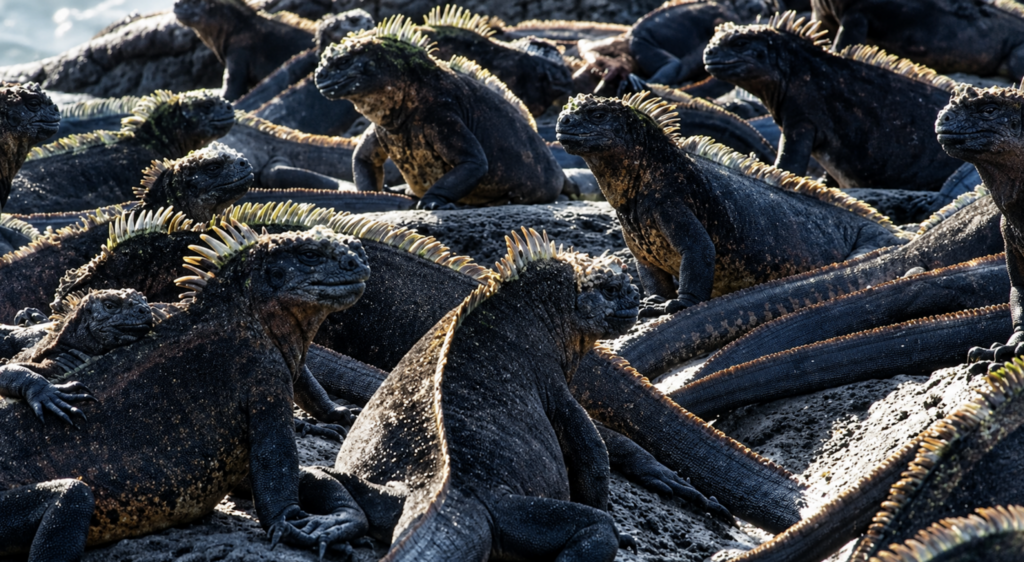
One of the most surprising abilities of marine iguanas is their capacity to physically shrink in response to environmental stress. During El Niño events, ocean temperatures rise and the availability of their preferred algae decreases. This forces them to switch to less nutritious food sources, leading to significant energy shortages. In response, their bodies actually reduce in size, sometimes shrinking by as much as twenty percent in length.
Even their skulls and mouths become smaller, allowing them to feed more efficiently on limited resources. This adaptation improves their chances of survival during difficult periods, since smaller bodies require less energy. In fact, studies suggest that even a one centimeter reduction in size can significantly increase survival rates. In nature, shrinking is not a weakness for them, but a clever survival strategy shaped by evolution.
Perhaps the most unusual behavior of marine iguanas is their ability to expel excess salt. Because they consume large amounts of seawater while feeding underwater, their bodies must constantly remove salt to stay balanced. Specialized glands near their noses filter out the excess, which they then expel by sneezing it out in visible bursts. This gives the impression that they are constantly clearing their noses, often leaving crusty white salt deposits around their faces.
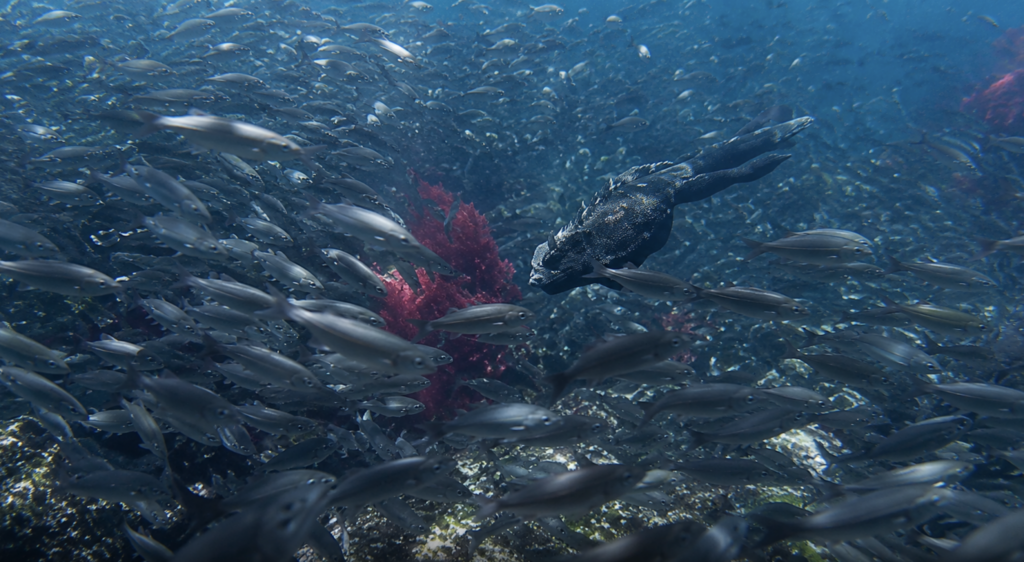
Despite their strange appearance and even stranger habits, marine iguanas play a crucial role in their ecosystem. They help control algae growth and provide food for predators such as birds and crabs. They are also highly vulnerable to environmental changes, especially climate shifts that affect ocean temperatures and food supply. This makes them an important indicator species for scientists studying the health of marine ecosystems.
In many ways, the marine iguana is a perfect example of how life adapts in unexpected and extreme ways. It may not destroy cities like its fictional namesake, but it survives in an environment that is constantly shifting, using abilities that seem almost unbelievable at first glance. From shrinking bodies to salt sneezing defenses, this small reptile proves that nature’s creativity can sometimes be even stranger than fiction.
And while Godzilla remains a symbol of cinematic destruction, the marine iguana quietly holds its own title in the real world as one of the most unusual and resilient reptiles on the planet.